
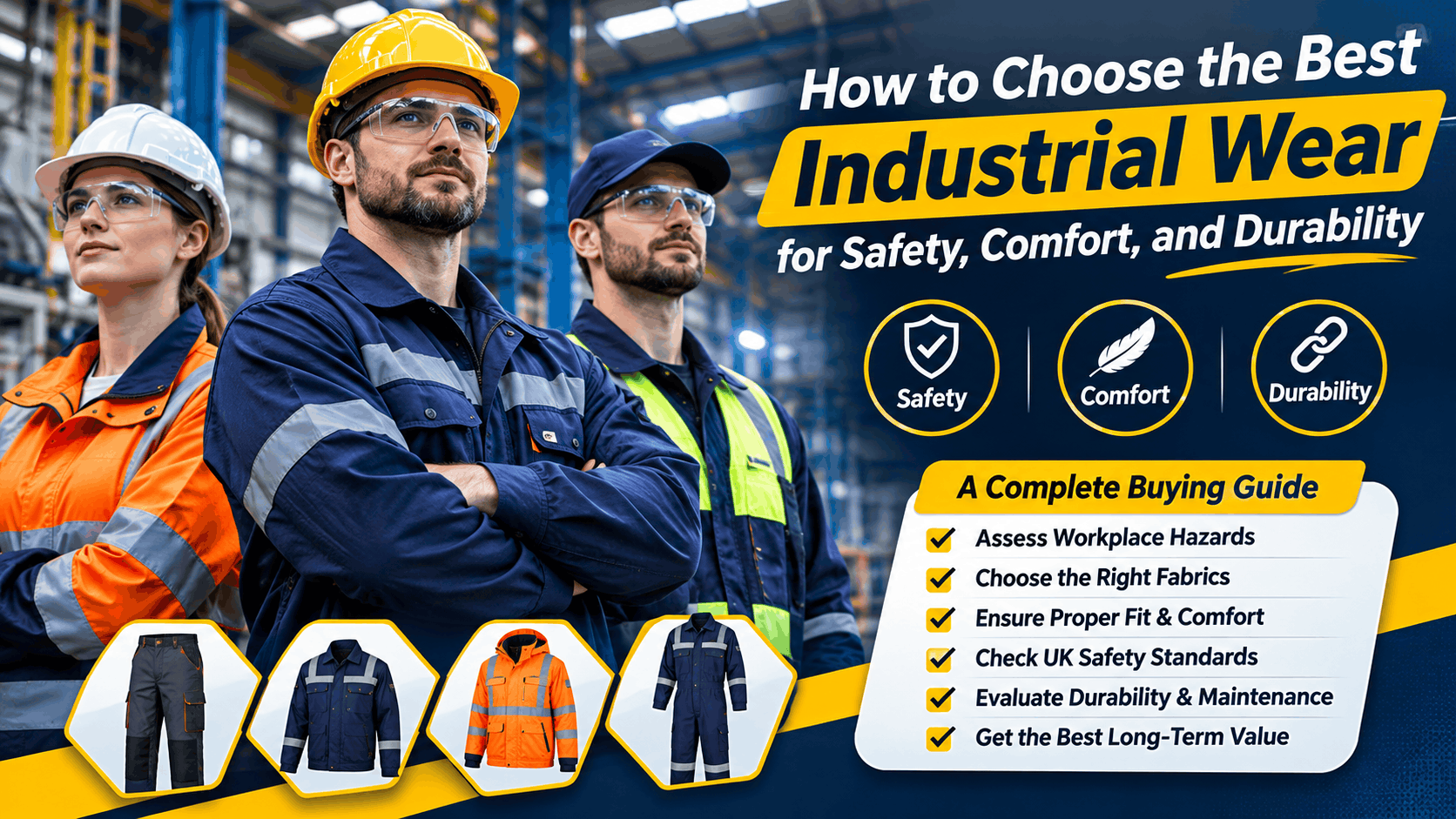
Choosing the right Industrial Wear is about more than finding clothing that looks professional. In demanding workplaces, unsuitable garments can restrict movement, cause discomfort, wear out prematurely and, in some circumstances, leave workers exposed to avoidable hazards.
Whether you work in manufacturing, construction, engineering or warehousing, your clothing should suit the tasks you perform and the conditions you face. However, not every workwear product offers the same protection, comfort or durability.
This guide explains how to select suitable industrial clothing, compare materials, understand relevant UK safety standards and evaluate long-term value. It also explores essential workwear products and practical considerations for employers purchasing clothing for their teams.
What Is Industrial Wear and Why Is It Important?
Industrial Wear refers to clothing designed for practical use in industrial and physically demanding working environments. It includes work trousers, jackets, coveralls, uniforms and specialised protective garments. Depending on the product, industrial clothing may prioritise durability, comfort, visibility or protection against specific workplace hazards.
Unlike ordinary clothing, industrial workwear is often designed with reinforced stitching, functional pockets, hard-wearing fabrics and features suited to particular working conditions.
For example, warehouse employees may need flexible trousers and breathable tops, while welders may require certified clothing designed for exposure to heat and flame.
Importantly, ordinary workwear is not automatically personal protective equipment (PPE). Clothing intended to protect against identified hazards must meet the relevant protective requirements.
How to Choose the Best Industrial Wear for Your Workplace
Selecting suitable workwear requires balancing protection, comfort, durability and cost. The following six considerations can help employers and individual workers make informed decisions.
1. Identify Workplace Hazards and Safety Requirements
Before purchasing Industrial Wear, identify the hazards associated with each job.
Common workplace risks include:
- Heat, flames and flying sparks
- Abrasion from rough materials and surfaces
- Chemical splashes or hazardous substances
- Poor visibility around moving vehicles
- Rain, wind and challenging outdoor conditions
- Entanglement risks around moving machinery
For instance, employees working near forklifts may require high-visibility clothing. Meanwhile, workers exposed to sparks or heat may need task-specific protective garments.
The UK’s Health and Safety Executive (HSE) recommends assessing workplace risks and selecting appropriate PPE where those risks cannot be adequately controlled through other measures.
2. Choose Durable and Suitable Fabric Materials
Fabric selection directly influences comfort, garment lifespan and suitability for different tasks.
Common workwear materials include:
| Fabric type | Main advantages | Considerations |
|---|---|---|
| Cotton | Breathable and comfortable | May shrink or wear depending on construction |
| Polyester-cotton blend | Often easy to maintain and resistant to creasing | Breathability varies by blend |
| Heavy-duty woven fabrics | Can provide good abrasion and tear resistance | May feel heavier or less flexible |
| Specialised protective fabrics | Designed for particular hazards | Require verified protective performance |
When comparing Industrial Wear Products, consider fabric weight, tear resistance, moisture management and washing durability.
Additionally, inspect whether the material suits the working environment. Lightweight clothing may improve comfort in warm warehouses, whereas heavier garments may be useful for certain demanding outdoor tasks.
Remember that ordinary cotton or polyester blends should never be assumed to provide certified flame, chemical or other hazard protection.
3. Prioritise Comfort, Fit and Freedom of Movement
Even durable workwear can become impractical when it restricts movement.
Workers frequently bend, kneel, stretch and lift throughout their shifts. Therefore, garments should accommodate these movements without excessive tightness or loose material.
Look for features such as adjustable waistbands, articulated knees, flexible panels, reinforced seams and practical pocket placement.
For example, well-fitting work trousers can make repetitive kneeling more comfortable, while correctly sized jackets allow workers to reach overhead without unnecessary restriction.
Where appropriate, arrange a fitting trial before ordering uniforms for an entire workforce.
4. Check Relevant Industrial Safety Wear Standards
Industrial Safety Wear must provide protection appropriate to the hazards identified in the workplace.
Several UK-adopted European standards may be relevant:
| Standard | Primary application |
|---|---|
| EN ISO 20471 | High-visibility warning clothing |
| EN ISO 11612 | Protective clothing against heat and flame |
| EN 343 | Protective clothing against rain |
| EN ISO 13688 | General requirements for protective clothing |
These standards address different aspects of garment performance. For example, EN ISO 20471 does not establish flame resistance, while EN ISO 13688 is generally used alongside more specific protective standards.
Before purchasing certified PPE, check the manufacturer’s documentation, applicable conformity marking, product instructions and declared performance.
A garment’s appearance alone cannot establish whether it meets the required standard.
5. Evaluate Durability and Maintenance Requirements
Industrial clothing experiences frequent washing, friction and physical strain. Consequently, construction quality deserves careful attention.
Examine reinforced stitching, seam strength, closures, fabric construction and stress points around pockets and knees.
Maintenance matters just as much. Follow the manufacturer’s washing and drying instructions, particularly for protective clothing whose performance may be affected by inappropriate cleaning.
Inspect garments regularly for tears, damaged fastenings, excessive wear and contamination. Replace protective items when damage or deterioration compromises their intended performance.
6. Compare Price, Quality and Long-Term Value
The cheapest garment is not necessarily the most economical choice.
Consider two hypothetical pairs of work trousers:
- Pair A costs £20 and lasts approximately 50 working days, giving a cost of £0.40 per wear.
- Pair B costs £35 and lasts approximately 150 working days, giving a cost of about £0.23 per wear.
Although Pair B costs more initially, its longer assumed lifespan makes it more economical.
These figures are illustrative, not product performance claims. Actual durability depends on use, maintenance and garment quality.
For businesses, comparing replacement frequency and maintenance requirements can reveal the real cost of Industrial Wear.
Essential Industrial Wear Products Every Worker Should Know
Different tasks require different clothing features. Understanding common product categories helps buyers choose suitable equipment.
Industrial work trousers: Durable work trousers often feature reinforced seams, practical pockets and flexible construction. They are commonly used in construction, maintenance and warehousing.
Protective work jackets: Safety jackets may provide weather protection, visibility or task-specific protective properties. Buyers should match the jacket’s documented features to workplace requirements.
High-visibility clothing: High-visibility vests, jackets and trousers help improve worker conspicuity around vehicles and equipment. Appropriate garment classes depend on the risk assessment.
Industrial coveralls: Coveralls provide broad clothing coverage and are useful in manufacturing, engineering and maintenance. Some specialised versions provide certified protection against specific hazards.
Flame-resistant protective clothing: Suitable garments can help protect workers exposed to identified thermal hazards. Certification, performance levels and garment compatibility require verification.
Weather-resistant workwear: Waterproof or water-resistant jackets and trousers can improve comfort for outdoor workers. Certified rain protection should be checked where required.
Protective gloves: Gloves may be necessary for mechanical, chemical or thermal risks. However, the correct glove type depends on the hazard, and gloves can introduce entanglement risks around certain machinery.
Red Kap Industrial Wear: What Should Buyers Consider?
Red Kap Industrial Wear is one branded option buyers may encounter when researching industrial uniforms and work clothing.
However, choosing branded workwear should involve more than comparing names or appearances.
Evaluate fabric composition, garment construction, available sizes, functional features and washing requirements. Additionally, check whether individual products suit the tasks being performed.
For protective applications, request documentation confirming the relevant standards and performance levels.
Buyers in the UK should also consider supplier availability, replacement consistency and delivery arrangements. These practical factors can affect uniform management and purchasing costs.
How to Find the Right Industrial Wear Solutions for Different Industries
Effective Industrial Wear Solutions should reflect the hazards and physical demands of each workplace.
Construction: Prioritise suitable high-visibility clothing where required, durable trousers, weather protection and task-specific PPE.
Manufacturing: Select clothing that permits movement without creating avoidable entanglement risks. Assess thermal, chemical and mechanical hazards.
Warehousing: Consider breathable garments, flexible trousers and visibility requirements around vehicles.
Engineering and maintenance: Choose practical clothing with suitable pocket arrangements and any necessary protective properties.
Outdoor work: Evaluate rain protection, layering, visibility and comfort across changing temperatures.
Rather than purchasing identical garments for every employee, businesses should develop clothing specifications based on job roles and documented risk assessments.
Common Mistakes to Avoid When Buying Industrial Wear
Several purchasing mistakes can increase costs or reduce workplace suitability.
- Choosing clothing solely on price: Cheap garments may require frequent replacement. Compare quality and expected cost per wear.
- Ignoring safety standards: Ordinary garments may not provide necessary protection. Verify certification and intended use.
- Purchasing incorrect sizes: Poor fit can restrict movement or create hazards. Use accurate measurements and fitting trials.
- Overlooking fabric quality: Weak seams and unsuitable materials can shorten garment lifespan. Inspect construction and care requirements.
- Confusing workwear with PPE: General-purpose clothing does not automatically protect against hazardous exposures. Select appropriate certified PPE where required.
Why Choosing the Right Industrial Wear Improves Workplace Safety and Productivity
Choosing the right Industrial Wear is essential for maintaining workplace safety, comfort, and efficiency. Firstly, suitable industrial clothing helps workers perform demanding tasks while reducing exposure to certain workplace hazards. Moreover, durable fabrics and reinforced stitching can improve garment longevity, especially in challenging industrial environments. In addition, properly fitted workwear allows employees to move comfortably throughout their working day. For example, construction workers benefit from flexible work trousers, while warehouse employees may require breathable clothing and high-visibility garments.
Furthermore, selecting appropriate Industrial Safety Wear helps businesses meet relevant workplace protection requirements. However, employers should always assess specific hazards before purchasing protective clothing. Therefore, investing in suitable Industrial Wear Products can reduce unnecessary replacement costs and improve everyday comfort. As a result, businesses can develop more practical Industrial Wear Solutions that support both employee wellbeing and operational efficiency. Ultimately, choosing the right workwear helps create a safer, more comfortable, and productive working environment.
How High-Quality Industrial Wear Enhances Comfort and Long-Term Durability
Investing in high-quality Industrial Wear is essential for workers who need reliable clothing in demanding environments. To begin with, durable industrial clothing helps protect garments against everyday wear and tear, reducing the need for frequent replacements. Additionally, breathable fabrics and ergonomic designs improve comfort during long working hours. For instance, workers in manufacturing facilities often benefit from flexible work trousers and lightweight jackets that support unrestricted movement. Moreover, choosing appropriate Industrial Safety Wear helps employees address specific workplace hazards when garments meet the necessary protective standards. Similarly, reinforced stitching and high-quality materials can extend the lifespan of Industrial Wear Products.
However, selecting clothing based solely on appearance or price may lead to poor performance and unnecessary expenses. Therefore, employers should evaluate fabric quality, safety requirements, sizing, and maintenance instructions before purchasing. Consequently, choosing suitable Industrial Wear Solutions can improve employee comfort while supporting cost-effective uniform management. Furthermore, regular garment inspections and proper washing practices help maintain clothing performance over time. Ultimately, investing in well-designed industrial workwear supports workplace safety, long-term durability, and everyday productivity.
How Proper Industrial Wear Selection Helps Reduce Workplace Risks and Costs
Selecting the right Industrial Wear plays an important role in maintaining a safer, more comfortable, and cost-effective working environment. Firstly, choosing suitable protective clothing helps workers address specific workplace hazards while performing their daily responsibilities. Moreover, high-quality Industrial Wear Products often feature durable materials and reinforced stitching that withstand demanding working conditions. In addition, properly fitted clothing supports flexibility and freedom of movement, particularly in construction, manufacturing, and warehouse environments. For example, workers exposed to outdoor conditions may benefit from weather-resistant jackets, whereas employees working near moving vehicles may require certified high-visibility clothing.
Furthermore, appropriate Industrial Safety Wear can support compliance with relevant UK workplace safety requirements. However, employers must consider fabric quality, protective standards, and individual job requirements before making purchasing decisions. Therefore, selecting reliable Industrial Wear Solutions can help businesses minimise unnecessary clothing replacements and improve employee comfort. Consequently, organisations may achieve better long-term value while maintaining suitable workplace protection. Ultimately, investing in appropriate industrial workwear supports employee wellbeing, operational efficiency, and long-lasting garment performance.
Final Thoughts – Choosing Industrial Wear That Delivers Long-Term Value
Choosing suitable Industrial Wear starts with understanding workplace hazards and continues through fabric selection, fit, durability and maintenance.
The best purchasing decision is not necessarily the cheapest or most expensive option. Instead, it is the garment that meets the required safety specifications while providing practical comfort and dependable value.
Whether purchasing individual garments or planning uniforms for a workforce, assess product suitability carefully and verify protective claims before ordering.
Explore the workwear range at MT Sports UK to consider clothing options for your workplace requirements.