
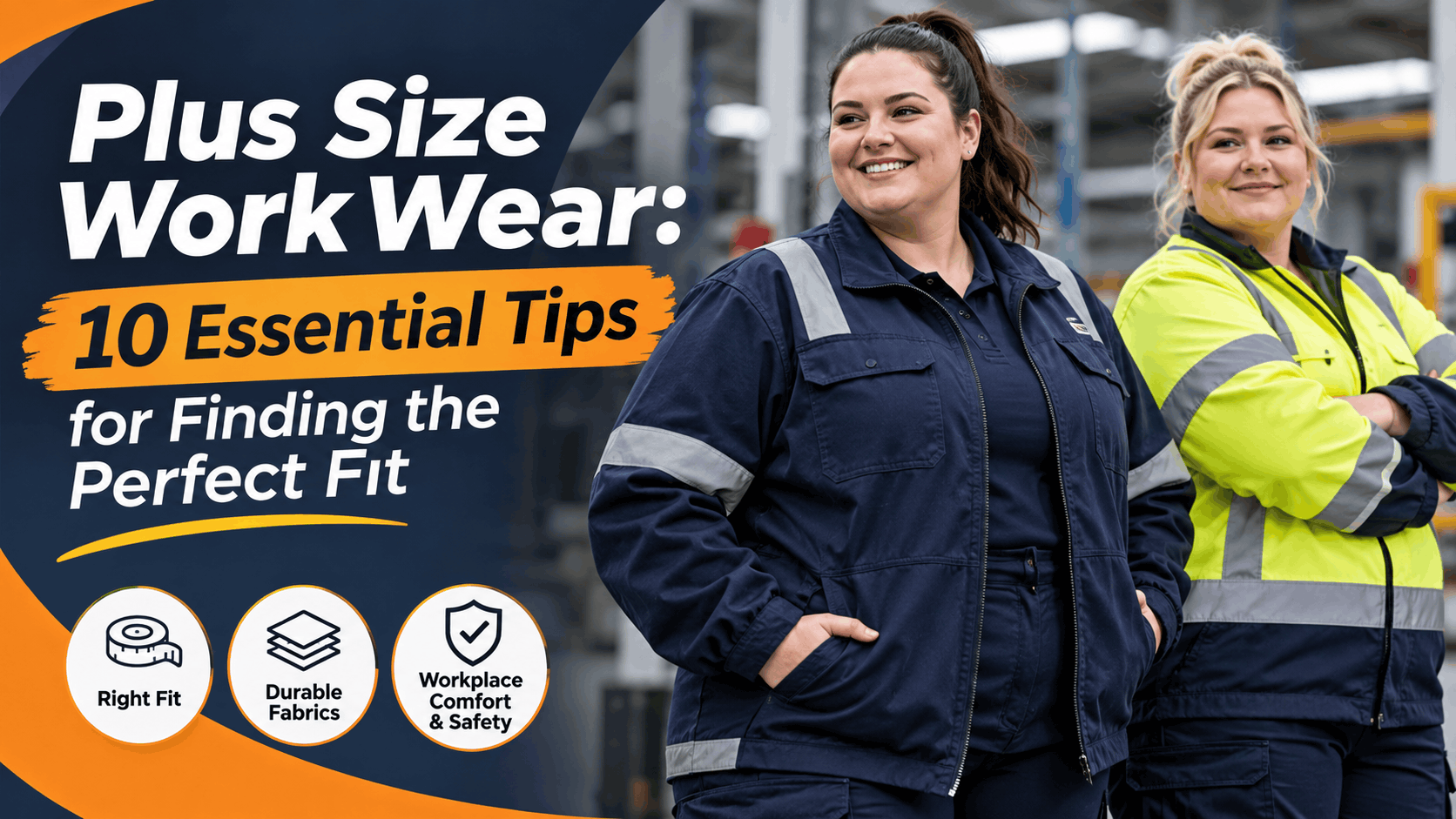
Finding comfortable, durable, and properly fitted plus size work wear can be challenging, especially when standard clothing sizes fail to accommodate different body shapes. Whether you work in construction, manufacturing, warehousing, or another demanding environment, your clothing should support movement without compromising comfort or safety.
However, poorly fitted workwear can restrict mobility, cause discomfort, and interfere with everyday tasks. Therefore, choosing suitable fabrics, accurate sizes, and practical designs is essential.
This guide explores ten important tips for selecting plus size workwear that combines functionality, durability, and comfort. Additionally, it explains how to evaluate workplace safety requirements and choose suitable clothing for different working conditions across the UK.
1. Understand Your Body Measurements Before Buying
The first step towards finding comfortable plus size work wear is understanding your actual body measurements.
Clothing sizes vary between manufacturers. For example, one supplier’s size 20 may fit differently from another supplier’s size 20. Therefore, relying exclusively on familiar clothing labels can lead to disappointing purchases.
Before ordering, measure the following areas:
- Waist: Measure around your natural waistline without pulling the tape too tightly.
- Hips: Measure around the widest part of your hips.
- Shoulders: Check shoulder width when choosing jackets or work shirts.
Additionally, compare your measurements against the manufacturer’s specific size chart.
Practical tip: Take measurements while wearing lightweight clothing and check whether the size guide uses body measurements or finished garment dimensions.
2. Choose Plus Size Work Wear That Allows Easy Movement
Workwear should accommodate the movements required throughout your working day.
For instance, warehouse employees frequently bend, lift, and reach, while construction workers may kneel, climb, or crouch.
Therefore, properly designed plus size work wear should provide enough room around the shoulders, waist, hips, and thighs.
Look for features such as articulated knees, gusseted crotches, adjustable waistbands, and strategically placed stretch panels.
Moreover, try performing typical workplace movements when testing a garment. If your trousers pull uncomfortably when kneeling or your jacket restricts overhead movement, consider a different fit.
A larger size alone is not always the solution. Sometimes, a different garment cut provides significantly better comfort.
3. Select Breathable and Durable Workwear Fabrics
Fabric selection influences comfort, durability, temperature regulation, and maintenance.
Different working environments require different materials. Consequently, choosing fabric solely by appearance or thickness may result in unsuitable clothing.
| Fabric | Main advantage | Consideration |
|---|---|---|
| Cotton | Soft and generally breathable | Can retain moisture |
| Polyester blends | Often durable and crease-resistant | Breathability varies |
| Cotton-elastane blends | Improved flexibility | Stretch and recovery vary |
| Ripstop fabric | Designed to resist further tearing | Not automatically protective against workplace hazards |
For physically demanding indoor jobs, breathable fabrics may help improve comfort. Meanwhile, outdoor work may require weather-resistant layers.
However, ordinary fabric properties do not establish PPE suitability. Where protective clothing is required, check its documented performance against the relevant workplace hazards.
4. Find Work Wear Trousers That Fit Properly
Choosing suitable work wear trousers is particularly important because uncomfortable trousers can affect movement throughout an entire shift.
A good pair should fit securely around the waist without excessive pressure. Additionally, there should be enough space around the hips and thighs for bending and kneeling.
Consider these features when comparing workwear trousers:
- Adjustable or elasticated waistbands for a flexible fit.
- Reinforced seams in high-stress areas.
- Appropriate leg lengths to prevent dragging.
- Secure pockets for everyday tools and accessories.
- Knee reinforcement where frequent kneeling is required.
Furthermore, check the fit while sitting and crouching rather than evaluating the garment only while standing.
For example, someone working in a warehouse may prefer flexible cargo trousers, whereas an outdoor maintenance worker may need more weather-resistant clothing.
5. Prioritise Workplace Safety and Appropriate Protection
Comfort matters, but workplace safety must remain a priority.
In the UK, employers must assess workplace risks and provide suitable personal protective equipment where required under applicable regulations.
According to the Health and Safety Executive (HSE), PPE must be suitable for the risks involved and fit the wearer correctly.
Importantly, ordinary work clothing and certified PPE are not necessarily the same.
For example, a durable jacket is not automatically suitable for high-visibility work, chemical exposure, or flame-related hazards.
When purchasing plus size safety clothing, check the relevant product documentation and applicable standards, such as EN ISO 20471 for high-visibility clothing where appropriate.
Also, ensure the garment maintains its intended protective coverage during normal workplace movements.
6. Explore Comfortable and Practical Women Work Wear
Finding suitable women work wear can be particularly challenging when clothing ranges rely on limited sizing or proportions.
For example, a unisex jacket may provide enough room around the chest but feel unnecessarily wide across the shoulders.
Similarly, standard trousers may fit around the waist but restrict movement around the hips.
Therefore, women should consider clothing with adjustable features, appropriate garment proportions, and inclusive sizing.
Useful options include shaped work jackets, flexible trousers, adjustable waistbands, and practical layering garments.
However, fit preferences differ between individuals. The most suitable choice is the garment that supports the worker’s body shape, job requirements, and comfort.
7. Understand What to Look for in Womens Work Wear UK
When searching online for womens work wear uk, pay attention to more than the advertised clothing size.
UK retailers and manufacturers may use different measurement systems and garment cuts. As a result, checking actual measurements is more reliable than assuming a particular size will fit consistently.
Before purchasing, evaluate:
- The supplier’s UK size conversion information.
- Available waist, hip, chest, and inseam measurements.
- Fabric composition and care instructions.
- Adjustable features and garment construction.
- Relevant safety specifications, where applicable.
- Returns and exchange conditions.
Additionally, look for detailed product photographs that show garment shape and practical features.
For workers who require protective clothing, confirm that the chosen size and design are suitable for the intended workplace application.
8. Consider Seasonal and Weather Conditions
Working conditions can change significantly throughout the year. Therefore, plus size work wear should be selected with temperature, ventilation, and weather exposure in mind.
During warmer months, lightweight and breathable clothing can help improve comfort.
Meanwhile, colder environments may require insulated jackets, thermal base layers, and weather-resistant outer garments.
Layering is often useful because it allows workers to adjust clothing as temperatures change.
However, additional layers must not interfere with required PPE, visibility, or safe equipment operation.
For example, an oversized outer jacket could create snagging risks around moving machinery. Always follow workplace clothing requirements when selecting garments.
9. Evaluate Durability, Stitching, and Maintenance Requirements Of Plus Size Work Wear
Quality workwear should withstand the demands of regular use and appropriate cleaning.
Before purchasing, examine the stitching around pockets, knees, shoulders, and other high-stress areas.
Reinforced seams and durable fabric construction can improve garment longevity. However, durability also depends on the working environment and how the clothing is maintained.
Check the care label for washing temperatures, drying instructions, and other restrictions.
Additionally, inspect garments regularly for damaged seams, excessive wear, or reduced protective performance.
Although a cheaper garment may seem attractive initially, a well-constructed alternative can offer better long-term value when it remains suitable for repeated use.
10. Choose Reliable Workwear Suppliers and Compare Size Guides
Selecting a reliable supplier is just as important as choosing the correct clothing.
A trustworthy workwear supplier should provide clear sizing information, accurate product descriptions, and accessible purchasing policies.
When comparing suppliers, consider garment measurements, fabric specifications, delivery information, and return conditions.
Additionally, read relevant customer feedback where available, particularly comments discussing sizing consistency and durability.
For UK customers researching workwear, MT Sports UK is one website to explore when comparing workwear options.
Visit MT Sports UK to review its current product information and available clothing categories. Always confirm the availability of specific plus-size garments before ordering.
Frequently Asked Questions About Plus Size Work Wear
A. Measure your chest, waist, hips, and inseam, then compare these measurements with the manufacturer’s size chart. Additionally, consider the garment’s cut and intended use. The correct size should allow comfortable movement without excessive looseness or restrictions during normal working activities.
A. The best fabric depends on your working environment. Cotton blends can provide comfort and breathability, while fabrics containing elastane may offer additional flexibility. For demanding jobs, prioritise suitable durability, moisture management, and any protective performance required by your workplace risk assessment.
A. Plus size work wear trousers should sit comfortably around the waist and provide enough room through the hips, thighs, and knees. They should allow bending, sitting, and crouching without excessive pulling. Additionally, the leg length should prevent unnecessary dragging or tripping hazards.
A. Women should compare garment measurements, fit, fabric composition, and practical features rather than relying exclusively on standard UK sizes. When evaluating womens work wear uk, also check adjustable features, workplace suitability, and returns policies to make a more informed purchasing decision.
A. Start by comparing established UK workwear suppliers that publish detailed size charts, fabric specifications, and product information. You can also explore MT Sports UK for its current workwear offerings. Before purchasing, verify the required sizes, product availability, and any necessary protective certifications.
Conclusion On Plus Size Work Wear
Choosing the right plus size work wear involves more than finding clothing with a larger size label. Proper measurements, comfortable fabrics, unrestricted movement, durable construction, and workplace suitability all contribute to a better working experience.
Moreover, comparing size guides and checking safety requirements can help prevent unsuitable purchases.
Whether you need practical work wear trousers, inclusive women’s workwear, or durable clothing for demanding environments, prioritise fit and function over appearance alone.
Explore the workwear options available through MT Sports UK and select clothing that meets your individual comfort and workplace requirements.