
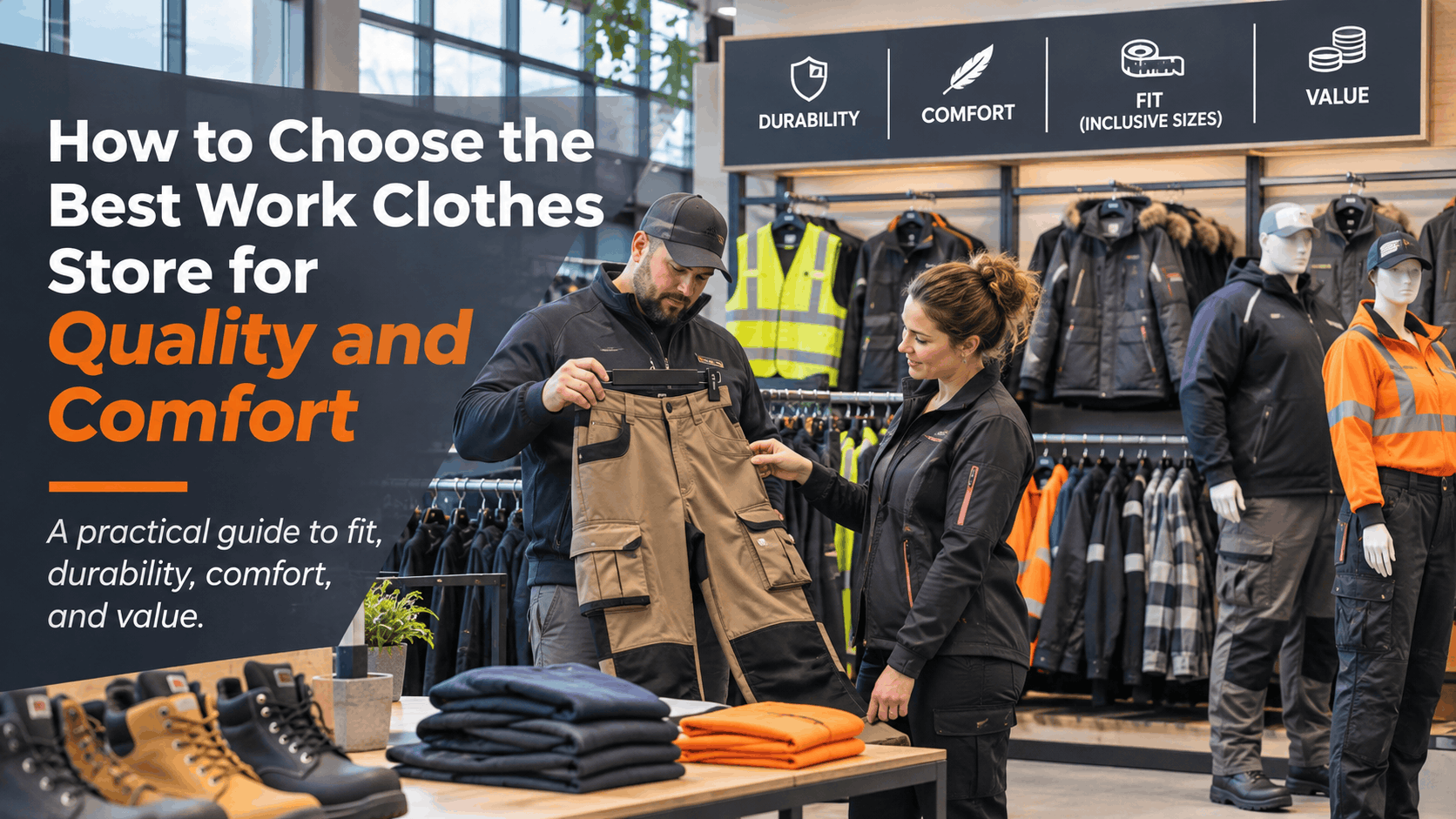
Work clothes can look tough and comfortable in product photos but tell a different story after a few shifts. Trousers that restrict movement, shirts that lose their shape, and jackets that fail to keep out the cold can turn a normal working day into a frustrating experience. Choosing the right work clothes store means looking beyond appearance and price. A reliable retailer should offer durable materials, comfortable fits, accurate sizing, suitable safety options, transparent pricing, and straightforward returns.
Whether you work in construction, maintenance, warehousing, or an outdoor trade, the right clothing should support your daily tasks without creating unnecessary discomfort or frequent replacement costs.
What Should You Look for in a Reliable Work Clothes Store?
A reliable work clothes store makes it easy to understand what you are buying before you spend your money. Detailed product descriptions, accurate size charts, clear pricing, and reasonable return policies are important signs of a retailer that takes customer needs seriously.
Start by checking the information provided for individual garments. A product listing should explain the fabric composition, available sizes, useful features, and intended working conditions.
For example, a pair of work trousers described simply as “heavy-duty” tells you very little. A more useful description identifies the material, reinforced areas, pocket layout, and washing instructions.
Pay attention to these details:
- Fabric information: Look for materials suited to your working environment.
- Sizing guidance: Check actual garment measurements rather than relying on size labels alone.
- Customer feedback: Read reviews that discuss fit, comfort, and wear after washing.
- Returns and exchanges: Confirm whether unsuitable items can be returned or exchanged.
- Price transparency: Look for clear delivery charges and any additional costs.
A good retailer should also make it easy to ask questions about products. Clear answers about sizing, stock, and garment features can prevent an expensive mistake.
How to Check the Quality of Construction Work Clothes
Good construction work clothes should withstand regular movement, contact with rough surfaces, and repeated washing while remaining comfortable enough for demanding shifts.
Fabric is a useful starting point. Cotton-rich materials can feel comfortable against the skin, while polyester blends may offer improved shape retention and faster drying. Heavier fabrics can provide abrasion resistance, although extra weight does not automatically mean better quality.
Construction workers should also examine garment construction.
Look for reinforced stitching around pockets, knees, and other high-stress areas. Secure fastenings, strong belt loops, and practical pocket placement can make everyday tasks easier.
Movement matters just as much as strength. A maintenance worker regularly kneeling or reaching overhead may benefit from articulated knees, stretch panels, or a flexible waistband.
Consider the job itself before choosing a garment. Someone working indoors may need breathable clothing, while an outdoor tradesperson may require water resistance and additional weather protection.
Check washing instructions, too. Clothing that requires complicated care may be inconvenient for workers who need clean uniforms throughout the week.
Remember that durable everyday workwear is not automatically certified protective clothing. Where a job requires high-visibility garments, flame-resistant clothing, or other protection, check the applicable safety requirements and product certification.
Cheap Work Clothes vs. Quality Workwear: What Offers Better Value?
Cheap work clothes can be a sensible purchase when they provide the durability, comfort, and protection appropriate for the job. The important question is not simply how much an item costs, but how well it performs over time.
Consider two pairs of work trousers. One costs £18 and needs replacing after three months. Another costs £35 but remains usable for a full year.
Illustrative comparison, not a product performance claim.
| Work trousers | £18 pair | £35 pair |
|---|---|---|
| Initial price | £18 | £35 |
| Assumed usable life | 3 months | 12 months |
| Annual replacement cost | £72 | £35 |
The lower-priced option would cost more across the year under these assumptions.
This does not mean expensive clothing always lasts longer. Price alone cannot confirm quality.
To find affordable workwear, compare fabric specifications, stitching, care requirements, and customer feedback. Look for retailer promotions, multipack offers, and end-of-season discounts.
Prioritise essential features over decorative extras. For example, a warehouse worker may get more value from comfortable, hard-wearing trousers than from a costly jacket with features they rarely use.
Never reduce essential safety protection simply to save money.
Choosing Winter Work Clothes That Keep You Warm and Comfortable
Effective winter work clothes should protect against cold conditions while allowing moisture to escape and workers to move comfortably.
Wearing one extremely thick garment is not always the best solution. Layering often provides greater flexibility, particularly when tasks involve changing levels of physical activity.
A practical winter clothing system includes three layers:
- Base layer: Helps manage sweat and keeps damp fabric away from the skin.
- Insulating layer: Provides warmth through fleece, wool, or another suitable insulating material.
- Outer layer: Helps protect against wind and rain while allowing appropriate ventilation.
The correct combination depends on the working environment.
A construction worker exposed to wind and rain may need a weather-resistant jacket, while a warehouse employee moving between indoor and outdoor areas may prefer removable layers.
Look for adjustable cuffs, secure closures, comfortable collars, and enough room to bend and stretch.
Breathability is particularly important during physical work. Heavy insulation that causes excessive sweating can leave clothing damp and uncomfortable during rest periods.
For severe cold or prolonged exposure, check whether specialised protective clothing is required rather than relying on ordinary insulated garments.
Why Fit and Inclusive Sizing Should Influence Your Choice
Workwear should allow natural movement without being excessively tight, loose, or awkward. Poor fit can cause rubbing, restrict movement, and make everyday tasks more tiring.
A retailer with a broad size range is often better equipped to serve workers with different body shapes.
Finding Comfortable Plus Size Work Clothes
When shopping for plus size work clothes, look beyond the size label.
Check waist, hip, chest, and inseam measurements against the retailer’s chart. Where possible, compare measurements with a work garment that already fits comfortably.
Adjustable waistbands, suitable leg lengths, and well-positioned stretch panels can make a noticeable difference during long shifts.
Oversized garments are not always a good substitute for properly graded larger sizes. Excess fabric can catch on equipment, while poorly positioned seams may cause discomfort.
Choosing Women’s Construction Work Clothes
Women’s construction work clothes should provide the same practical durability and necessary protection as other construction garments, with sizing and cuts that support the intended wearer.
Unisex clothing may work for some people, but it can create problems with sleeve length, trouser fit, waist placement, and overall mobility.
Look for retailers offering women’s-specific sizing, useful pocket arrangements, appropriate garment lengths, and detailed measurements.
Before buying, check whether the clothing allows comfortable bending, reaching, climbing, and kneeling.
For protective garments, suitable fit is particularly important. Clothing must not interfere with the protection required for the task.
Inclusive sizing is more than a matter of choice. It helps workers find clothing that supports comfort, movement, and safe working practices.
How to Compare Work Clothes Stores Before Buying
The easiest way to compare workwear retailers is to evaluate the same type of garment across several stores rather than judging entire websites by their appearance.
Choose a product you genuinely need, such as durable cargo trousers or a waterproof work jacket, and compare the details side by side.
Consider the total purchasing cost. A retailer offering a slightly cheaper jacket may charge more for delivery or make exchanges difficult.
Stock availability also matters. A good price is less helpful if your required size is unavailable when you need it.
Use this simple buying checklist:
- Product details: Are fabric composition, features, and care instructions clearly explained?
- Fit: Are measurements and size charts available?
- Value: Does the price reflect useful features and expected performance?
- Delivery: Are shipping costs and estimated delivery dates transparent?
- Returns: Can you exchange an unsuitable size without unreasonable difficulty?
- Customer feedback: Do independent reviews describe consistent product quality and service?
Read negative reviews as carefully as positive ones. Repeated complaints about inaccurate sizing, weak stitching, or delayed refunds deserve attention.
If you are buying uniforms for an entire team, ask about size availability, repeat orders, and consistent product lines. Reordering identical garments becomes much easier when a retailer maintains dependable stock.
Common Mistakes to Avoid When Buying Work Clothes
Buying unsuitable workwear often comes down to a few avoidable decisions.
Choosing clothing based only on price is one of them. A cheap garment may become expensive if it needs constant replacement.
Other common mistakes include guessing sizes, ignoring washing instructions, and choosing clothing without considering the working environment.
Another important mistake is assuming all workwear offers protection against workplace hazards.
A comfortable jacket is not necessarily suitable protective equipment. Before purchasing safety-related garments, confirm the requirements with your employer or workplace safety representative.
Finally, check return conditions before ordering multiple items, particularly when purchasing unfamiliar brands or sizes.
Frequently Asked Questions
A. Look for specialist workwear retailers that offer inclusive size ranges, women’s-specific designs, detailed garment measurements, and clear exchange policies. Prioritise stores with practical fit information, suitable garment cuts, and clothing designed for the physical demands of your job.
A. Choose winter clothing that balances insulation, breathability, weather resistance, and movement. Look for comfortable base layers, suitable insulating garments, and protective outerwear. Consider outdoor temperatures, activity levels, and exposure to rain or wind before deciding how much warmth you need.
A. Compare materials, stitching, fit, and washing requirements before choosing the lowest price. Look for seasonal discounts, workwear bundles, and established product ranges. Prioritise essential features and consider replacement costs to find affordable garments that offer better long-term value.
A. A good work clothes store offers durable garments, accurate sizing information, clear product descriptions, fair pricing, and helpful customer support. It should also provide practical clothing for different working conditions, transparent delivery charges, and reasonable return policies that help customers make purchases confidently.
Final Thoughts: Choose Workwear That Works as Hard as You Do
The right workwear should make your working day easier, not create additional problems. Focus on durable fabrics, comfortable sizing, job-specific features, and realistic long-term costs.
Before placing an order, compare garment specifications, safety requirements, delivery charges, and returns. A dependable work clothes store helps you choose clothing that fits properly, performs reliably, and offers lasting value.