
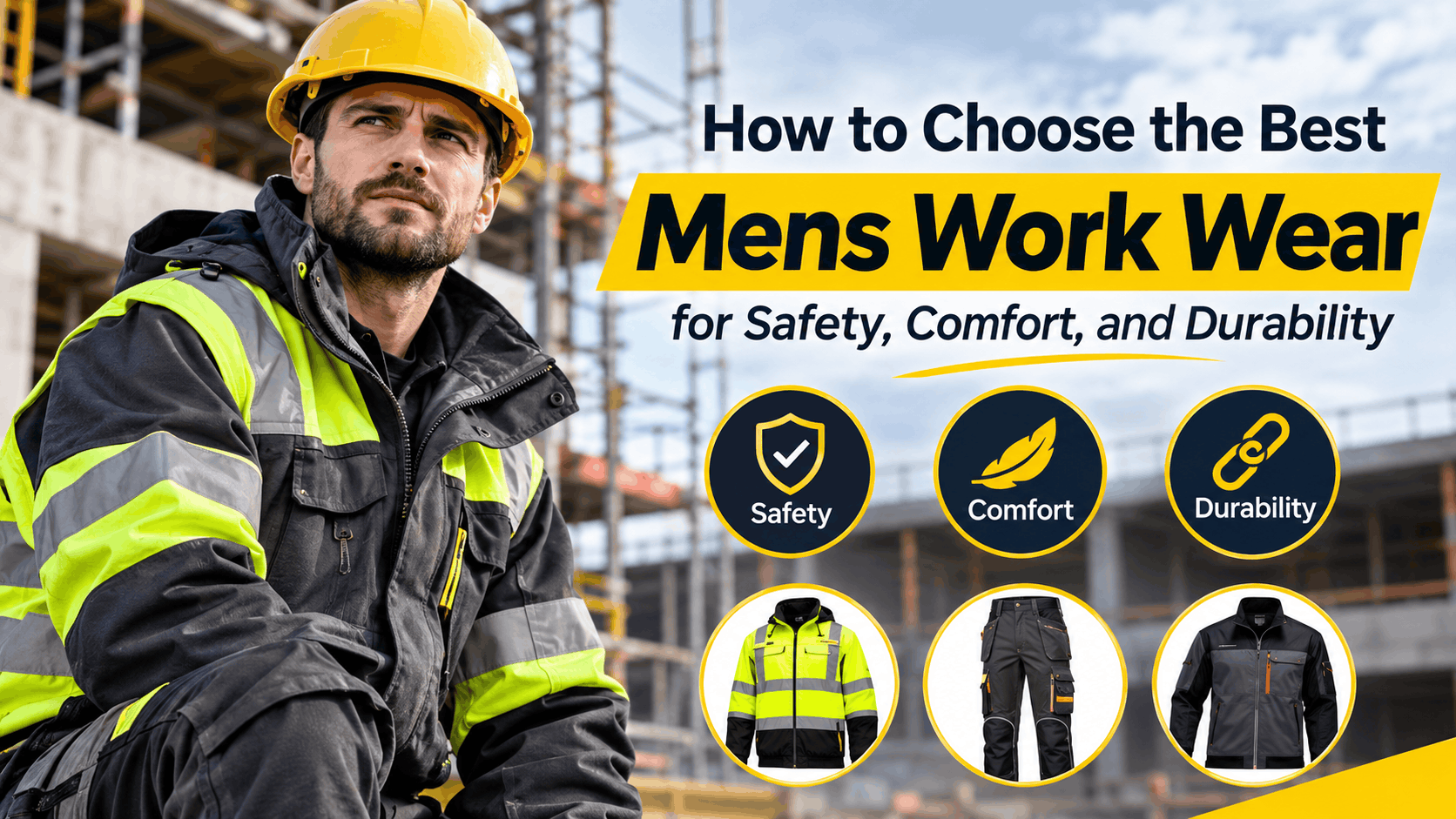
A long shift can feel even longer when your work trousers restrict movement, your jacket traps sweat, or your clothing offers little protection against the weather. Whether you’re working on a construction site, repairing machinery, or managing stock in a warehouse, the clothes you wear can make a noticeable difference to your working day. Choosing the right mens work wear isn’t simply about finding something tough-looking or affordable. Good workwear should suit your job, fit comfortably, withstand regular use, and provide appropriate protection where workplace hazards demand it.
This guide explains what to look for when buying workwear in the UK, from fabric quality and sizing to high-visibility clothing and long-term maintenance.
What Should You Look for When Buying Mens Work Wear?
The best mens work wear combines suitable materials, a comfortable fit, practical features, and protection appropriate to the job. Start by identifying workplace hazards, then consider how often you bend, lift, kneel, or work outdoors. Compare garment construction, care requirements, and durability before deciding which option offers the best value.
Different jobs place different demands on clothing. For example:
- Construction workers often benefit from abrasion-resistant trousers, reinforced knees, and practical tool pockets.
- Warehouse employees may prefer lightweight, breathable fabrics that allow repeated bending and lifting.
- Mechanics need durable clothing that tolerates regular contact with workshop surfaces and everyday grime.
- Electricians must select clothing appropriate to assessed electrical and thermal hazards, rather than assuming ordinary workwear provides protection.
- Outdoor workers may require weather-resistant layers, insulation, and suitable visibility features.
Consider the entire working day rather than just how a garment feels when first tried on. Clothing that seems comfortable while standing may become restrictive after several hours of kneeling or reaching overhead.
Choose Workwear That Meets Your Workplace Safety Needs
Not every workwear garment is personal protective equipment (PPE).
Ordinary work clothing is generally designed for durability, comfort, or a professional appearance. Personal protective equipment (PPE) is designed to protect workers from specific workplace hazards and must comply with relevant safety standards and regulations.
According to the UK’s Health and Safety Executive (HSE) guidance on PPE, employers should assess workplace risks and provide suitable protective equipment where those risks cannot be adequately controlled by other measures.
For example, employees working near moving vehicles may need certified high-visibility clothing. Workers exposed to heat, flames, or electrical hazards may require specialised protective garments.
Two standards worth understanding are:
- EN ISO 20471: Specifies requirements for high-visibility clothing intended to make the wearer visually conspicuous.
- EN ISO 13688: Covers general protective clothing requirements, including aspects of ergonomics, sizing, and information supplied by manufacturers. It does not establish protection against a particular hazard on its own.
Always check garment labels, manufacturer documentation, and workplace safety requirements before purchasing protective clothing.
Why Fabric Quality and Durability Matter
Fabric selection influences comfort, flexibility, washing performance, and how quickly workwear deteriorates.
The most suitable material depends on the tasks being performed and the conditions in which the garment will be worn.
| Fabric | Main advantages | Considerations |
|---|---|---|
| Cotton | Soft, breathable, comfortable | Can absorb moisture and dry slowly |
| Polyester | Quick-drying, crease-resistant | May retain heat and odours |
| Polyester-cotton blend | Balances comfort and durability | Performance varies by composition |
| Ripstop fabric | Designed to limit the spread of tears | Not automatically puncture-proof |
| Stretch fabric | Improves flexibility and movement | Stretch components may deteriorate with repeated heat exposure |
For example, a warehouse employee working indoors may prefer lightweight polyester-cotton trousers. Meanwhile, a tradesperson regularly kneeling on rough surfaces may benefit from heavier fabric with reinforced knee panels.
Look Beyond the Fabric Label
Fabric composition alone doesn’t determine garment quality. Pay attention to construction details such as reinforced stitching, strong zips, secure buttons, durable pocket edges, and abrasion-resistant panels.
Fabric weight also matters. Heavier material can provide additional resistance to everyday wear, although it may feel uncomfortable during physically demanding work in warmer conditions.
A well-constructed pair of workwear trousers may cost more initially but offer better long-term value if it lasts through repeated washing and regular use.
How to Choose a Comfortable Work Wear Jacket
A suitable work wear jacket should protect you from the conditions you encounter without making ordinary tasks unnecessarily difficult.
British weather can change quickly, particularly during autumn and winter. Someone working on an outdoor building project might start the morning in cold, damp conditions before becoming considerably warmer through physical activity.
Therefore, consider these features before buying:
- Insulation: Choose appropriate warmth for the season and activity level.
- Breathability: Look for fabrics and ventilation features that help manage perspiration.
- Weather protection: Understand that water-resistant clothing offers different protection from a properly waterproof garment.
- Adjustable cuffs: These can help reduce unwanted draughts and improve fit.
- Freedom of movement: Check that the jacket allows reaching, bending, and lifting.
- Practical pockets: Secure storage is useful, provided pockets do not interfere with safe working.
Layering can be particularly effective. A breathable base layer, insulating middle layer, and suitable outer jacket allow workers to adjust clothing as conditions change.
However, where protective clothing is required, ensure that layering does not compromise its intended performance.
When Is Hi Vis Work Wear Necessary?
Hi vis work wear helps make workers more noticeable in environments where poor visibility creates additional risks.
It is commonly used around moving vehicles, construction equipment, loading areas, roadworks, and certain industrial operations.
High-visibility clothing generally combines fluorescent background material with retroreflective material.
Fluorescent material helps improve visibility in daylight and certain low-light conditions. Retroreflective strips return light towards its source, making them particularly useful when illuminated by vehicle headlights.
Under EN ISO 20471, high-visibility garments are classified according to specified performance requirements, including minimum areas of visible materials.
The appropriate class should be selected through a workplace risk assessment.
Importantly, reflective strips alone do not make ordinary clothing compliant PPE. Nor does high-visibility clothing replace safe traffic management, adequate lighting, or other workplace controls.
For further guidance, consult the UK Health and Safety Executive and the relevant manufacturer documentation.
How to Find the Right Fit and Size
Even durable workwear becomes frustrating when it doesn’t fit correctly.
Trousers that are too tight may restrict squatting or climbing. Meanwhile, excessively loose garments can snag on equipment or interfere with safe movement.
Before ordering, measure your:
- Waist circumference
- Inside leg length
- Chest circumference
- Hip circumference, where relevant
Compare these measurements with the manufacturer’s specific size chart rather than relying on your usual clothing size.
Test the Fit Through Movement
When trying on workwear, sit down, squat, bend forward, raise your arms, and simulate typical working movements.
For trousers, check whether the waistband remains comfortable and the knees have sufficient flexibility.
For jackets, make sure the sleeves provide adequate coverage without restricting your arms.
If you regularly wear thermal layers underneath, account for that additional clothing when selecting your size.
Is There a Difference Between Mens Work Wear and Work Wear for Women?
The main differences between men’s workwear and work wear for women usually involve garment cuts, proportions, sizing systems, and fit options.
For example, some women’s trousers are designed with different waist-to-hip proportions, while jackets may offer alternative shoulder, chest, and waist shaping.
However, the correct choice should always depend on individual body measurements and working requirements.
When comparing women work wear with men’s clothing, prioritise practical fit, mobility, material performance, and appropriate protective certification.
A poorly fitted garment can cause discomfort regardless of who wears it. Likewise, protective clothing must provide the required level of protection regardless of gender.
Common Mistakes to Avoid When Buying Workwear
Buying workwear without considering everyday working conditions can lead to unnecessary expense and discomfort.
A. A low purchase price doesn’t always represent good value. Compare construction quality, expected wear, and replacement requirements.
A. Ordinary durable clothing may not protect against specific risks. Check workplace assessments before selecting safety clothing.
A. Incorrect sizing can restrict movement or create snagging hazards. Measure carefully and use the relevant size guide.
A. Workers who kneel frequently should consider reinforced knees and appropriate knee protection where required.
A. Heavy insulated clothing may cause overheating in summer, while lightweight clothing can leave outdoor workers uncomfortable in winter.
A. Professional-looking work clothing isn’t necessarily certified protective equipment. Check the manufacturer’s specifications and applicable standards.
How to Make Your Workwear Last Longer
Good maintenance helps preserve comfort, appearance, and garment performance.
Start by following the care label. Different fabrics may require different washing temperatures, drying methods, or detergents.
Inspect clothing regularly, especially around knees, pockets, seams, zips, and fastenings.
For protective garments, pay particular attention to damaged fabric, faded fluorescent material, and deteriorating reflective strips. Follow the manufacturer’s instructions for cleaning, inspection, and replacement.
Avoid continuing to use protective clothing once damage or wear compromises its required protection.
Store clean, dry garments in suitable conditions to help prevent avoidable deterioration.
Although proper maintenance cannot make clothing last indefinitely, it can reduce premature replacement and unnecessary purchasing costs.
Frequently Asked Questions About Mens Work Wear
A. There is no single best material for every job. Cotton offers comfort and breathability, while polyester-cotton blends can balance durability with everyday practicality. Ripstop fabrics may suit demanding environments, and stretch fabrics improve flexibility. Choose according to workplace conditions, movement requirements, laundering needs, and any identified protective requirements.
A. Measure your waist, chest, and inside leg, then compare the results with the manufacturer’s size chart. Try moving naturally while wearing the garment, including bending, sitting, and reaching. Allow room for necessary layers without creating excessive looseness. For protective clothing, ensure the fit maintains the required coverage.
A. Regular workwear is primarily designed for practical use, comfort, and durability. Certified high-visibility clothing is designed to improve wearer conspicuity and must meet relevant performance requirements. Hi vis work wear typically uses fluorescent and retroreflective materials. The appropriate garment class depends on workplace risks and visibility conditions.
A. Consider weather protection, insulation, breathability, durability, and freedom of movement. Check whether you need water-resistant or waterproof construction, and ensure the jacket accommodates appropriate layers. Practical pockets and adjustable closures can improve everyday usability. Any required protective features should also meet the relevant workplace specifications.
A. Workwear designed for women may use different sizing systems, garment cuts, and body proportions. However, safety and performance requirements should remain appropriate to the same workplace hazards. The most important considerations are accurate sizing, comfortable movement, suitable materials, and verified protective performance wherever PPE is required.
Final Thoughts — Choosing Workwear That Works as Hard as You Do
Good workwear should support your working day rather than make it more difficult.
Before purchasing, consider the hazards associated with your job, the conditions you’ll work in, how comfortably the garment fits, and whether its construction can withstand regular use.
Taking a little extra time to compare materials, sizing, and practical features can help you avoid unsuitable purchases.
If you’re looking for workwear options in the UK, explore the clothing range at MT Sports UK and compare available garments against your everyday working requirements.