
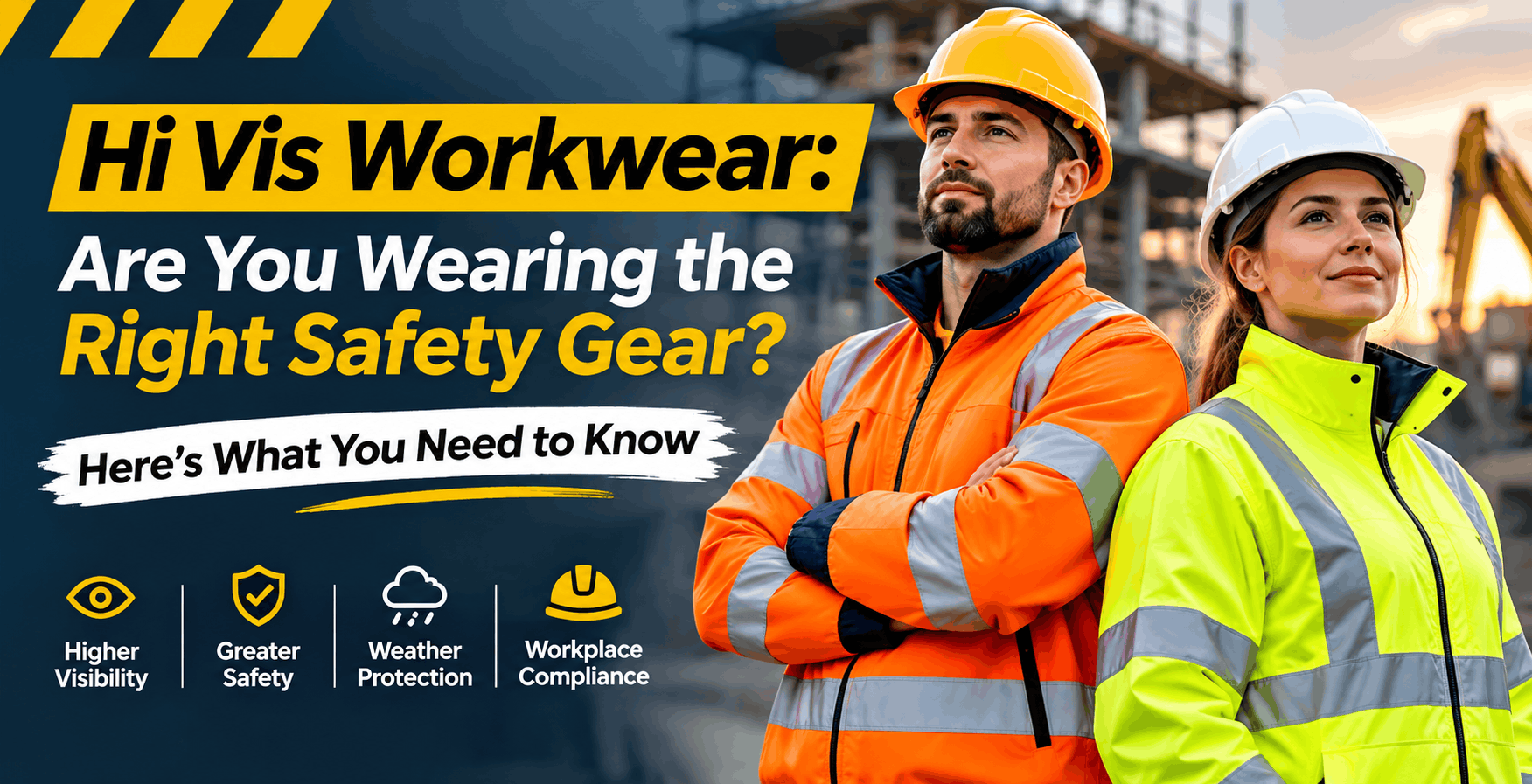
Workplace safety begins with visibility. Whether you work on a construction site, manage warehouse operations, or perform roadside maintenance, wearing the right protective clothing can make a significant difference. However, not every high-visibility garment provides the same protection. Therefore, understanding Hi Vis Workwear is essential for choosing safety clothing that suits your working environment.
Across the UK, workers regularly face hazards involving moving vehicles, heavy equipment, poor lighting, and unpredictable weather. Consequently, employers and employees must recognise the importance of appropriate high-visibility clothing.
Moreover, modern Hi Vis Workwear combines visibility, comfort, durability, and practical features. From lightweight vests to waterproof safety jackets, different garments serve different purposes.
This comprehensive guide explains everything you need to know about high-visibility clothing, including its benefits, types, safety classifications, UK regulations, and essential buying considerations.
What Is Hi Vis Workwear?
Hi Vis Workwear is protective clothing designed to make workers more noticeable in environments where reduced visibility creates safety risks. It typically combines fluorescent fabric with reflective materials to improve visibility during daylight and under artificial lighting.
Fluorescent colours help individuals stand out against their surroundings. Meanwhile, retroreflective strips return incoming light towards its source, making workers more noticeable when illuminated by vehicle headlights.
Common examples include high-visibility jackets, trousers, waistcoats, polo shirts, and coveralls.
Additionally, high-visibility clothing is widely used in construction, transport, logistics, road maintenance, and industrial operations.
According to the UK’s Health and Safety Executive (HSE), employers should select high-visibility clothing based on workplace risks, lighting conditions, job requirements, and individual fit. HSE
Therefore, choosing suitable garments requires more than simply selecting a bright colour.
Why Is Hi Vis Workwear Important for Workplace Safety?
High-visibility clothing helps make workers easier to identify, particularly in locations where vehicles, machinery, and pedestrians operate close together.
However, its effectiveness depends on the garment’s design, condition, fit, and suitability for the workplace.
1. Improves visibility in hazardous environments
Construction sites and industrial facilities often contain moving vehicles and complicated working areas. Consequently, workers may be difficult to notice against surrounding equipment.
Fluorescent clothing provides greater visual contrast during daylight. Furthermore, reflective strips improve recognition when illuminated in darker conditions.
2. Supports workplace safety requirements
UK workplace safety regulations require employers to assess hazards and provide suitable protective equipment when other controls cannot adequately manage the risks.
Therefore, appropriate workwear protective clothing helps employers meet their safety responsibilities while supporting safer working practices.
3. Offers protection in challenging weather
Outdoor workers frequently experience rain, cold temperatures, and strong winds.
Fortunately, certain high-visibility garments combine visibility features with waterproof materials, thermal insulation, and wind-resistant construction.
However, weather protection should be checked separately from visibility certification.
4. Encourages a professional safety culture
Consistent use of suitable protective clothing can reinforce workplace safety expectations.
Additionally, properly fitted and comfortable garments may encourage workers to wear their equipment correctly throughout their shifts.
Nevertheless, high-visibility clothing cannot replace traffic management, barriers, safe procedures, or other preventive measures.
Different Types of Hi Vis Workwear You Should Know
Various occupations require different clothing styles. Therefore, selecting the right garment involves considering working conditions, weather, and movement requirements.
1. High-Visibility Safety Vests
Safety vests are lightweight garments commonly worn over regular workwear. They are especially useful in warehouses, construction environments, and visitor-controlled industrial areas.
Moreover, their sleeveless design allows flexibility in warmer conditions. However, the required visibility class should always be confirmed.
2. High-Visibility Safety Jackets
Safety jackets combine visibility features with practical outdoor protection. Depending on the design, they may include waterproof fabric, adjustable cuffs, insulated linings, and reflective strips.
Consequently, they are suitable for road maintenance, construction, and outdoor industrial work.
3. High-Visibility Work Trousers
High-visibility trousers provide additional conspicuous material around the lower body.
Furthermore, some designs feature reinforced knees, functional pockets, and durable fabrics for demanding environments.
When worn with compatible upper-body garments, certain certified combinations can achieve a higher overall visibility class.
4. Hi Vis Polo Shirts and T-Shirts
High-visibility polo shirts offer a practical option for physically active workers, especially during warmer weather.
Additionally, breathable fabrics and moisture-management features can improve comfort during long shifts.
However, buyers should verify the garment’s certification instead of assuming that fluorescent fabric alone guarantees appropriate protection.
Understanding UK Hi Vis Workwear Safety Standards
When purchasing safety clothing ppe, understanding recognised performance standards is particularly important.
In the UK, BS EN ISO 20471:2013+A1:2016 is a key standard for high-visibility clothing intended for higher-risk situations.
The standard addresses fluorescent background materials, retroreflective performance, and garment design. Furthermore, it categorises certified clothing according to the minimum areas of visible material. Test methods and requirements+1
Three Classes of High-Visibility Clothing
| Safety class | Visibility level | General description |
|---|---|---|
| Class 1 | Lowest | Provides the smallest minimum area of high-visibility material |
| Class 2 | Intermediate | Offers a greater area of conspicuous material |
| Class 3 | Highest | Provides the greatest minimum area of high-visibility material |
Class 3 is particularly relevant for higher-risk situations requiring maximum conspicuity. Meanwhile, Class 2 garments may be appropriate for some workplace activities, depending on risk assessment findings.
Importantly, the correct class is determined by the job and its hazards, not simply by personal preference.
The HSE also highlights that clothing must remain suitable for weather conditions, lighting, and the specific task being performed. books.hse.gov.uk
How to Choose the Right Hi Vis Workwear
Selecting protective clothing involves balancing safety performance, durability, and comfort. Therefore, consider the following factors before making a purchase.
Check the safety certification
Firstly, examine product labels and supporting documentation.
Look for the relevant high-visibility standard, stated performance class, and appropriate conformity information.
Additionally, check whether your employer or industry requires particular colours or garment combinations.
Consider your working environment
Different workplaces present different hazards.
For example, a warehouse employee may require lightweight high-visibility clothing. In contrast, a roadside maintenance worker may need a higher visibility class alongside weather-resistant protection.
Therefore, conduct or consult a workplace risk assessment before choosing equipment.
Prioritise fit and comfort
Ill-fitting workwear can restrict movement, create discomfort, or interfere with other protective equipment.
Consequently, workers should select garments that allow comfortable movement while maintaining the intended visibility coverage.
Adjustable closures, suitable sizing, and practical fabric construction can improve everyday wearability.
Evaluate fabric quality
Durable materials are particularly important in physically demanding occupations.
Furthermore, breathable fabrics may be beneficial during warmer months, while insulated options can support comfort in winter.
Nevertheless, fabric comfort should never compromise the garment’s required safety performance.
Womens Hi Vis Workwear: Why Proper Fit Matters
The demand for womens hi vis workwear highlights an important workplace safety consideration: protective clothing should fit the person wearing it.
Historically, some workplaces have relied heavily on standard unisex sizing. However, these garments may not suit every body shape.
As a result, oversized jackets, excessively long sleeves, or poorly fitted trousers can create discomfort and interfere with movement.
Modern women’s workwear ranges can offer more suitable proportions without sacrificing practical features.
For example, properly designed high-visibility jackets may provide adjustable waist fittings, appropriate sleeve lengths, and comfortable shoulder construction.
Additionally, women’s high-visibility trousers may feature alternative waist and leg measurements.
When comparing womens hi vis workwear, buyers should prioritise certification, size availability, comfort, and compatibility with other safety equipment.
It is also useful to distinguish between protective clothing and general workplace fashion.
While women’s office workwear focuses primarily on professional appearance and everyday comfort, industrial women’s workwear may need to meet specific protective requirements.
Therefore, ordinary office jackets, trousers, or brightly coloured clothing should never be treated as substitutes for certified safety garments.
Hi Vis Workwear for Different UK Industries
Different industries experience different visibility-related risks. Consequently, suitable workwear varies according to the environment and activities involved.
Construction and building sites
Construction workers may operate alongside excavators, delivery vehicles, and moving machinery.
Therefore, high-visibility clothing can help make workers more noticeable.
Additionally, appropriate safety footwear, hard hats, and gloves may be necessary depending on the risks identified.
Warehouse and logistics operations
Warehouses frequently involve forklifts, loading equipment, and pedestrian movement.
Consequently, high-visibility garments can support worker recognition in busy operational areas.
However, loose-fitting clothing should be avoided near machinery where snagging risks exist.
Road maintenance and transport
Roadside work often involves moving traffic, changing weather, and reduced visibility.
Accordingly, workers may require higher-class clothing, reflective features, and waterproof safety jackets.
The precise requirements depend on the relevant road-work guidance, risk assessment, and working conditions.
Outdoor maintenance and utilities
Utility engineers, grounds maintenance personnel, and outdoor technicians may work in varied environments.
Therefore, weather-resistant high-visibility clothing can provide practical comfort alongside improved visibility.
Nevertheless, additional protective features may be necessary for electrical, chemical, or mechanical hazards.
Hi Vis Workwear vs Regular Workwear: What’s the Difference?
Although regular workwear and high-visibility clothing may look similar, they serve different primary purposes.
| Feature | Hi Vis Workwear | Regular Workwear |
|---|---|---|
| Main purpose | Improve wearer visibility | Provide general work-related comfort and durability |
| Fluorescent material | Common in certified garments | Not necessarily included |
| Reflective strips | Used to meet applicable visibility requirements | Usually optional |
| Safety certification | Relevant for certified protective clothing | Not always required |
| Typical use | Visibility-risk workplaces | Offices, retail, general work environments |
Importantly, workwear protective clothing is a broad category that includes garments designed for different hazards.
For instance, flame-resistant clothing, chemical-resistant coveralls, and high-visibility jackets each serve distinct protective functions.
Therefore, a garment labelled as workwear is not automatically suitable for every workplace hazard.
Common Mistakes People Make When Buying Hi Vis Workwear
Even experienced workers can overlook important details when selecting safety clothing.
One common mistake is choosing garments based solely on appearance. Although bright colours may look highly visible, they do not automatically confirm compliance with recognised safety standards.
Another mistake involves selecting the wrong size. Oversized clothing can interfere with machinery, while excessively tight garments may limit movement.
Furthermore, some buyers overlook weather protection. For instance, a lightweight vest may be uncomfortable during prolonged outdoor work in heavy rain.
Similarly, workers sometimes continue using worn or damaged reflective clothing.
As a result, the garment may no longer provide the intended visibility performance.
Finally, combining different protective garments without checking compatibility can reduce effectiveness. Therefore, every item should be assessed as part of the overall workwear system.
How to Maintain Hi Vis Workwear for Long-Term Use
Proper maintenance helps protective clothing remain functional throughout its service life.
Firstly, follow the manufacturer’s washing instructions carefully. Excessive temperatures, unsuitable detergents, or harsh cleaning methods may damage fluorescent and reflective materials.
Secondly, inspect clothing regularly for tears, fading, damaged seams, and worn reflective strips.
Additionally, keep garments reasonably clean, since accumulated dirt can obscure high-visibility materials.
Storage also matters. Therefore, keep protective clothing in clean, dry locations away from unnecessary exposure to damaging conditions.
Finally, replace garments when they can no longer provide the required protection or when manufacturer guidance indicates replacement is necessary.
The HSE states that employers are responsible for appropriate PPE maintenance, storage, and replacement. HSE
Is Hi Vis Workwear Mandatory in the UK?
High-visibility clothing is not automatically compulsory for every UK occupation. Instead, requirements depend on workplace hazards, risk assessments, and applicable industry rules.
Under the Personal Protective Equipment at Work Regulations 1992, as amended in 2022, employers must provide suitable PPE free of charge where it is necessary to address risks that cannot be adequately controlled through other measures.
Furthermore, the 2022 amendments extended relevant duties to certain workers beyond traditional employees. HSE
Therefore, employers should evaluate job-specific hazards, provide appropriate equipment, and ensure workers understand how to use it correctly.
Meanwhile, workers must follow applicable safety instructions and report defective equipment.
Frequently Asked Questions About Hi Vis Workwear
A. Hi Vis Workwear improves a person’s visibility in environments where moving vehicles, machinery, or poor lighting create risks. Fluorescent materials support daytime visibility, while reflective components help under illumination at night.
A. Class 3 clothing provides a greater minimum area of high-visibility material than Class 2. Consequently, it offers a higher classification of conspicuity. However, the appropriate class depends on workplace conditions and risk assessment requirements.
A. Yes, provided the garments fit correctly, meet the required safety standards, and remain suitable for the job. However, purpose-designed women’s high-visibility clothing may offer improved proportions and comfort.
A. No. Some safety jackets are designed primarily for visibility, while others include separate waterproof or weather-resistant features. Therefore, check the manufacturer’s specifications and relevant certification before purchasing.
A. There is no single replacement interval suitable for every garment. Instead, replacement depends on manufacturer guidance, cleaning history, wear, damage, and continued protective performance.
A. Yes, when the garment is appropriately certified and suitable for the conditions. Retroreflective materials help improve visibility under headlights and other directed light sources. However, the required clothing class and workplace safety controls must still be assessed.
Final Thoughts: Choosing the Right Hi Vis Workwear Matters
Choosing suitable Hi Vis Workwear is an important part of protecting workers in environments where visibility is critical. However, effective protection requires more than simply wearing a fluorescent jacket or vest.
The best approach involves selecting appropriately certified garments, assessing workplace hazards, checking fit, and maintaining protective clothing correctly.
Furthermore, businesses should recognise the different needs of men and women when selecting workplace safety equipment.
Whether you need breathable high-visibility polo shirts, durable work trousers, waterproof safety jackets, or womens hi vis workwear, prioritise protection and practical comfort.
Ultimately, investing in suitable high-visibility clothing supports a safer, more professional, and better-prepared working environment.