
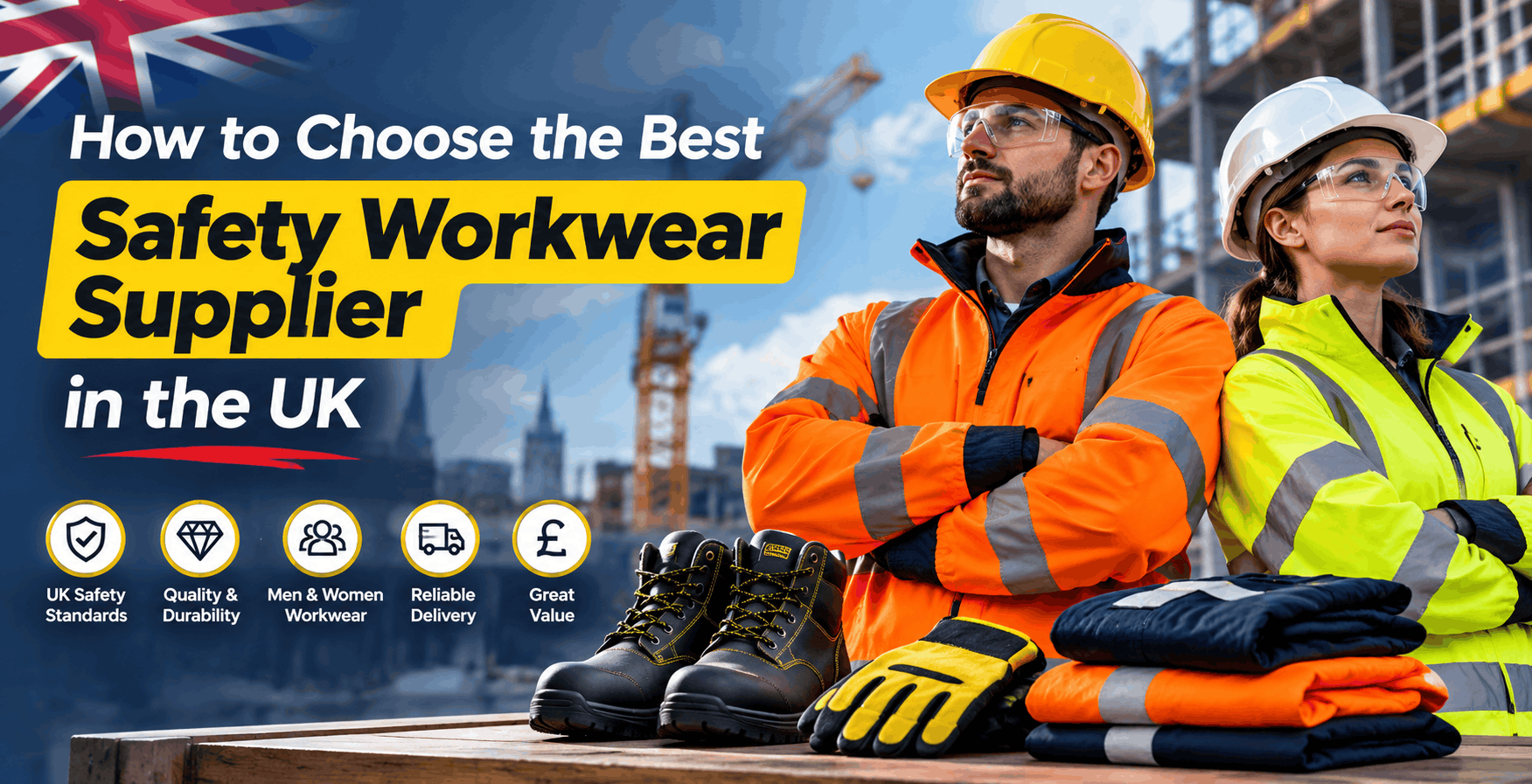
Choosing the right safety workwear supplier in the UK is essential for businesses that want to protect employees, maintain workplace safety and improve productivity. Whether you operate a construction company, warehouse, manufacturing facility or engineering business, reliable protective clothing helps reduce workplace risks.
However, with numerous suppliers available, finding one that offers quality, affordability, comfort and appropriate safety standards can be challenging. Moreover, purchasing unsuitable workwear can lead to unnecessary replacement costs, employee discomfort and inadequate protection.
Therefore, businesses should evaluate suppliers based on product quality, safety compliance, industry requirements and customer support rather than price alone.
This guide answers common questions about choosing safety workwear, finding trustworthy suppliers and purchasing suitable protective clothing for different working environments across the UK.
Key Takeaways
- Choose a supplier that provides products meeting applicable UK safety requirements.
- Prioritise durability, comfort and protection over the lowest price.
- Select safety workwear according to workplace hazards.
- Ensure suitable sizing and protective clothing options for women.
- Compare delivery services, bulk discounts and return policies.
- Purchase from suppliers offering clear product specifications and safety documentation.
What Is a Safety Workwear Supplier?
A safety workwear supplier is a business that provides protective clothing, footwear and workplace safety equipment to individuals and organisations. These suppliers help businesses source equipment suitable for their working conditions and industry requirements.
Typically, their product ranges include high-visibility clothing, protective trousers, safety boots, work gloves, waterproof jackets and personal protective equipment (PPE).
Furthermore, a reliable supplier helps customers understand product specifications and select suitable protection. As a result, businesses can make more informed purchasing decisions and avoid investing in unsuitable equipment.
1. How Do You Identify a Reliable Safety Workwear Supplier?
Finding a trustworthy supplier requires more than comparing product prices. Instead, businesses should evaluate the supplier’s reputation, product information and customer service.
A professional supplier should demonstrate the following qualities:
- Clearly documented product specifications
- Relevant safety certifications
- Competitive and transparent pricing
- Comprehensive size options
- Reliable delivery services
- Responsive customer support
- Transparent returns and exchange policies
Additionally, customer reviews can provide valuable insights into product durability and service reliability. However, businesses should also request samples before placing large orders.
Consequently, testing products beforehand can prevent expensive purchasing mistakes.
2. Does the Safety Workwear Meet UK Safety Standards?
One of the most important considerations when selecting a safety workwear supplier is regulatory compliance.
According to the UK’s Health and Safety Executive (HSE), employers must provide suitable PPE free of charge when workplace risk assessments identify that it is necessary. Furthermore, PPE should be used alongside appropriate measures to control workplace hazards. HSE+1
Therefore, buyers should familiarise themselves with relevant protective equipment standards.
| Safety standard | Purpose |
|---|---|
| EN ISO 20471 | High-visibility clothing |
| EN ISO 20345 | Safety footwear |
| EN 388 | Gloves protecting against mechanical risks |
| EN 343 | Protective clothing against rain |
| EN 397 | Industrial safety helmets |
| EN ISO 11612 | Clothing protecting against heat and flame |
| EN 511 | Protective gloves against cold |
Moreover, businesses should check applicable conformity markings, manufacturer instructions and declarations of conformity.
Most new workplace PPE placed on the Great Britain market must carry appropriate CE or UKCA markings. Northern Ireland has separate regulatory arrangements. HSE
3. How Can I Find the Best Safety Workwear Near Me?
Searching online for safety workwear near me is a convenient starting point. However, geographical proximity should not be the only deciding factor.
Local suppliers can offer convenient collections and opportunities to inspect products. Meanwhile, online suppliers may provide greater product variety, competitive prices and nationwide delivery.
Before choosing a supplier, compare delivery charges, estimated arrival dates, product availability and customer feedback.
Furthermore, consider whether the supplier can accommodate urgent replacement orders. For example, if an employee’s protective boots become damaged, quick access to suitable replacements can help minimise operational disruption.
Ultimately, the best supplier is one that consistently meets your business requirements, whether locally or online.
4. How Do You Choose the Right Safety Workwear Boots?
Foot injuries are a significant concern in environments involving heavy equipment, slippery surfaces and falling materials. Therefore, selecting appropriate safety workwear boots is essential.
Depending on the workplace, suitable footwear may require protective toe caps, penetration-resistant midsoles, slip-resistant outsoles or water resistance.
7752 Men Wide Fit Safety Boot | Steel Toe Cap | S3 SRC Rated – Black Hammer
Safety toe bootsProtection against impact and compression.
Waterproof bootsSuitable for selected wet working environments.
Scruffs Safety Trainers | Lightweight, Protective Footwear for Trades – Scruffs Workwear
Safety trainersSuitable for certain indoor working environments.
Additionally, comfort should never be overlooked. Employees working extended shifts need footwear that fits correctly and supports comfortable movement.
However, not every safety boot protects against every hazard. Consequently, businesses should match footwear specifications to their workplace risk assessments.
5. What Safety Workwear Gloves Should Employees Use?
Choosing suitable safety workwear gloves depends on the materials, equipment and hazards employees encounter during their daily responsibilities.
For instance, warehouse employees handling rough materials may require abrasion-resistant gloves. Meanwhile, workers handling sharp components may require gloves with appropriate cut resistance.
| Glove type | Common application |
|---|---|
| Cut-resistant gloves | Handling sharp materials |
| Thermal gloves | Cold working environments |
| Chemical-resistant gloves | Handling specified chemicals |
| Grip gloves | Material handling |
| Heat-resistant gloves | Selected high-temperature tasks |
| Disposable protective gloves | Suitable hygiene-related tasks |
Nevertheless, gloves must be selected carefully because no single material protects against every chemical or workplace hazard. Furthermore, gloves can create entanglement risks around certain machinery. HSE+1
Therefore, a knowledgeable safety workwear supplier should provide detailed information about protection levels and intended applications.
6. Why Is Suitable Work Wear for Women Important?
Workplace protection should accommodate employees of different body shapes and sizes. However, traditionally designed workwear may not always provide an appropriate fit for female workers.
Consequently, businesses should choose suppliers offering dedicated work wear for women rather than relying exclusively on unisex clothing.
Women’s safety footwear
Well-designed womens work wear should provide suitable proportions, comfortable movement and appropriate protection without compromising functionality.
Similarly, employers searching for “work wear women” should consider suppliers offering adjustable waistbands, multiple leg lengths and properly sized protective footwear.
Moreover, involving female employees in product trials can help businesses identify practical sizing concerns before making bulk purchases.
7. Which Safety Workwear Is Best for Different Industries?
Different industries experience different workplace risks. Therefore, purchasing identical protective clothing for every employee is not always appropriate.
| Industry | Potential workwear requirements |
|---|---|
| Construction | High-vis clothing, safety boots and helmets |
| Warehousing | Safety footwear, grip gloves and high-vis vests |
| Manufacturing | Protective overalls, gloves and safety footwear |
| Engineering | Task-specific protective clothing and footwear |
| Landscaping | Protective boots, gloves and weatherproof clothing |
| Logistics | High-vis jackets and suitable safety footwear |
| Agriculture | Waterproof clothing and task-specific protection |
Additionally, seasonal weather conditions should influence purchasing decisions. For example, outdoor workers may require waterproof jackets during rainy months and breathable protective garments during warmer periods.
As a result, selecting industry-specific safety workwear can improve employee comfort while supporting workplace protection.
8. Is Cheap Safety Workwear Worth Buying?
Although affordable workwear can help businesses manage expenses, purchasing solely based on price can create long-term problems.
For example, poorly manufactured garments may deteriorate quickly. Consequently, businesses may face repeated replacement expenses that exceed the initial savings.
Instead, compare the overall value of each product. Consider material quality, expected service life, maintenance requirements and suitability for the intended task.
Furthermore, ask your safety workwear supplier about bulk purchasing discounts. Ordering larger quantities may reduce procurement costs without compromising essential protection.
Ultimately, affordable workwear should deliver both reasonable pricing and dependable performance.
9. Should Businesses Buy Safety Workwear in Bulk?
Bulk purchasing can be particularly beneficial for organisations with large teams or recurring uniform requirements.
Additionally, it can simplify procurement, maintain consistent clothing specifications and improve stock availability.
However, businesses should confirm employee measurements and test sample products before committing to large orders.
Similarly, purchasing excessive quantities of unsuitable clothing can create unnecessary waste.
Therefore, maintain an accurate inventory, establish replacement schedules and negotiate purchasing arrangements that reflect your actual workforce requirements.
10. What Mistakes Should You Avoid When Choosing a Workwear Supplier?
Businesses frequently encounter procurement problems because they overlook essential details during supplier selection.
Common mistakes include choosing products purely on price, ignoring safety documentation, overlooking women’s sizing and failing to assess workplace hazards.
Furthermore, some businesses purchase ordinary clothing under the assumption that it provides certified protection.
However, standard uniforms and protective equipment serve different purposes. Therefore, buyers must confirm whether products offer the specific protection required.
Additionally, regularly inspect workwear for damage and follow manufacturer maintenance instructions.
Why Consider MT Sports for Safety Workwear in the UK?
Finding suitable work clothing becomes easier when you explore products according to your industry, budget and employee requirements.
MT Sports is a UK-focused workwear shopping destination that businesses and individual customers can explore when sourcing workplace clothing.
Whether you are purchasing everyday workwear or looking for protective clothing, begin by reviewing product descriptions, available sizes and relevant safety specifications.
Furthermore, contact the supplier directly to confirm product suitability, availability and bulk ordering arrangements before purchasing.
Frequently Asked Questions
Yes. Many UK retailers offer women’s protective trousers, jackets, footwear and other work clothing. Nevertheless, always check sizing charts and protection specifications before ordering.
Replacement depends on product condition, usage, manufacturer guidance and workplace risks. However, equipment that no longer provides adequate protection should be removed from use promptly.
Regular workwear provides practicality, comfort and professional appearance. In contrast, safety workwear is designed to protect against specified workplace hazards.
You can purchase safety workwear through local industrial clothing stores, specialist PPE retailers and online UK workwear suppliers. Moreover, online shopping allows you to compare products and prices conveniently.
Employers must provide appropriate PPE when required by workplace risk assessments. However, the specific protective clothing needed depends on the hazards involved.
The best supplier offers suitable products, verifiable safety documentation, competitive pricing, reliable delivery and responsive customer support. Additionally, its product range should match your workplace requirements.
Final Thoughts
Choosing the best safety workwear supplier in the UK requires careful consideration of product quality, regulatory compliance, employee comfort and long-term value.
Furthermore, purchasing appropriate protective clothing helps businesses support employee safety while reducing unnecessary replacement costs.
Whether you need safety workwear boots, protective gloves, high-visibility jackets or womens work wear, always prioritise suitability over price alone.
Explore MT Sports today to discover workwear options for your professional requirements and make more informed purchasing decisions.