
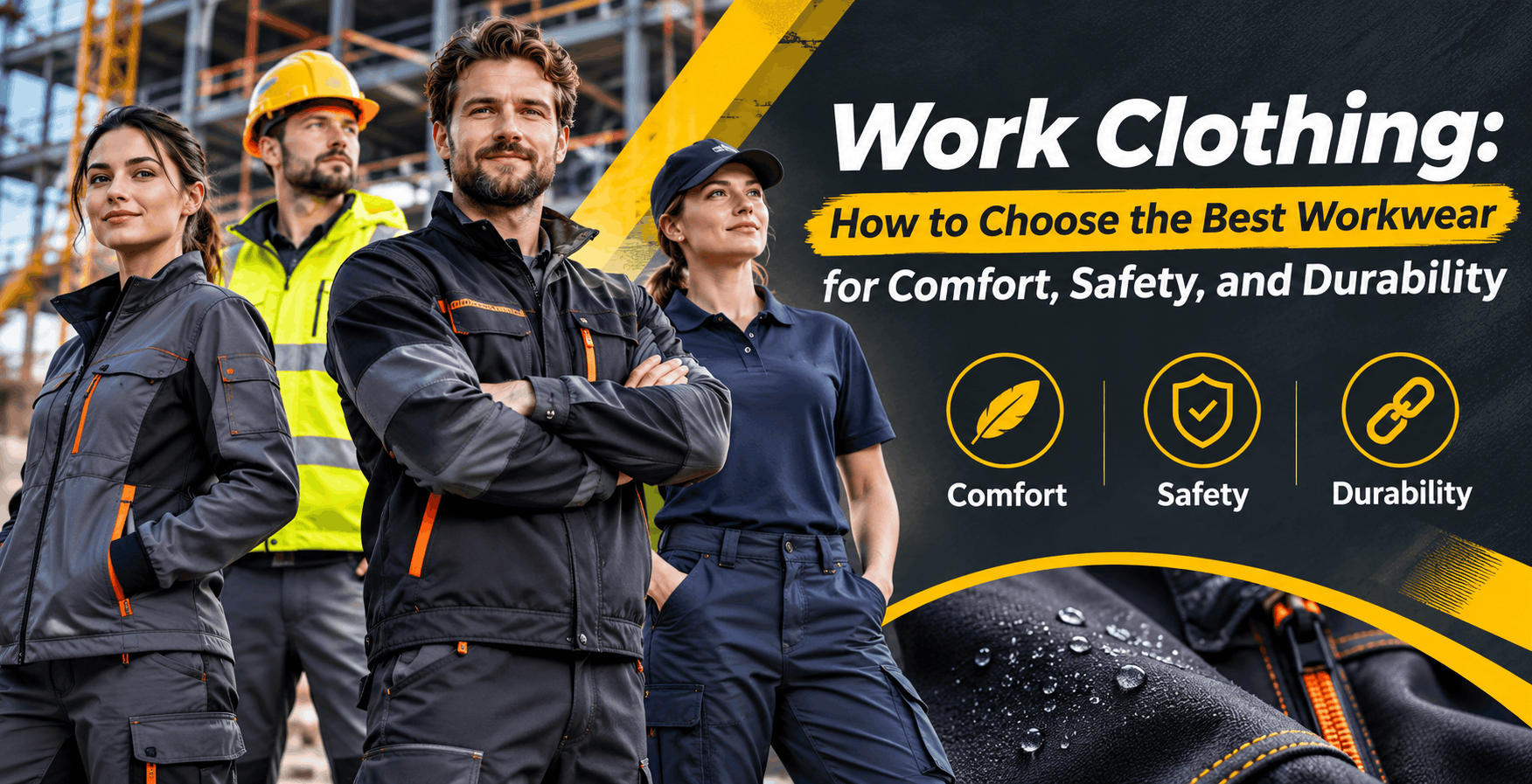
A pair of work trousers that tears after a few weeks, a jacket that restricts movement, or a uniform that becomes uncomfortable halfway through a shift can make an already demanding job harder. Choosing the right work clothing is about more than looking professional. Workers need garments that fit properly, withstand regular use, suit their working environment, and provide the right level of comfort throughout the day.
For construction workers, warehouse employees, tradespeople, and business owners purchasing uniforms, poor clothing choices can lead to unnecessary replacement costs and practical difficulties.
So, how do you find workwear that performs without overspending?
This guide explains how to compare fabrics, check durability, choose suitable sizes, understand workplace safety requirements, and select clothing that delivers dependable everyday value.
What Is Work Clothing, and Why Does It Matter?
Work clothing refers to garments designed or selected for specific jobs, working environments, and professional activities. It includes work trousers, jackets, shirts, uniforms, and protective garments. Good workwear supports comfort, movement, and durability, but ordinary clothing does not automatically protect against workplace hazards or qualify as certified personal protective equipment (PPE).
There are four important categories:
- Everyday work clothing: Practical shirts, trousers, and jackets suitable for general duties.
- Professional uniforms: Coordinated garments that create a consistent appearance for employees.
- Protective workwear: Clothing intended to protect against specified hazards.
- Personal protective equipment (PPE): Equipment, including suitable protective clothing, designed to reduce identified workplace risks.
The distinction matters because a durable jacket is not necessarily flame-resistant, and a brightly coloured shirt is not automatically compliant high-visibility clothing.
How to Choose the Best Work Clothing for Your Job
The best workwear combines suitable materials, comfortable sizing, practical features, and durability. However, different jobs require different clothing.
1. Choose Fabrics That Match Your Working Conditions
Fabric choice affects breathability, drying time, comfort, maintenance, and resistance to daily wear.
| Fabric | Main Advantages | Potential Limitations |
|---|---|---|
| Cotton | Breathable, soft, comfortable against skin | Can retain moisture and dry slowly |
| Polyester | Quick-drying, relatively easy to maintain | May feel less breathable depending on construction |
| Polyester-cotton blend | Balances comfort, durability, and easy care | Performance varies with blend ratio |
| Stretch fabric | Supports bending, kneeling, and reaching | Stretch fibres may deteriorate under unsuitable laundering |
| Reinforced woven fabric | Improves durability in high-wear areas | Can add weight or reduce flexibility |
For example, warehouse employees performing repetitive movements may prefer flexible polyester-cotton trousers, while outdoor workers might benefit from weather-resistant outer layers.
Cotton can feel comfortable in warm conditions, but it is not ideal for every wet or cold environment because it absorbs moisture.
Similarly, thicker material does not automatically mean better quality. Weave, stitching, fit, and intended use also influence performance.
Buying tip: Check the fabric composition and care instructions before purchasing rather than judging garments entirely by appearance.
2. Prioritize Fit, Comfort, and Freedom of Movement
Even expensive work apparel becomes frustrating when it fits poorly.
Clothing should allow workers to bend, squat, reach overhead, and walk comfortably without excessive pulling or bunching.
Before selecting a size, check:
- Waist, hip, chest, and inside-leg measurements.
- Sleeve length when stretching or reaching.
- Available room around the knees and shoulders.
- Adjustable waistbands and cuffs.
- Compatibility with necessary safety equipment.
A practical fitting test is to squat, kneel, and reach forward while wearing the garment.
If trousers pull tightly across the knees or a jacket rides up excessively, another size or cut may be more suitable.
However, avoid excessively loose garments around moving machinery, where dangling fabric can create an entanglement hazard.
3. Consider Durability and Construction Quality
Durable workwear should withstand the physical demands of its intended job and repeated laundering.
Pay particular attention to the areas that experience the most movement and friction.
Look for reinforced stitching, secure fasteners, strong pocket openings, and robust seams.
For heavy-duty work trousers, inspect the knees, seat, inner thighs, and pocket edges. These sections commonly experience repeated pressure and abrasion.
A useful comparison is between two trousers with similar fabric weights: one has basic seams, while the other includes reinforced high-stress areas and secure pocket construction.
The second may offer better practical durability, although actual performance depends on material quality and use.
Workers should also consider washing requirements. Garments that are difficult to maintain may create unnecessary costs.
4. Check Workplace Safety Requirements
Comfortable work clothing is not necessarily suitable protective clothing.
Construction sites, manufacturing facilities, workshops, and transport environments may expose workers to moving vehicles, chemicals, sharp materials, heat, or machinery.
Before purchasing protective garments, identify the hazards associated with the job.
The UK’s Health and Safety Executive (HSE) explains that employers must assess workplace risks and provide appropriate PPE free of charge when it is necessary. PPE should be selected after considering more effective ways to control the hazards. HSE+1
For example, high-visibility workwear may be needed where workers operate near moving vehicles. The appropriate level of visibility depends on working conditions, lighting, and the assessed risks.
A fluorescent jacket alone should never be assumed to meet the necessary protective standard.
Safety tip: Check the relevant product specifications, conformity markings, and employer requirements before selecting safety clothing.
5. Match Workwear to Weather and Temperature
Working conditions change throughout the year, making seasonal suitability an important buying consideration.
Summer work clothing
Choose breathable fabrics, lightweight construction, and practical ventilation where appropriate. Avoid unnecessary layers that increase discomfort.
Winter work clothing
Use insulation and multiple compatible layers. Thermal base layers, suitable work jackets, and weather-resistant outerwear can help retain warmth without severely restricting movement.
Rainy conditions
Look for clothing designed to resist or prevent water penetration, depending on the exposure. Check whether seams, closures, and fabric construction provide the protection needed.
Indoor working environments
Breathable, flexible garments may be more useful than bulky outerwear, particularly in heated warehouses or production facilities.
For workers moving between indoor and outdoor environments, removable layers offer greater flexibility.
6. Balance Purchase Price With Long-Term Value
Affordable workwear can be a sensible choice, but the cheapest garment is not always the most economical.
Consider its useful life, laundering requirements, and replacement frequency.
For illustration, suppose one pair of trousers costs £15 and needs replacing every three months. Another costs £30 and lasts twelve months under the same working conditions.
The annual comparison would be:
- Budget trousers: £15 × 4 = £60.
- More durable trousers: £30 × 1 = £30.
These are hypothetical figures, not product testing results, but they demonstrate why purchase price alone can be misleading.
Choose garments based on overall value rather than the lowest initial cost.
Best Work Clothing for Different Industries
Work clothing requirements depend on the job, working environment, employer policies, and identified hazards.
| Industry | Recommended Clothing Features | Main Buying Consideration |
|---|---|---|
| Construction | Durable trousers, reinforced seams, suitable high-visibility garments | Safety assessment and abrasion resistance |
| Warehousing | Flexible, breathable clothing with practical pockets | Freedom of movement |
| Manufacturing | Task-appropriate fabrics and secure-fitting garments | Machinery and process-specific hazards |
| Outdoor Work | Weather-resistant jackets and suitable insulating layers | Rain, wind, and temperature |
| Hospitality | Comfortable, washable professional uniforms | Appearance, hygiene, and comfort |
For example, construction work clothing often needs reinforcement for frequent kneeling and contact with rough surfaces.
Meanwhile, a warehouse employee may benefit more from lightweight garments that allow continuous movement.
Industrial workwear should always be selected according to actual working conditions rather than a general industry label.
How Do You Choose the Right Work Clothing?
To choose the right work clothing, start by identifying your daily tasks and workplace hazards. Select fabrics suited to the temperature and physical workload, check measurements for comfortable movement, and inspect seams and fasteners for durability. Finally, compare care requirements, expected replacement costs, and any mandatory protective equipment specifications.
How to Choose Work Clothing for Women
Finding suitable work clothing for women should not mean compromising on practicality, durability, or protection.
Women working in construction, manufacturing, hospitality, and other industries need garments that fit their bodies and support their job requirements.
Well-designed work apparel for women should offer the same functional features expected from other professional workwear.
Choose the Right Fit
Women’s and unisex sizing can differ considerably.
Rather than choosing a smaller unisex size automatically, compare actual body measurements with the manufacturer’s sizing chart.
Adjustable waistbands, suitable hip measurements, and multiple leg lengths can improve comfort.
Look for Practical Features
Useful considerations include:
- Pockets positioned for convenient access.
- Adjustable work trousers.
- Jackets that allow comfortable shoulder movement.
- Suitable sleeve and trouser lengths.
- Fabrics appropriate for seasonal conditions.
For teams purchasing ladies work uniforms, consistent colour and presentation may matter, but appearance should never take priority over fit or safe working conditions.
Importantly, protective garments must fit the individual wearer correctly. HSE guidance specifically identifies size, fit, compatibility, and weight as considerations when selecting PPE. HSE
Common Work Clothing Buying Mistakes to Avoid
Poor purchasing decisions often create avoidable discomfort and replacement expenses.
1. Choosing clothing based only on price
Cheap garments may cost more over time if they require frequent replacement.
Solution: Compare construction quality, maintenance requirements, and expected useful life.
2. Ignoring sizing charts
Sizing can vary between manufacturers, even for garments with identical size labels.
Solution: Measure carefully and review the relevant size guide.
3. Selecting the wrong material
Heavy fabric may cause discomfort in warm conditions, while lightweight fabric may be unsuitable for demanding outdoor duties.
Solution: Match material characteristics to the actual work environment.
4. Overlooking safety requirements
Ordinary clothing cannot replace hazard-specific PPE.
Solution: Follow employer instructions and the workplace risk assessment.
5. Buying unsuitable seasonal clothing
A single jacket may not provide appropriate comfort throughout the year.
Solution: Choose compatible layers for changing temperatures.
6. Ignoring washing instructions
Incorrect laundering can damage fabrics, coatings, fasteners, and protective features.
Solution: Check care labels before purchasing and follow the manufacturer’s guidance.
How to Make Work Clothing Last Longer
Good maintenance helps preserve appearance, comfort, and garment performance.
Always check the manufacturer’s care guidelines before washing or drying your work clothing.
Wash garments at suitable temperatures and avoid detergents, bleach, or fabric treatments that could damage specific materials.
Inspect frequently worn clothing for loose seams, damaged zips, worn knees, and weakened fasteners.
Minor damage to ordinary work garments may be repairable, provided the repair does not compromise their intended function.
Rotating between multiple sets can also reduce repeated wear on the same clothing.
However, protective clothing requires additional care. Damaged PPE may no longer provide the protection originally intended, even if the damage appears minor.
HSE guidance requires employers to maintain, store, and replace PPE appropriately. Any cleaning, repair, or replacement should follow manufacturer instructions and workplace requirements. HSE+1
Where to Find Reliable Work Clothing in the UK
Choosing reliable workwear suppliers in the UK involves more than comparing product photographs.
Look for suppliers that provide clear descriptions of materials, sizes, construction features, intended uses, and ordering options.
For businesses purchasing uniforms, consistent sizing and accurate product information are particularly valuable.
MT Sports is one option for customers exploring workwear and industrial apparel.
Its website features workwear items including work trousers, jackets, gloves, and high-visibility clothing. Buyers should review individual product specifications and confirm suitability for their particular requirements. MT Sports
Explore the available workwear options at MT Sports and compare the garments based on fit, practical features, material construction, and intended working conditions.
Why Choosing the Right Work Clothing Makes a Difference
Choosing suitable work clothing plays an important role in maintaining comfort, safety, and productivity throughout the working day. For example, breathable fabrics help workers stay comfortable in warmer environments, while reinforced stitching improves durability in areas exposed to frequent wear and tear. Moreover, properly fitted workwear allows employees to bend, stretch, and move freely without unnecessary discomfort. In addition, selecting clothing according to seasonal conditions helps workers remain comfortable during both hot summers and cold winters.
Furthermore, high-quality work clothing can reduce the need for frequent replacements, making it a cost-effective option for businesses and individual workers. On the other hand, poorly fitted or unsuitable garments may restrict movement, wear out quickly, and create unnecessary discomfort during physically demanding tasks. As a result, choosing durable materials, practical designs, and appropriate sizes becomes essential for long-term satisfaction. Therefore, investing in reliable workwear from suppliers such as MT Sports can help workers balance everyday comfort, durability, and professional appearance. Ultimately, the right clothing supports better working conditions while providing practical value over time.
How Quality Work Clothing Improves Everyday Performance
Selecting the right work clothing can make daily tasks more comfortable while helping workers manage the physical demands of their jobs. Firstly, choosing breathable and flexible fabrics allows employees to move comfortably during long working hours. Additionally, garments with reinforced seams and durable stitching are better suited to activities involving frequent bending, lifting, and kneeling. For instance, construction workers may benefit from heavy-duty trousers with reinforced knees, whereas warehouse employees often prefer lightweight clothing that supports unrestricted movement.
Furthermore, weather conditions should influence workwear selection. During winter, insulated jackets and suitable layers help workers stay warm, while breathable materials and lightweight designs can improve comfort during warmer months. Similarly, properly fitted uniforms support a professional appearance without restricting everyday activities. However, selecting clothing based solely on appearance or price may lead to discomfort and unnecessary replacement expenses.
In addition, businesses purchasing uniforms for employees should consider fabric quality, sizing options, and maintenance requirements. Consequently, choosing garments that withstand regular washing and daily wear can help control long-term clothing expenses. More importantly, workplaces should ensure that protective clothing meets the specific safety requirements identified through their risk assessments. Ultimately, comparing materials, fit, durability, and functionality allows buyers to make more informed purchasing decisions. Therefore, exploring practical workwear options from MT Sports can be a useful starting point for workers and businesses seeking reliable clothing for their everyday needs.
How Proper Work Clothing Helps Reduce Discomfort and Improve Efficiency
Wearing suitable work clothing can make a noticeable difference in how comfortably employees perform their daily responsibilities. To begin with, properly designed workwear supports natural body movement, allowing workers to complete physically demanding tasks with fewer clothing-related restrictions. For example, flexible work trousers make bending and kneeling easier, while breathable shirts help manage discomfort in warm working environments. Moreover, garments made with durable materials are better suited to frequent use, particularly in industries where clothing experiences constant friction and movement.
Besides comfort, choosing appropriate workwear can help workers prepare for different workplace conditions. For instance, outdoor employees may require insulated jackets during colder months, whereas warehouse workers often benefit from lightweight clothing that allows better airflow. Similarly, construction workers should consider reinforced fabrics and practical pocket designs for everyday convenience. However, ordinary durable clothing should not be considered a replacement for protective equipment required by workplace safety assessments.
Another important factor is the long-term cost of maintaining employee uniforms. Although inexpensive garments may initially seem attractive, poor-quality materials can wear out quickly and require repeated replacement. In contrast, well-constructed clothing that withstands regular washing may provide better value over time. Furthermore, selecting easy-care fabrics can simplify laundry routines and help maintain a professional appearance.
Therefore, businesses and individual workers should compare fabric quality, sizing, comfort, and maintenance requirements before making a purchase. By doing so, they can avoid common buying mistakes and select garments that suit their working conditions. Ultimately, exploring suitable workwear options from MT Sports can help buyers make practical clothing choices that balance comfort, durability, functionality, and long-term value.
Frequently Asked Questions
The best fabric depends on the working environment. Cotton offers breathability and softness, while polyester is often quick-drying and easy to maintain. Polyester-cotton blends can provide a practical balance of comfort and durability. For physically demanding work, reinforced materials or suitable stretch fabrics may offer additional benefits.
Work clothing and workwear are commonly used interchangeably. Both describe garments worn for professional or occupational activities. However, workwear often refers specifically to purpose-designed items such as reinforced trousers, industrial uniforms, and protective garments. Neither term automatically means that clothing meets a particular workplace safety standard.
Choose durable work clothing by checking fabric construction, stitching, seam reinforcement, fasteners, and resistance to expected wear. Consider which parts of the garment experience frequent friction or movement. Review care instructions and choose materials suited to your job rather than assuming that heavier clothing will always last longer.
Look for accurate sizing, comfortable cuts, adjustable features, suitable pocket placement, and freedom of movement. Women’s and unisex sizes may fit differently, so measurements matter more than labels. Where protective clothing is required, ensure it fits correctly and provides the protection specified by the workplace risk assessment.
Construction workers often benefit from durable trousers, reinforced seams, practical pockets, and suitable weather-resistant layers. Depending on site risks, compliant high-visibility clothing and other PPE may also be required. Clothing should allow movement without creating unnecessary snagging hazards. Always follow site-specific safety requirements rather than relying on general product descriptions.
There is no universal replacement schedule for ordinary work clothing. Replace garments when damage, poor fit, excessive wear, or reduced functionality makes them unsuitable for their intended use. Protective clothing must be inspected and replaced according to the manufacturer’s instructions, employer requirements, and any signs that its protective performance has deteriorated.
You can explore workwear manufacturers, specialist suppliers, and online retailers serving the UK market. Compare fabric information, sizing options, product descriptions, and ordering arrangements before purchasing. MT Sports is another supplier worth exploring for professional workwear, with product information available through its website.
Conclusion — Choose Work Clothing That Works as Hard as You Do
The right work clothing should make demanding tasks easier to manage, not create additional discomfort or unnecessary expenses.
Start with the requirements of your job. Choose fabrics suited to your environment, prioritize comfortable sizing, inspect construction quality, and consider how garments will perform after repeated washing.
Most importantly, understand the difference between everyday workwear and protective equipment required for specific workplace hazards.
A carefully chosen garment can provide better long-term value than repeatedly replacing unsuitable clothing.
For workers, businesses, and uniform buyers comparing practical apparel options, explore the workwear selection at MT Sports and choose clothing that matches your working conditions, comfort needs, and budget.