
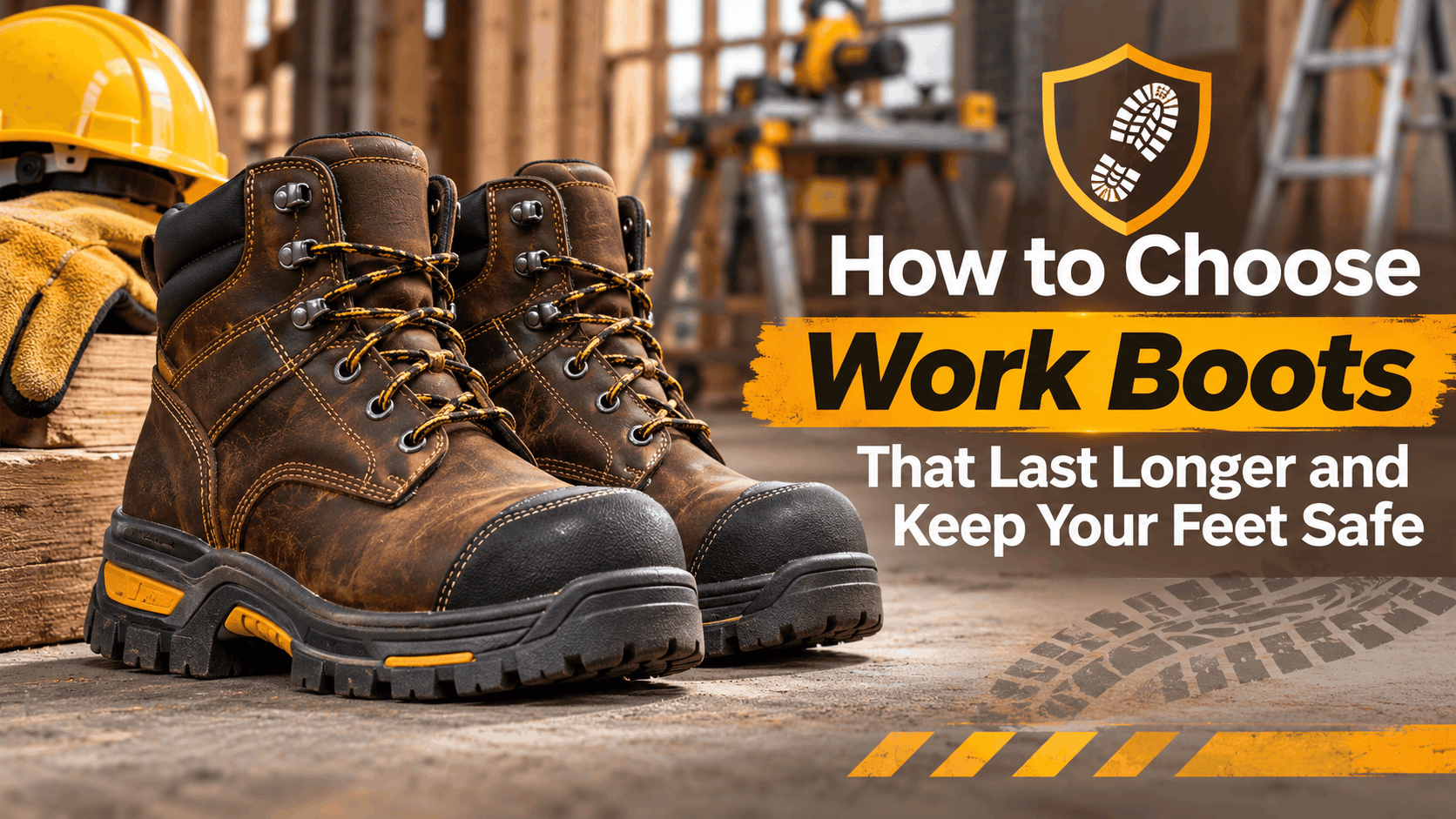
A pair of boots can look tough on the shelf yet become uncomfortable, lose grip, or start separating after months of demanding work. Worse, footwear chosen without considering workplace hazards may leave your feet inadequately protected.
Choosing the right work boots is therefore about much more than style or price. The right pair should match your working environment, fit correctly, provide the required protection, and remain comfortable throughout long shifts. Whether you work on a construction site, in a warehouse, outdoors, or around wet surfaces, this guide explains how to compare safety features, materials, fit, waterproofing, grip, and durability before spending your money.
Why Choosing the Right Work Boots Matters
Work footwear affects both safety and everyday performance. Workers may encounter falling objects, sharp materials, slippery floors, water, uneven ground, or electrical hazards. The correct footwear should be selected according to the hazards actually present.
In the US, OSHA requires protective footwear where employees face specified foot-injury hazards, and relevant footwear may need to comply with applicable consensus standards such as ASTM F2413. In the UK, HSE guidance similarly stresses selecting PPE according to workplace risks and lists options including protective-toe and penetration-resistant safety footwear.
Protection is only part of the decision. Poorly fitting mens work boots can make a long shift unnecessarily tiring, while unsuitable materials may wear prematurely in demanding conditions.
7 Essential Factors to Consider When Buying Work Boots
How Should You Choose Work Boots?
Choose work boots by first identifying your workplace hazards and required safety standard. Then compare toe protection, sole grip, materials, waterproofing, fit, cushioning, and construction quality. Prioritize footwear that fits properly and provides the specific protection your job requires rather than choosing solely by price, appearance, or brand.
1. Safety Toe Protection: Steel vs Composite Toe
Steel toe boots use a metal protective cap and are a familiar choice for jobs involving impact or compression hazards. They can be highly practical for construction, manufacturing, and other heavy-duty environments.
Composite toe boots use non-metallic materials. Depending on their certified design, they can offer required impact and compression protection while avoiding a metal toe cap.
Do not assume that having a safety toe automatically means a boot provides every other type of protection. Electrical-hazard performance, puncture resistance, waterproofing, and slip resistance are separate considerations. Always check the footwear’s markings and documentation against your workplace requirements.
2. Check Materials and Construction Quality
Leather remains popular for heavy-duty work boots for men because suitable types can provide a useful combination of durability, support, and abrasion resistance. Synthetic and textile materials can reduce weight and may improve flexibility or breathability.
Construction matters too. Examine stitching, the connection between the upper and sole, eyelets, toe areas, and other high-stress points. A premium-looking upper means little if the sole or seams fail quickly.
3. Balance Waterproofing and Breathability
If you regularly work outdoors, around standing water, or in persistent rain, waterproof work boots can be worth the additional investment.
Waterproof membranes and treated materials help limit moisture entering the boot, but moisture protection can sometimes reduce breathability. For dry indoor workplaces, a highly breathable boot may therefore be more comfortable than a heavily waterproof design.
4. Choose the Right Outsole Grip
Do not confuse a safety toe with slip protection. HSE specifically cautions that footwear described as safety footwear is not automatically non-slip footwear.
Consider the surfaces you actually walk on: polished warehouse floors, mud, wet concrete, oily workshop surfaces, or rough outdoor ground can require different outsole characteristics.
HSE recommends considering the surfaces and contaminants responsible for workplace slip risks when choosing slip-resistant footwear.
5. Get the Size, Fit, and Support Right
A boot that is too tight can create pressure points, while excessive movement inside an oversized boot can cause rubbing and instability.
Try work footwear with the type of socks you normally wear. Your toes should have appropriate room without your heel moving excessively, and the boot should feel secure around the midfoot.
Workers who spend most of the day standing or walking should also consider appropriate arch support and a supportive footbed.
6. Consider All-Day Comfort
Comfort becomes increasingly important during eight-, ten-, or twelve-hour shifts.
Look for suitable cushioning, flexibility, padding around the collar, manageable boot weight, and enough interior space for natural movement. The best work boots for men are not simply the toughest available; they need to balance protection with practical comfort for the intended job.
7. Consider Durability and Overall Value
Price alone is a poor measure of durability. Instead, examine the quality of the upper, outsole, stitching, hardware, and construction.
Established ranges such as Timberland work boots, for example, may be among the options shoppers compare, but brand recognition should never replace checking the specific model’s certification, fit, construction, and suitability for your workplace.
A boot that costs slightly more but fits properly and withstands your working conditions can offer better value than repeatedly replacing unsuitable footwear.
| Feature | Best suited to | What to check |
|---|---|---|
| Safety toe | Impact/compression hazards | Required certification and rating |
| Waterproof construction | Wet/outdoor work | Waterproofing plus breathability |
| Slip-resistant outsole | Wet or contaminated floors | Suitability for actual surface |
| Penetration resistance | Sharp-object hazards | Certified protective properties |
| Cushioned footbed | Long standing/walking shifts | Fit, support and comfort |
| Durable upper | Heavy everyday use | Material and construction quality |
How to Choose Work Boots for Different Jobs
Different jobs expose workers to different hazards, so there is no single boot specification suitable for everyone.
Construction workers may need protective toe caps, penetration resistance, durable uppers, strong grip, and possibly water resistance depending on site conditions.
Warehouse employees may prioritize safety-toe protection where required, lightweight construction, cushioning, and grip suited to smooth indoor floors.
Outdoor workers should consider changing weather, mud, uneven terrain, temperature, and prolonged moisture exposure. Waterproofing and aggressive tread may be more important.
For wet or slippery workplaces, choose footwear specifically suited to the floor surface and likely contaminants. HSE notes that slip-resistant footwear can help where floors cannot reliably be kept clean and dry.
Always follow your employer’s risk assessment and PPE requirements.
Waterproof Work Boots vs Regular Work Boots: Which Should You Buy?
The better choice depends mainly on moisture exposure.
| Waterproof Work Boots | Regular Work Boots |
|---|---|
| Better for frequent rain and wet ground | Suitable for many dry environments |
| Designed to reduce water penetration | May offer greater breathability |
| Useful for outdoor and exposed jobs | Often suitable for indoor work |
| Can feel warmer depending on construction | May manage heat better |
If wet feet are a regular problem, waterproofing can substantially improve practicality. If you spend every shift in a dry warehouse, however, breathability may deserve higher priority.
Remember that waterproofing does not automatically mean the footwear has certified safety-toe, electrical, penetration, or slip-resistant properties.
How to Make Your Work Boots Last Longer
Even well-made boots deteriorate faster when dirt, moisture, and damage are ignored. A simple maintenance routine can improve their usable life.
- Brush or wipe off mud and dirt after demanding shifts.
- Let wet boots dry naturally in a ventilated area rather than placing them against intense direct heat.
- Condition appropriate leather according to the manufacturer’s care instructions.
- Remove and dry insoles when appropriate after particularly wet use.
- Inspect tread, stitching, eyelets, uppers, and sole attachment regularly.
- Replace damaged protective footwear when deterioration could compromise safety.
If boots are part of your protective work wear, treat maintenance as a safety task rather than purely a cosmetic one.
Common Mistakes to Avoid When Buying Work Boots
One common mistake is ordering a familiar shoe size without checking the manufacturer’s fit guidance or trying the boots with work socks. Another is choosing appearance over workplace protection.
Do not assume that expensive footwear is automatically more durable, or that a steel toe makes a boot suitable for every hazardous workplace. Ignoring certification, grip, fit, or employer requirements can leave you with expensive footwear that is still wrong for the job.
Frequently Asked Questions
A .Check the manufacturer’s label, product documentation, and applicable certification markings. In the US, ASTM F2413 is an important standard for protective footwear; OSHA requires protective footwear in specified hazardous conditions. For UK workplaces, check applicable safety-footwear requirements, including relevant EN ISO 20345 specifications where appropriate, alongside your employer’s risk assessment and PPE requirements.
A .Some Timberland work boots may be designed for construction-related environments, but suitability depends on the specific model. Check its safety markings and features against the hazards and footwear requirements of your particular job rather than choosing based on brand alone.
A .Yes, when your job regularly exposes you to rain, mud, wet grass, puddles, or other moisture. For consistently dry indoor environments, breathable non-waterproof footwear may be more practical.
A .There is no reliable universal lifespan. Boot life depends on construction, materials, working conditions, frequency of use, body weight and gait, maintenance, moisture exposure, and surface abrasion. Replace protective footwear when wear or damage means it can no longer provide the required protection.
A .The best mens work boots are those matched to the wearer’s job hazards, required safety standards, foot shape, and working conditions. Look for proper fit, suitable toe protection where required, good outsole grip, supportive cushioning, and durable construction rather than relying on one brand or style.
Choose Protection Before Appearance
Good work boots should protect against the hazards of your job without making every shift uncomfortable. Start with the required safety features, then evaluate fit, grip, materials, waterproofing, support, construction, and maintenance needs.
Instead of buying the toughest-looking or most expensive pair, choose footwear designed for the conditions you actually face. Explore quality work boots and complementary work wear options that combine appropriate protection, practical comfort, and long-term value.