
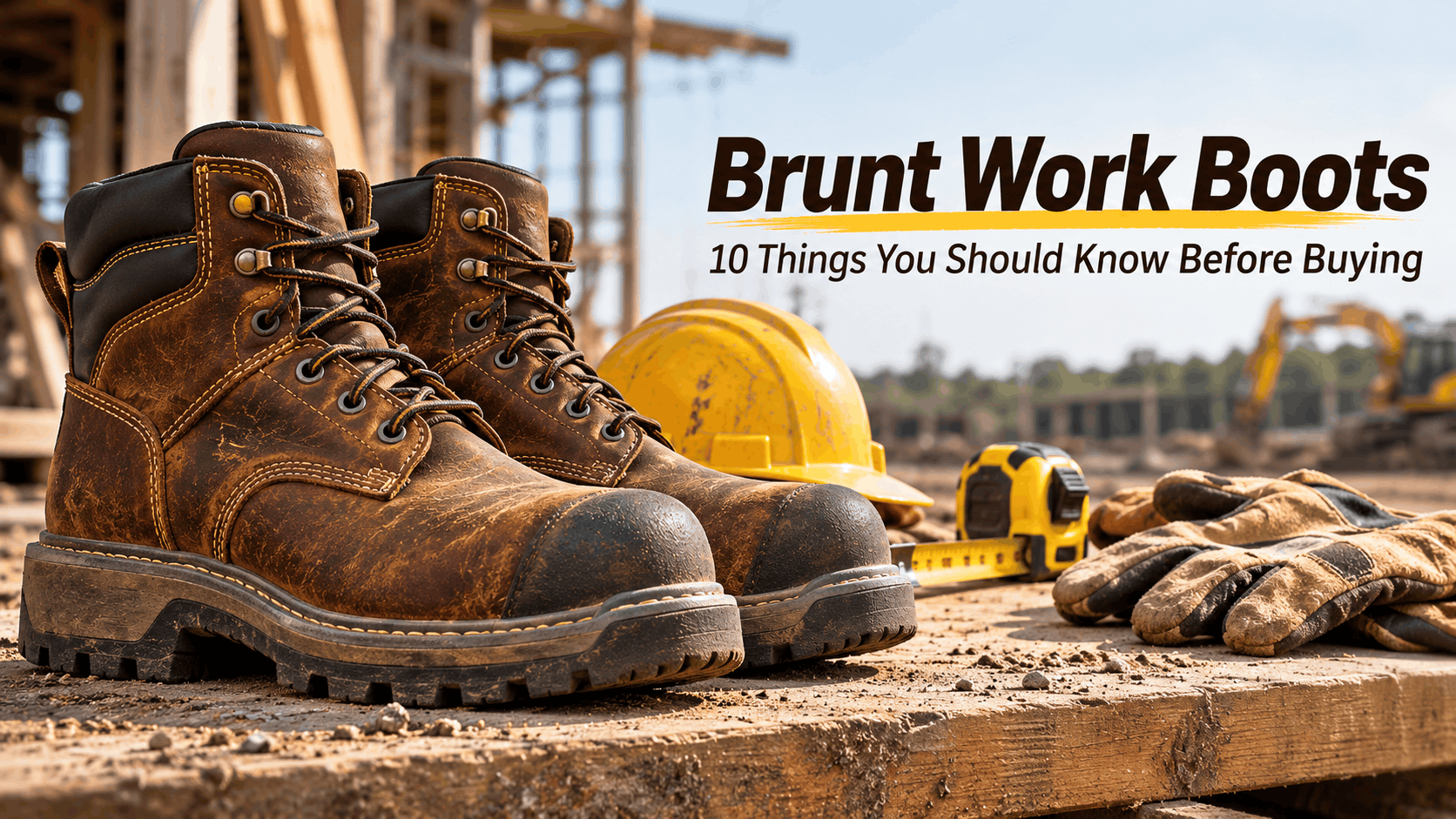
A long workday becomes even harder when your feet start hurting before lunchtime. Whether you’re walking across a construction site, standing on concrete in a warehouse, or working outdoors in unpredictable weather, uncomfortable footwear can affect your entire shift. Brunt Work Boots are among the options workers may discover while searching for comfortable, protective, and practical jobsite footwear. However, choosing the right pair involves more than finding an attractive design or an affordable price.
You need boots that fit properly, provide appropriate protection, handle your working conditions, and offer reasonable long-term value.
Before spending your money, it’s important to understand how different boot features affect comfort, safety, and durability.
Here are ten essential things to consider before buying Brunt Work Boots.
What Are Brunt Work Boots?
BRUNT Workwear offers footwear and clothing designed for people working in construction, skilled trades, maintenance, manufacturing, and other physically demanding industries.
Its footwear range includes options with different toe configurations, waterproof constructions, protective features, and outsole designs.
For example, the company’s Marin Waterproof Composite Toe model lists a waterproof membrane, cushioning system, composite safety toe, and electrical hazard protection. However, these specifications should not be assumed to apply to every Brunt model. BRUNT Workwear+1
The key is to choose footwear based on your actual working conditions rather than relying on brand recognition alone.
10 Things You Should Know Before Buying Brunt Work Boots
1. Comfort Matters More Than Appearance
Comfort should be one of your highest priorities, especially if you spend eight or more hours standing, walking, climbing, or lifting.
A good work boot should provide sufficient cushioning, suitable arch support, and enough flexibility for your normal movements.
Additionally, supportive insoles can help distribute pressure more comfortably across your feet. However, excessive softness isn’t always beneficial. Some workers prefer firmer support, particularly when carrying equipment or walking on uneven ground.
Brunt lists its CUSH’N insole system on certain models, including the Marin Waterproof Composite Toe. Nevertheless, the best way to judge comfort is to wear the boots and assess how your feet respond during realistic movements. BRUNT Workwear
Buying tip: Test the boots while walking, squatting, and standing. Pay attention to pressure around your heels, arches, and toes.
2. Work Boot Sizing Can Affect Your Entire Workday
Incorrect sizing can cause rubbing, blisters, pressure points, and unnecessary foot fatigue.
Wearing boots that are too tight can put uncomfortable pressure on your toes. Meanwhile, oversized boots can allow excessive heel movement and reduce stability.
Therefore, consider these important fit measurements:
- Toe room: Your toes should move comfortably without touching the front during normal movement.
- Width: The boot should accommodate the broadest part of your foot without squeezing.
- Heel fit: Slight movement may occur, but significant slipping is undesirable.
- Work socks: Always check sizing while wearing the socks you normally use.
Brunt also offers a SWITCH-FIT adjustable-width system on its boots, allowing a regular D fit to change to a roomier EE fit by removing an insert beneath the insole. help.bruntworkwear.com+1
However, extra width cannot correct every sizing problem, particularly insufficient length or an unsuitable heel shape.
3. Different Brunt Work Boots Provide Different Levels of Safety and Protection
Different workplaces expose workers to different hazards. Therefore, the type of foot protection you need depends on your specific job duties and workplace hazards.
Common toe configurations include:
- Soft toe: Suitable for some jobs where impact-resistant safety toes are not required.
- Steel toe: Uses a steel protective cap to resist specified impact and compression forces.
- Composite toe: Uses nonmetallic protective materials and may be preferred for certain working conditions.
For example, construction workers handling heavy materials may need impact- and compression-resistant safety toes.
The ASTM F2413-24 standard outlines safety requirements for protective footwear, including impact-resistant toe protection and other safety features. However, a boot must have the relevant model-specific markings to substantiate its protective capabilities. ASTM Store+1
Electricians should also check whether their employer requires electrical hazard-rated footwear and understand that such footwear is not a substitute for electrical safety procedures.
Buying tip: Confirm the exact ASTM marking, required hazard protection, and employer approval before purchasing.
4. How Waterproof Work Boots Protect Your Feet in Wet Conditions
Wet socks and damp footwear can make demanding shifts significantly less comfortable.
For outdoor workers, waterproof work boots may provide practical protection against rain, puddles, wet grass, and muddy conditions.
However, water-resistant and waterproof footwear are not identical.
Water-resistant materials can repel limited moisture, whereas waterproof construction is designed to prevent water penetration under specified conditions.
Some Brunt models include waterproof membranes alongside treated leather. The Marin Waterproof Composite Toe is one example listed with these features. BRUNT Workwear
Nevertheless, waterproof construction can sometimes reduce ventilation compared with more breathable footwear.
Therefore, consider your working environment carefully.
Workers in frequently wet conditions may benefit from waterproof boots. In contrast, someone working inside a hot, dry warehouse might prioritize breathability.
Remember that waterproof boots can still allow water to enter over the collar.
5. Durability Depends on Materials and Working Conditions
No work boot lasts forever. However, construction quality, maintenance, and daily use influence how quickly footwear wears out.
Leather quality, stitching, sole attachment, and reinforcement around high-contact areas all deserve attention.
For example, workers who frequently kneel may wear through the toe area faster than workers who primarily walk on smooth indoor flooring.
Similarly, abrasive concrete, chemicals, mud, and repeated moisture exposure can accelerate deterioration.
When evaluating Brunt Work Boots, inspect:
- Leather thickness and flexibility
- Stitching around high-stress areas
- Outsole construction and attachment
- Toe and heel reinforcement
- Ease of cleaning and maintenance
Additionally, remove accumulated dirt, dry wet boots away from direct heat, and use appropriate leather-care products.
For more practical maintenance advice, consult a dedicated work boot cleaning and maintenance guide.
6. Slip Resistance and Outsole Traction Should Not Be Ignored
Slippery surfaces create risks in construction, manufacturing, maintenance, and outdoor work.
Therefore, outsole traction deserves as much attention as cushioning or appearance.
Deep tread patterns may help with certain muddy surfaces, while specialized rubber compounds can improve grip under particular testing conditions.
However, no outsole performs equally well on every surface.
For example, traction on wet tile is different from traction on oily concrete or loose gravel.
Some Brunt product descriptions identify slip-resistant outsoles and reference specific ASTM testing methods. Yet these claims should always be checked for the individual model. BRUNT Workwear+1
ASTM F3445-24 addresses slip-resistance performance requirements, while ASTM F2913 provides a whole-shoe testing method. ASTM Store+1
Most importantly, remember that slip-resistant footwear reduces certain risks but cannot eliminate slipping hazards.
7. Black Work Boots Offer Practical Styling Options
Appearance may not determine safety, but workplace dress expectations can influence footwear choices.
Black work boots are popular with workers who prefer a neutral, professional-looking option that coordinates with different uniforms.
For example, maintenance technicians, warehouse supervisors, and service contractors may prefer darker footwear for a consistent appearance.
Black leather can also make certain stains less noticeable than lighter finishes. However, dust, scratches, salt deposits, and dried mud may remain visible.
Furthermore, color should never outweigh essential safety requirements.
Before choosing black footwear, confirm that the exact model provides the protection, comfort, and weather resistance your job demands.
Ultimately, a practical boot should look appropriate while performing reliably in its intended environment.
8. Why Proper Fit and Comfort Matter When Choosing Women’s Work Boots
Finding appropriate women’s work boots can be challenging when available designs or size ranges do not accommodate different foot shapes.
Some shoppers need a narrower heel, additional forefoot space, or a different combination of length and width.
Therefore, choosing solely by converting women’s sizes into men’s sizes may not produce the best fit.
Brunt publishes men’s and women’s size conversions on certain product charts. However, shoppers should verify model availability, foot measurements, width options, and overall fit before purchasing. BRUNT Workwear+1
Ankle support, boot height, and flexibility also matter, especially for workers climbing ladders or moving across uneven ground.
Rather than assuming every model fits similarly, compare the measurements and construction of each available option.
9. Brunt Work Boots vs. Athletic-Inspired Footwear
Many workers prefer lightweight footwear that feels similar to everyday sneakers.
This explains why searches such as nike work boots appear alongside searches for athletic-inspired work shoes.
However, comfortable athletic footwear and industrial safety footwear serve different purposes.
Running shoes typically prioritize flexibility, cushioning, and athletic movement. In contrast, purpose-built industrial work boots may include protective toe caps, puncture-resistant components, electrical hazard protection, and specialized outsoles.
A sneaker-like appearance does not establish safety compliance.
Therefore, if your employer requires protective footwear, check the actual certification and safety markings rather than relying on a product’s sporty design.
For workers who prioritize lighter footwear, composite-toe work boots may be worth comparing with conventional steel-toe designs.
The best choice balances mobility, comfort, and the protection your workplace requires.
10. Price, Return Policy, and Overall Value Matter
An expensive boot is not automatically better, and a cheaper pair is not necessarily a bargain.
Instead, evaluate what you receive for the purchase price.
Compare protective features, construction materials, comfort, expected working conditions, and replacement costs.
Additionally, review return and exchange terms before ordering.
Brunt’s published policy currently describes a 14-day return-and-exchange window for eligible direct purchases, including an opportunity to try boots on the job. Its warranty guidance emphasizes this trial rather than a conventional long-term limited manufacturer warranty. Terms and exclusions should be checked before purchase. help.bruntworkwear.com+1
Ultimately, long-term value depends on whether the boots provide the right features and hold up appropriately under your working conditions.
Brunt Work Boots Buying Comparison Table
Use this checklist to compare models before purchasing.
| Buying Factor | What to Check | Why It Matters |
|---|---|---|
| Comfort | Cushioning, insoles, arch support | Helps limit discomfort |
| Safety | Toe protection and ASTM markings | Supports workplace compliance |
| Waterproofing | Membranes and water resistance | Helps protect against moisture |
| Sizing | Length, width, heel movement | Improves everyday fit |
| Durability | Leather, stitching, outsole | Influences service life |
| Traction | Tread and slip-test claims | Helps manage slippery surfaces |
| Price | Features, policies, total cost | Supports better value |
Are Brunt Work Boots Worth Buying?
Brunt Work Boots may be worth buying if a specific model fits comfortably, meets your workplace’s safety requirements, and provides suitable protection for your working conditions. However, buyers should compare alternatives when they need specialized features, different sizing, stronger warranty coverage, or independently demonstrated durability.
For construction and trade workers, prioritize jobsite protection before appearance.
For warehouse employees, cushioning, traction, and flexibility may be particularly important.
Meanwhile, outdoor workers should consider weather protection alongside breathability.
Before making your final decision, compare at least two suitable models and confirm the applicable safety requirements.
A boot offers genuine value when it meets your needs without requiring compromises in essential protection.
Frequently Asked Questions About Brunt Work Boots
Brunt Work Boots can be suitable for construction workers when the selected model provides the necessary safety features. For example, some models offer composite safety toes and electrical hazard protection. However, construction sites have different requirements, so always verify protective ratings, traction, fit, and employer specifications before purchasing.
Some Brunt Work Boots are waterproof, but buyers should not assume every model provides identical moisture protection. Certain designs include waterproof membranes and water-repellent leather. If you regularly work in rain, mud, or wet environments, choose a model explicitly identified as waterproof and check its construction details.
Brunt describes many of its boots as true to size and provides adjustable-width options on applicable models. However, individual fit depends on foot shape, length, width, and sock thickness. Check the official size chart and ensure your toes have sufficient room without excessive heel movement.
There is no universal lifespan for Brunt Work Boots because durability depends on working conditions, frequency of use, materials, and maintenance. Heavy construction may cause faster wear than light indoor work. Regularly inspect the outsole, stitching, leather, and protective components, and replace damaged boots when necessary.
Brunt Work Boots may provide suitable comfort for prolonged standing, depending on the model and your individual needs. Cushioning, arch support, proper sizing, and work surfaces all influence comfort. Workers standing on concrete should pay particular attention to supportive insoles, heel stability, and pressure distribution.
Brunt Work Boots may offer reasonable value when their features match your work requirements and budget. However, purchase price alone cannot determine value. Compare safety ratings, materials, comfort, return conditions, and expected wear. Choosing the right fit and protective features is more important than selecting the cheapest option.
Conclusion
Choosing the right work boots is about protecting your feet while making demanding workdays more manageable.
Brunt Work Boots deserve consideration if you’re searching for footwear that combines practical work-oriented designs with comfort and protective features. However, not every model will suit every worker or environment.
Before buying, evaluate your required safety ratings, sizing, cushioning, outsole traction, waterproof construction, and expected durability. Additionally, review the return policy and compare alternatives within your budget.
Most importantly, never sacrifice workplace protection for appearance or a lower price.
Identify your job’s specific footwear requirements, compare suitable Brunt models, and choose the pair that offers the best combination of fit, safety, and value for your daily work.