
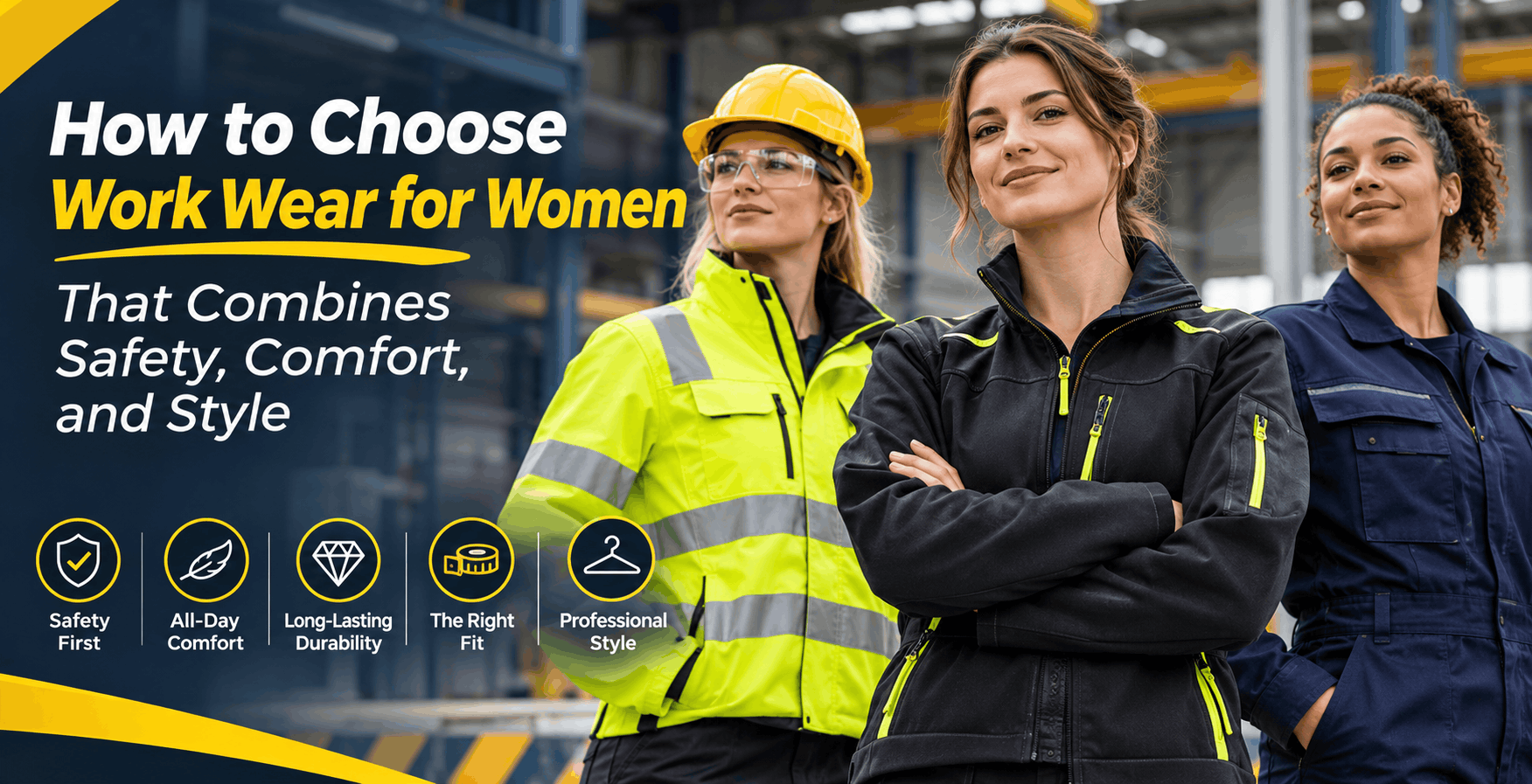
Finding the right work wear for women involves more than choosing clothing that looks professional. Whether you work in construction, manufacturing, warehousing, logistics, or hospitality, your clothing should support your movements, suit your working environment, and provide appropriate protection.
Yet finding the right combination of comfort, durability, and fit can be challenging, particularly when workwear is designed around limited sizing options.
This guide explains how to select women’s workwear that meets your practical needs without compromising personal style or everyday comfort.
How Do You Choose the Right Work Wear for Women?
The best work wear for women fits correctly, allows comfortable movement, withstands daily wear, and addresses relevant workplace hazards. Start by identifying your job requirements, then compare fabrics, sizing, garment features, and applicable safety standards. Prioritise protective performance where required, while choosing designs that feel comfortable throughout your working day.
Why Does Choosing the Right Women’s Workwear Matter?
Workwear can influence how comfortably and confidently you perform everyday tasks.
For example, warehouse employees frequently bend, reach, and lift throughout their shifts. Restrictive trousers or poorly positioned seams can make these movements uncomfortable. Similarly, outdoor construction workers need clothing suitable for changing weather conditions.
Properly selected women’s workwear can offer several advantages:
- Improved mobility: Well-fitting clothing allows natural movement.
- Better comfort: Suitable fabrics help manage heat, moisture, and irritation.
- Appropriate protection: Certified garments can address specific workplace hazards.
- Greater durability: Strong construction helps clothing withstand repeated use.
- Professional appearance: Practical, coordinated clothing supports a tidy workplace presentation.
However, ordinary workwear should never be treated as a substitute for protective equipment required by a workplace risk assessment.
What Fabrics Are Best for Work Wear for Women?
Understanding fabric performance
Fabric selection affects comfort, maintenance, flexibility, and garment lifespan.
| Fabric | Main advantage | Best suited for |
|---|---|---|
| Cotton | Soft and breathable | General indoor work |
| Polyester blends | Durable and easy to maintain | Warehousing and uniforms |
| Stretch blends | Greater flexibility | Active, movement-heavy jobs |
| Moisture-managing fabrics | Help move perspiration away from skin | Physically demanding tasks |
| Weather-resistant fabrics | Help protect against wind and rain | Outdoor environments |
Cotton can feel comfortable during long shifts, although it may absorb moisture and dry slowly. Polyester blends often retain their shape and withstand frequent washing, but their comfort depends on the fabric construction.
Stretch fabrics are particularly useful in women’s work trousers, where bending and kneeling are common.
For outdoor work, consider weather resistance alongside breathability. A waterproof jacket that traps excessive heat may become uncomfortable during physical activity.
Remember that fabric composition alone does not establish whether a garment is suitable protective clothing.
How to Choose Workwear Based on Workplace Safety Requirements
Safety should always guide purchasing decisions when workplace hazards are present.
Before buying protective workwear for women, identify the risks associated with the job, including moving vehicles, heat, sharp materials, machinery, or adverse weather.
In the UK, relevant protective clothing standards include:
- EN ISO 20471: Specifies requirements for high-visibility clothing intended to make wearers more visible.
- EN ISO 13688: Covers general requirements for protective clothing, including ergonomics, sizing, and information supplied by manufacturers.
- EN ISO 11612: Applies to protective clothing designed for certain heat and flame hazards.
These standards serve different purposes. A garment meeting one standard does not automatically protect against unrelated hazards.
The Health and Safety Executive (HSE) explains that employers must assess workplace risks and provide suitable PPE where required.
When purchasing women’s PPE, check the product’s declared protection, instructions, fit, and applicable conformity marking rather than relying on marketing descriptions.
How to Find the Perfect Fit, Including Plus Size Work Wear
A comfortable fit is essential, especially for workers who spend long periods standing, walking, bending, or lifting.
Before ordering, measure your:
- Waist and hips
- Inside leg length
- Chest or bust
- Shoulder width and sleeve length
Compare these measurements with the manufacturer’s size chart rather than relying on your usual clothing size.
Choosing plus size work wear
Good plus size work wear should offer more than additional fabric.
Look for properly proportioned garments with comfortable waistbands, sufficient hip and thigh room, suitable sleeve lengths, and unrestricted movement.
Try sitting, squatting, reaching overhead, and bending forward while wearing the clothing.
For protective garments, ensure the correct coverage is maintained during movement. Oversized or excessively loose clothing can also create hazards around moving machinery.
Inclusive sizing should support both comfort and safe working practices.
Women’s Workwear vs Mens Work Wear: What Is the Difference?
Women’s workwear and mens work wear may differ in their sizing systems, garment proportions, and tailoring.
Some women’s designs accommodate different waist-to-hip ratios, while certain men’s garments may have longer sleeves, broader shoulders, or a straighter cut.
However, body proportions vary considerably between individuals.
Simply purchasing a smaller men’s jacket or pair of trousers may not produce a comfortable fit. The sleeves might remain too long, or the garment could restrict movement around the hips.
The best approach is to compare actual garment measurements and test the fit, regardless of the collection’s label.
How to Balance Comfort, Durability, and Professional Style
Modern work wear for women can look professional without sacrificing everyday functionality.
When comparing garments, pay attention to practical details:
Reinforced stitching: Check high-stress areas such as pocket openings, knees, and seams.
Secure pockets: Choose pocket positions that keep essential items accessible without interfering with movement.
Adjustable features: Waistbands, cuffs, and closures can help accommodate different body shapes and working conditions.
Practical colours: Darker shades may conceal everyday marks, while visibility requirements may dictate specific colours and reflective materials.
Easy maintenance: Check washing instructions, especially for protective garments whose performance depends on correct care.
For long-term value, consider cost per wear rather than purchase price alone. A durable garment used regularly may offer better value than a cheaper alternative requiring frequent replacement.
Common Mistakes to Avoid When Buying Women’s Workwear
Several purchasing mistakes can affect comfort, suitability, and durability.
- Choosing appearance over protection: Never substitute fashionable clothing for required PPE.
- Ignoring size charts: Different manufacturers may use different measurements.
- Buying excessively loose clothing: Poor fit can interfere with movement or create machinery-related risks.
- Overlooking fabric care: Incorrect washing can damage certain protective properties.
- Ignoring working conditions: Clothing suitable for an indoor office may perform poorly outdoors.
- Choosing price alone: Evaluate construction quality, comfort, and expected lifespan.
A practical fitting test and careful review of product information can prevent many of these problems.
Frequently Asked Questions
A. Look for comfortable fabrics, appropriate sizing, durable seams, practical pockets, and freedom of movement. Consider the physical demands of your job and any workplace hazards. Where protective clothing is required, verify its suitability and applicable safety certification before purchasing.
A. Women’s and men’s workwear may use different garment proportions, tailoring, and size charts. However, neither category guarantees a better fit for every person. Compare measurements, assess comfort during movement, and select clothing that provides appropriate coverage and functionality.
A. Choose garments designed with suitable proportions rather than simply increasing the overall size. Check waist, hip, thigh, and sleeve measurements. Prioritise flexible construction, comfortable waistbands, and adequate coverage, while avoiding loose fabric that could create workplace hazards.
A. There is no single best fabric for every industrial environment. Cotton can offer comfort, polyester blends provide durability, and stretch fabrics support mobility. Where hazards such as flames, heat, or chemicals exist, choose appropriately certified protective clothing based on the workplace risk assessment.
A. Start with clothing that meets your workplace’s functional and safety requirements. Then consider flattering but practical cuts, coordinated colours, secure pockets, and comfortable tailoring. Professional appearance should complement protective performance, never replace it.
Final Thoughts
Choosing the right work wear for women requires balancing safety, fit, fabric quality, durability, and personal comfort.
Begin with your workplace requirements, compare garment measurements, and examine construction details before purchasing. Most importantly, ensure protective clothing is suitable for the hazards involved.
For readers exploring workwear and clothing options in the UK, MT Sports UK is a useful starting point. Review the available product information, sizing details, and garment specifications to find clothing that suits your working routine.