
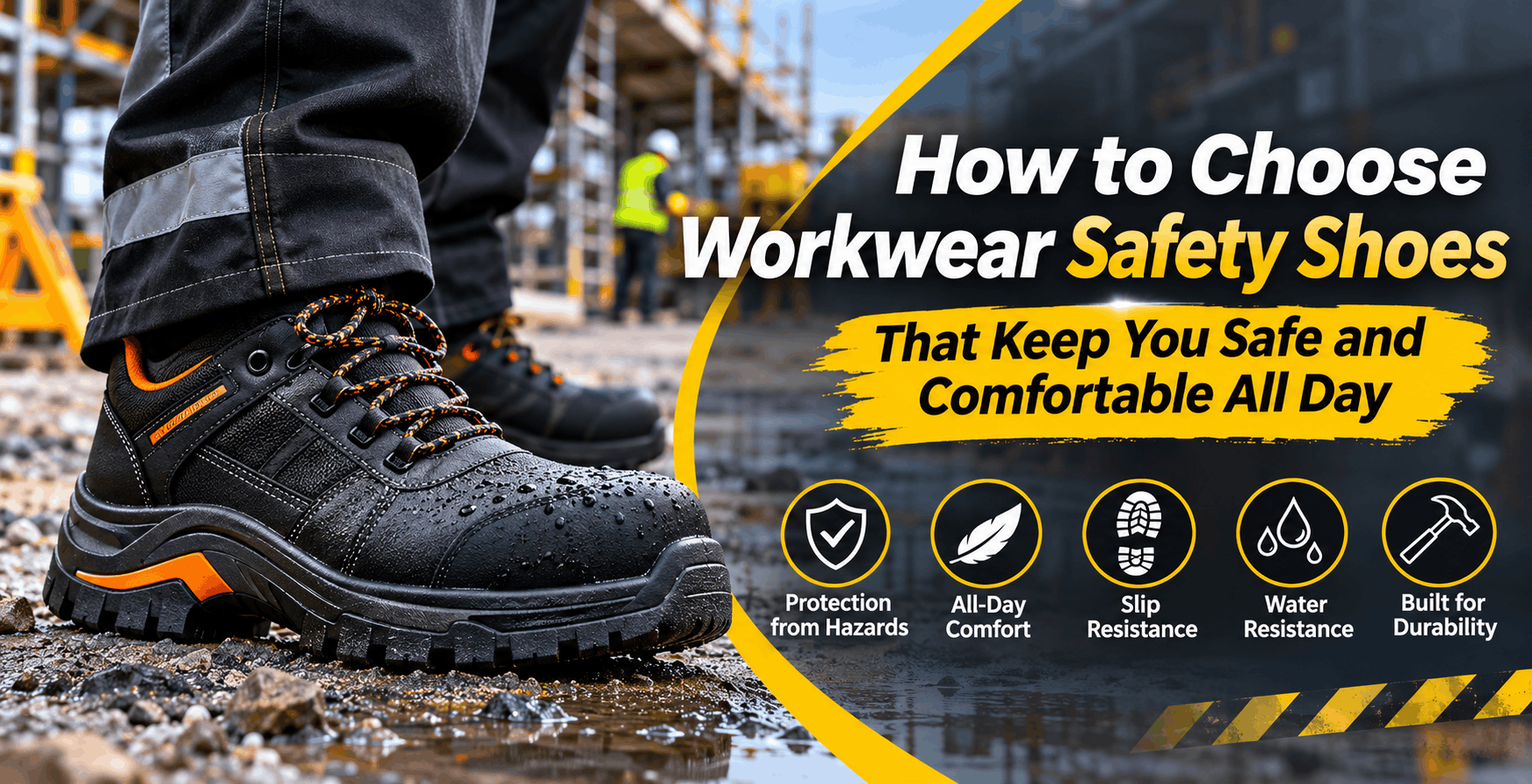
Choosing the right workwear safety shoes is essential for protecting your feet while maintaining comfort throughout a demanding working day. Whether you work on a construction site, in a warehouse, or in a manufacturing facility, your footwear must withstand daily hazards without restricting movement.
Falling objects, slippery floors, sharp materials, and prolonged standing can all affect workplace safety. Poorly fitted shoes may also contribute to foot discomfort, fatigue, and reduced concentration.
However, not all protective footwear offers the same level of protection. Understanding safety standards, materials, fit, and working conditions helps you make an informed choice.
This guide explains how to select safety footwear that balances certified protection, durability, and everyday comfort.
What Are Workwear Safety Shoes and Why Are They Important?
Workwear safety shoes are protective footwear designed to reduce the risk of workplace foot injuries. Certified safety footwear incorporates features such as protective toe caps and, depending on its classification, penetration-resistant inserts, water-resistant uppers, and other protective properties.
Unlike ordinary trainers or casual shoes, safety footwear certified to EN ISO 20345 must meet defined protective requirements, including toe protection against specified impact and compression forces.
However, safety shoes do not eliminate every workplace hazard. Their effectiveness depends on choosing footwear appropriate to the risks identified in a workplace assessment.
How to Choose the Right Workwear Safety Shoes
1. Identify Your Workplace Hazards
Start by evaluating the conditions in which you work.
For example:
- Construction sites: Falling materials, sharp debris, and uneven ground may require toe protection, penetration resistance, and robust soles.
- Warehouses: Workers may benefit from lightweight, comfortable footwear with appropriate slip resistance.
- Manufacturing facilities: Heavy machinery, moving equipment, and dropped components may create impact or compression hazards.
- Outdoor environments: Water-resistant materials and suitable tread patterns can help in wet or muddy conditions.
The best footwear is not necessarily the most heavily reinforced option. It is the footwear that addresses your actual workplace risks.
2. Understand UK Safety Footwear Standards
When purchasing safety footwear in the UK, look for certification against the applicable EN ISO 20345 standard.
This standard establishes requirements for protective toe caps and other safety properties.
Common classifications include:
| Classification | General protection |
|---|---|
| SB | Basic safety footwear with protective toe caps |
| S1 | Basic protection plus properties such as a closed heel, antistatic performance, and heel energy absorption |
| S1P | S1 features plus penetration resistance |
| S2 | S1 features plus resistance to water penetration and absorption through the upper |
| S3 | S2 features plus penetration resistance and a cleated outsole under the older classification system |
Important: The 2022 revision introduced updated classifications, including S3L and S3S, and changed certain marking conventions. Always check the exact standard edition and markings on the footwear rather than relying solely on older category descriptions.
3. Choose Between Steel and Composite Toe Caps
Both steel toe cap safety shoes and composite toe safety shoes can provide certified impact protection.
Steel toe caps are generally robust and may be more economical, although their weight depends on the shoe’s overall construction.
Composite toe caps use non-metallic materials and may suit workers seeking metal-free footwear. However, composite construction does not automatically mean a shoe is lighter or more comfortable.
Choose according to certified protection, fit, workplace conditions, and employer requirements.
4. Prioritise Comfort and Proper Fit
Workers who spend eight or more hours standing or walking need comfortable safety shoes that fit correctly.
Consider these features:
- Adequate toe room without excessive movement.
- Secure heel support to reduce slipping inside the shoe.
- Cushioning appropriate to the working surface.
- Breathable materials for warmer indoor environments.
- Suitable arch support and a stable sole.
Try footwear with your normal work socks. Ideally, test the fit later in the day, when feet may be slightly swollen.
Remember that excessive cushioning cannot compensate for incorrect sizing or inadequate protection.
5. Check Sole Grip and Slip Resistance
Slips and falls are common workplace hazards, particularly around wet floors, oils, and loose materials.
Look for slip-resistant safety footwear tested for relevant surface conditions.
Outsole material, tread pattern, contamination, and floor condition all influence traction. No shoe is completely slip-proof.
For example, a warehouse worker walking across smooth indoor flooring may need a different outsole from a construction worker navigating muddy ground.
6. Evaluate Materials and Durability
Materials influence footwear durability, flexibility, breathability, and maintenance requirements.
Leather can provide abrasion resistance and durability when appropriately maintained. Synthetic materials may offer lighter or more flexible constructions, while textile uppers can improve ventilation.
Waterproof safety shoes can help protect feet in wet environments, although waterproof constructions may reduce breathability.
Inspect stitching, sole attachment, and upper construction before purchasing. Material quality should complement, not replace, certified safety performance.
7. Match Footwear to Working Conditions
Different working environments require different protective features.
| Working environment | Features to consider |
|---|---|
| Indoor warehouse | Comfortable fit, appropriate slip resistance, protective toe cap |
| Outdoor construction | Toe protection, penetration resistance, suitable tread, water protection |
| Wet workplace | Water-resistant or waterproof construction, appropriate outsole |
| Industrial workshop | Protection based on impact, compression, penetration, and other identified hazards |
| Electrical work | Footwear specifically assessed for the electrical hazards present |
For electrical work, ordinary antistatic or metal-free footwear must not be assumed to provide electrical insulation.
How Workwear and Safety Gear Support Workplace Protection
Safety footwear is only one component of effective workplace protection.
A complete workwear and safety gear strategy considers the full range of hazards employees face.
Depending on the workplace risk assessment, workers may also require protective clothing, high-visibility garments, helmets, eye protection, and respiratory equipment.
For example, a construction worker handling materials near moving vehicles may require safety footwear alongside a high-visibility jacket, helmet, and appropriate hand protection.
Employers should prioritise eliminating or reducing hazards through other controls before relying on personal protective equipment.
Why Safety Workwear Gloves Matter Alongside Safety Shoes
Appropriate safety workwear gloves help protect hands against hazards such as abrasion, cuts, and contact with certain substances.
Meanwhile, protective footwear helps address foot-related hazards.
Together, they can support safer material handling, construction, and manufacturing activities.
However, gloves and footwear must be selected independently according to the hazards involved. For example, cut-resistant gloves do not necessarily provide chemical protection, just as impact-resistant safety shoes do not automatically protect against every puncture hazard.
Common Mistakes to Avoid When Buying Workwear Safety Shoes
Even experienced workers can make mistakes when choosing protective footwear.
- Prioritising appearance or price: Attractive or inexpensive shoes may lack the protection required for a particular job. Check specifications first.
- Ignoring certification: Confirm that the footwear meets the relevant safety standard and workplace requirements.
- Choosing the wrong size: Tight shoes can cause discomfort, while loose shoes may compromise stability.
- Overlooking outsole suitability: Match traction characteristics to the flooring and contaminants present.
- Wearing damaged footwear: Replace shoes when damage could compromise their protective performance.
A practical approach is to identify hazards, check certification, assess comfort, and inspect construction before making a purchase.
How to Maintain Workwear Safety Shoes for Longer Use
Proper maintenance helps preserve comfort and protective performance.
Clean footwear regularly to remove mud, dust, and workplace contaminants. Allow wet shoes to dry naturally, away from excessive direct heat that could damage materials.
Inspect the uppers, toe-cap area, stitching, and soles for visible damage. Pay particular attention to worn tread, splitting materials, and separation between the upper and outsole.
Follow the manufacturer’s cleaning and care instructions.
If protective footwear has suffered significant impact or shows signs of structural damage, replace it when its protective performance may be compromised, even if the damage is not immediately obvious.
Frequently Asked Questions About Workwear Safety Shoes
Safety shoes are required where a workplace risk assessment identifies foot hazards that cannot be adequately controlled by other measures. Under UK PPE regulations, employers must provide suitable protective equipment free of charge when it is necessary. HSE+1
There is no universal replacement interval. Footwear should be inspected regularly and replaced when wear, damage, or significant impact could compromise its protection. Follow the manufacturer’s instructions and your employer’s PPE inspection and replacement procedures.
The best safety shoes for prolonged standing provide adequate toe space, secure heel support, suitable cushioning, and a comfortable fit. Breathable materials may improve comfort indoors. However, certified protection and suitability for the workplace must remain the primary considerations.
Steel toe shoes contain metal protective caps, while composite toe shoes use non-metallic materials. Both can meet recognised impact and compression requirements. The better choice depends on workplace hazards, fit, comfort, and whether metal-free construction is necessary.
Workwear safety shoes are specially designed protective shoes that help reduce workplace foot injuries. Certified models include protective toe caps and may incorporate penetration-resistant inserts, slip-resistant soles, and water-resistant materials, depending on the footwear’s classification and intended use.
Conclusion
Selecting suitable workwear safety shoes involves more than choosing a comfortable or affordable pair. Workplace hazards, certified protection, proper fit, outsole performance, and material durability all influence how effectively footwear supports everyday safety.
Workers should understand their specific requirements, while employers must ensure protective footwear is suitable for identified risks.
Investing in appropriate footwear and maintaining it correctly can support comfort, protection, and long-term usability.
For more information about practical workplace clothing, explore the workwear and protective clothing options available at MT Sports UK.