
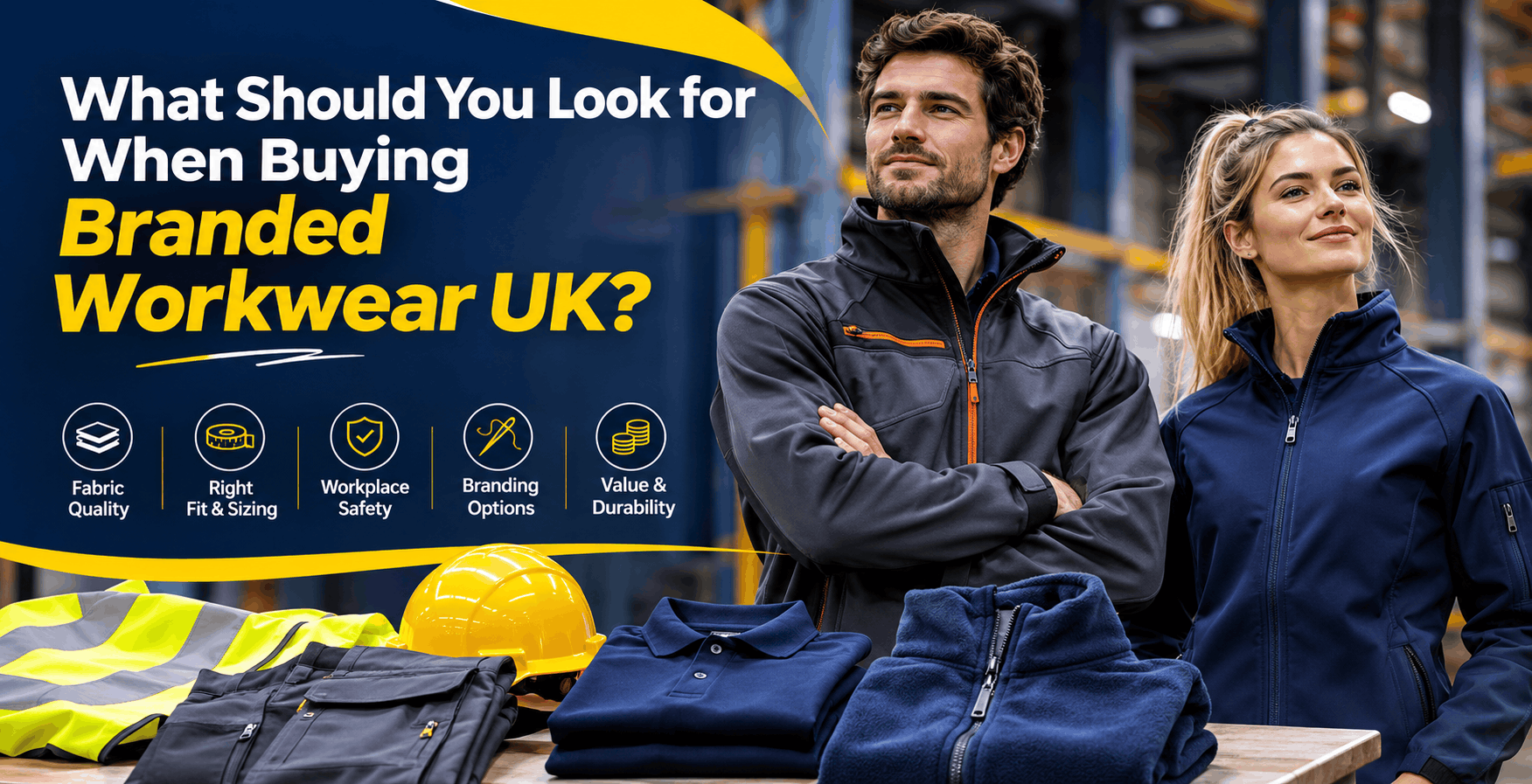
Choosing the right branded workwear UK businesses can rely on involves more than adding a company logo to a uniform. Buyers should assess fabric durability, employee comfort, accurate sizing, workplace safety requirements, branding methods, weather protection and supplier reliability. The best choice balances professional appearance with practical performance and long-term value.
Whether you manage a construction company, manufacturing facility, warehouse or small business, suitable workwear can help employees feel comfortable, look professional and represent your organisation consistently.
However, poorly selected clothing can restrict movement, deteriorate after repeated washing or fail to provide the protection required for particular tasks.
This guide explains seven essential factors to consider before purchasing personalised workwear in the UK.
What Is Branded Workwear and Why Does It Matter?
Branded workwear refers to clothing customised with a company’s name, logo or visual identity. Common examples include embroidered polo shirts, printed T-shirts, workwear jackets, trousers, fleeces and uniforms.
Businesses invest in custom branded workwear for several practical reasons:
- Professional appearance: Consistent uniforms create a recognisable business identity.
- Employee identification: Customers and visitors can identify staff more easily.
- Brand visibility: Logos make businesses recognisable during everyday activities.
- Team consistency: Coordinated clothing helps maintain a unified appearance.
- Practical functionality: Suitable garments can provide useful features such as reinforced pockets, adjustable cuffs and durable fabrics.
Nevertheless, branding should never compromise comfort, functionality or workplace safety.
7 Essential Things to Check Before Buying Branded Workwear UK
1. Fabric Quality and Durability
Fabric quality directly affects how workwear performs during demanding activities and frequent washing.
Different materials offer different advantages:
| Fabric | Main advantage | Suitable applications |
|---|---|---|
| Cotton | Soft, breathable and comfortable | Indoor work, hospitality, light-duty uniforms |
| Polyester | Quick-drying and resistant to creasing | Active roles, uniforms requiring frequent washing |
| Cotton-polyester blends | Balance of comfort and durability | Warehousing, maintenance, general workwear |
| Reinforced technical fabrics | Greater resistance to abrasion in suitable constructions | Industrial and demanding outdoor roles |
When examining workwear fabric quality, check stitching, seam strength, fabric weight and washing instructions.
For example, reinforced stitching around pockets and stress points can improve garment longevity.
Buying tip: Request a sample and wash it according to the care label before placing a large order. Examine shrinkage, colour retention, seam quality and overall fit.
2. Comfort, Fit and Inclusive Sizing
Employees may wear their uniforms for eight hours or longer, making comfort a significant purchasing consideration.
Poorly fitted clothing can restrict movement, create discomfort and reduce practicality during physically demanding tasks.
When selecting garments, consider shoulder mobility, sleeve length, waist adjustment, ventilation and room for bending or lifting.
Businesses researching womens workwear uk should look for appropriate women’s fits rather than assuming unisex garments will suit everyone.
Likewise, men’s clothing should offer suitable sizing and movement without excessive loose fabric that could become hazardous near machinery.
Provide accurate size charts and, where possible, organise fitting sessions before ordering.
3. Workplace Safety and UK Compliance
Not all branded uniforms qualify as personal protective equipment (PPE).
Ordinary corporate clothing may provide identification and comfort, but hazardous workplaces can require protective garments designed and assessed for specific risks.
According to the UK Health and Safety Executive (HSE), employers must assess workplace risks and provide suitable PPE where necessary.
For example:
- High-visibility clothing may need to comply with EN ISO 20471.
- Protective clothing for certain welding activities may need to meet EN ISO 11611.
- Weather-protective clothing may be assessed against EN 343 when protection against rain is required.
The applicable requirements depend on the hazards and intended use. A garment’s branding does not establish compliance.
Important: Confirm the relevant protective performance, conformity marking, documentation and suitability before purchasing safety-critical clothing. Employers must provide required PPE free of charge to workers.
4. Branding and Customisation Methods
The branding technique influences appearance, durability, comfort and cost.
Embroidery
Thread is stitched directly into the garment. It creates a professional finish and is commonly suitable for polo shirts, fleeces and jackets.
Screen printing
IInk is transferred onto fabric using a specialised screen-printing technique to create clear, durable, and visually appealing designs.
. It can be economical for larger quantities of T-shirts and simple logo designs.
Heat-transfer printing
Heat and pressure are used to apply custom designs directly onto fabric, creating sharp, detailed, and professional-looking prints.
It works well for detailed graphics, names and smaller personalised orders, depending on the transfer system.
Before approving custom logo workwear, ask suppliers about wash resistance, minimum order quantities, artwork requirements and placement restrictions.
For certified PPE, also confirm that logo application will not interfere with protective performance or compliance.
5. Industry-Specific Clothing Requirements
Different workplaces demand different clothing features.
Construction workers may need durable trousers, appropriate high-visibility garments and weather-resistant outerwear.
Warehouse employees often benefit from breathable materials, reinforced pockets and clothing that supports frequent movement.
Meanwhile, hospitality teams may prioritise washable fabrics, neat presentation and comfortable fits.
Corporate environments may prefer embroidered shirts, polo shirts or lightweight jackets.
The most effective approach is to select clothing based on actual tasks and working conditions rather than appearance alone.
6. Weather Protection and Seasonal Suitability
The UK’s changing weather makes seasonal suitability particularly important for outdoor employees.
Businesses comparing mens workwear jackets uk options should evaluate insulation, breathability, water resistance and freedom of movement.
A lightweight softshell may suit mild conditions, while a suitable waterproof outer layer can be more appropriate for persistent rain.
However, water-resistant and waterproof are not interchangeable terms. Check the garment’s stated performance and intended use.
Layering also provides flexibility. Employees can combine breathable base layers, insulating mid-layers and protective outer garments as conditions change.
Where protective clothing is required, ensure the complete clothing arrangement remains suitable for the identified hazards.
7. Supplier Reliability and Overall Value
A low purchase price does not necessarily mean better value.
Reliable workwear suppliers should provide clear product information, consistent sizing, branding specifications and transparent delivery arrangements.
Before ordering, ask:
- Are samples available?
- What are the minimum order quantities?
- Can the same garments be reordered later?
- What happens if branding or sizing is incorrect?
- Are bulk pricing and delivery charges clearly explained?
- Is appropriate product documentation available?
Calculate the cost per garment over its expected useful life, rather than comparing initial prices alone.
For instance, a more durable uniform that survives frequent washing may be more economical than a cheaper alternative requiring regular replacement.
How Do You Choose the Right Branded Workwear for Different Industries?
Start by identifying the employee’s tasks, workplace environment and relevant hazards.
A construction business might prioritise abrasion-resistant trousers and compliant protective clothing. A logistics company may focus on mobility, practical pockets and appropriate visibility.
Conversely, a customer-facing retail business may place greater emphasis on presentation, easy-care fabrics and consistent branding.
Before committing to a bulk order, trial sample garments with employees performing representative tasks. Their feedback can reveal problems that product descriptions cannot.
Common Mistakes to Avoid When Ordering Branded Workwear
Several purchasing mistakes can create unnecessary expenses:
- Choosing price over durability: Consider fabric construction and replacement frequency.
- Ignoring employee measurements: Use accurate sizing information and fitting samples.
- Selecting unsuitable branding: Match the decoration method to the fabric and washing requirements.
- Overlooking safety requirements: Verify PPE suitability before customisation.
- Ordering without samples: Test comfort, washing performance and logo appearance.
- Forgetting future orders: Check whether suppliers can maintain garment and branding consistency.
A small trial order can help businesses avoid costly mistakes before purchasing uniforms for an entire workforce.
Branded Workwear UK: Frequently Asked Questions
Compare fabric durability, branding quality, washing performance, supplier reliability and replacement costs. Trial garments before ordering in bulk to reduce the risk of expensive mistakes.
Ordinary branded uniforms do not automatically require PPE certification. However, clothing used as PPE must satisfy applicable legal and performance requirements for the hazards involved.
Collect measurements, consult garment-specific size charts and offer fitting samples. Consider different body shapes, movement requirements and appropriate women’s and men’s fit options.
Embroidery is often preferred for professional logos on polos and jackets. Printing may be more suitable for large graphics, detailed designs or certain bulk orders. Durability depends on the technique, materials and care.
There is no single best material. Cotton offers comfort and breathability, polyester provides easy-care properties, and blended fabrics can balance both. The ideal choice depends on working conditions and garment requirements.
Conclusion
Selecting branded workwear UK businesses can depend on requires careful consideration of durability, comfort, fit, safety, branding quality and overall cost.
Rather than choosing uniforms solely by appearance, evaluate how employees will use them and whether garments remain comfortable and functional throughout their working day.
Businesses exploring workwear options can review relevant clothing categories at MT Sports UK and compare available garments against their specific requirements.
Ultimately, the best branded workwear is clothing that supports employees, represents the business professionally and delivers reliable value over time.