
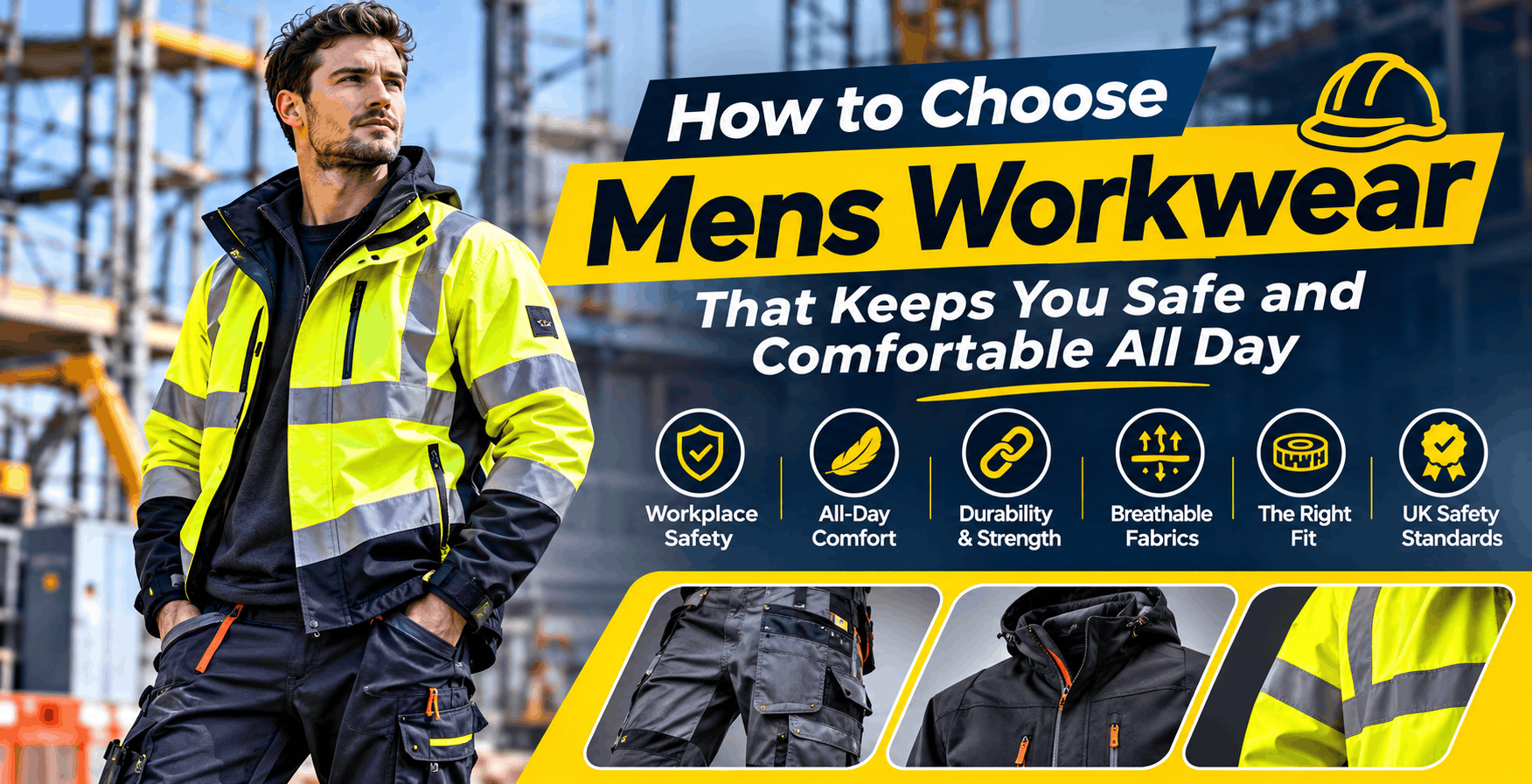
Choosing the right Mens Workwear is about more than looking professional. The clothing you wear can influence your comfort, mobility, and protection throughout a demanding working day. Whether you work in construction, manufacturing, warehousing, or outdoor maintenance, unsuitable clothing can restrict movement, trap heat, and wear out prematurely.
The best approach is to match your workwear to your job’s hazards, choose durable yet comfortable fabrics, check the fit, and identify any required safety certifications. This guide explains how to make those decisions confidently while balancing protection, practicality, and long-term value.
1. Choose Mens Workwear Based on Your Working Environment
Different workplaces expose employees to different physical conditions and hazards. Therefore, understanding your daily tasks is the first step towards choosing suitable men’s work clothes.
For example, construction workers may need abrasion-resistant trousers, reinforced knees, and high-visibility clothing. Meanwhile, warehouse employees often benefit from lightweight, flexible garments that allow repeated bending, lifting, and walking.
Consider these workplace requirements:
- Construction: Durable trousers, practical pockets, and task-appropriate protective clothing.
- Manufacturing: Clothing suitable for machinery-related hazards, with specialist protection where required.
- Warehousing and logistics: Breathable fabrics, flexible fits, and comfortable clothing for frequent movement.
- Outdoor maintenance: Weather-resistant jackets, adjustable layers, and suitable visibility protection.
Importantly, ordinary industrial workwear is not automatically personal protective equipment (PPE). Where hazards require protective clothing, employers must select suitable PPE based on a workplace risk assessment.
2. Select Fabrics That Balance Durability and Comfort
Fabric choice directly affects how workwear performs during long shifts. However, the strongest material is not necessarily the most comfortable for every job.
Cotton offers a soft feel and good breathability in many conditions. Nevertheless, it absorbs moisture and can remain damp after heavy sweating.
Polyester-cotton blends often provide a practical balance between durability, crease resistance, and everyday comfort. Additionally, fabrics containing elastane can improve flexibility during repetitive movements.
For outdoor work, consider wind-resistant or water-resistant materials alongside breathable layers. In contrast, hot indoor environments may benefit from lighter fabrics that help manage perspiration.
Remember that ordinary fabric properties do not establish protection against flames, chemicals, or other specialist hazards.
3. Look for Durable, Flexible Workwear Trousers
Well-designed workwear trousers should withstand regular movement without causing discomfort.
Before purchasing, examine the following features:
- Reinforced stitching: Helps strengthen seams exposed to repeated stress.
- Flexible construction: Allows easier bending, kneeling, and climbing.
- Practical pockets: Keeps frequently used items accessible without obstructing movement.
- Reinforced knees: Helps reduce fabric wear in kneeling-intensive jobs.
- Adjustable waistbands: Can improve comfort during extended shifts.
Additionally, heavy-duty work trousers should offer enough room around the thighs and knees without excessive loose fabric that could create snagging hazards.
Try sitting, squatting, and reaching while wearing the trousers. If the fabric pulls tightly or the waistband digs in, consider another fit.
4. Get the Right Fit Without Compromising Safety
Correct sizing supports comfort, mobility, and, where applicable, protective performance.
Therefore, check waist, chest, inside-leg, and sleeve measurements against the manufacturer’s size guide rather than relying solely on standard clothing sizes.
Workwear jackets should allow necessary movement without leaving excessively loose sleeves near machinery. Similarly, trousers should remain secure when bending or climbing.
Inclusive sizing also matters. For example, ladies workwear should accommodate different body proportions without sacrificing the protection or functionality required for the job.
For certified PPE, follow the manufacturer’s fitting instructions because an incorrect fit may reduce protection.
5. Understand UK Workwear Safety Standards
Not every garment labelled as safety clothing provides certified protection.
In the UK, employers should follow relevant Health and Safety Executive (HSE) guidance when assessing workplace risks and selecting PPE.
Two important standards include:
- EN ISO 20471: Specifies requirements for high-visibility clothing intended to make wearers more visually conspicuous in hazardous situations.
- EN ISO 13688: Establishes general requirements for protective clothing, including ergonomics, sizing, and marking. It is used alongside standards addressing specific hazards.
Consequently, buyers should examine garment labels, manufacturer information, applicable conformity markings, and declared protection levels.
For workplace PPE, confirm that the product meets the relevant legal requirements and is suitable for the identified hazard. Ordinary durable work clothing should never be treated as a substitute for certified protection.
6. Check Quality Before Buying Workwear
Quality workwear should remain practical after repeated wearing and appropriate washing.
Before ordering, inspect seam construction, fastenings, fabric composition, pocket placement, and care instructions. Additionally, check whether the garment offers sufficient freedom of movement for your usual tasks.
When purchasing online, compare measurements and product descriptions carefully. If using a quick-order or workwear express delivery option, prioritise correct sizing and safety requirements over delivery speed.
For long-term value, consider expected wear, cleaning needs, and suitability rather than price alone.
7. Maintain Workwear for Longer-Lasting Performance
Proper maintenance helps preserve clothing quality and can support continued protective performance.
Follow the manufacturer’s washing and drying instructions. Moreover, inspect garments regularly for torn seams, damaged closures, excessive abrasion, and contamination.
Replace protective clothing when damage, wear, or the manufacturer’s stated limits mean it can no longer provide the required protection. Never assume that washing or repairing damaged PPE restores its certified performance.
FAQ On Mens Workwear
A. Regular workwear provides practical clothing for daily tasks, whereas protective workwear is designed to protect against identified hazards. Certified PPE must meet applicable requirements and be selected according to the workplace risk assessment and intended protective function.
A. Prioritise breathable fabrics, comfortable waistbands, suitable layering, and freedom of movement. Furthermore, consider workplace temperature, physical activity, and moisture management. Testing the fit in typical working positions can help identify potential discomfort before purchase.
A. Look for durable seams, appropriate reinforcement, secure fastenings, and suitable visibility features. Where protective clothing is required, check the relevant certification, protection class, and manufacturer instructions rather than relying on appearance or marketing descriptions.
A. Workwear trousers should fit securely around the waist while allowing comfortable bending, kneeling, and walking. Additionally, the leg length should prevent dragging, and the fabric should not restrict movement or create unnecessary snagging risks.
A. Polyester-cotton blends are practical for many everyday jobs because they balance durability and comfort. However, cotton may suit certain indoor conditions, while stretch fabrics improve flexibility. The best material ultimately depends on working conditions and specific hazards.
Conclusion Choose Mens Workwear That Works as Hard as You Do
The right Mens Workwear combines durability, comfortable movement, appropriate fabric selection, and protection suited to the job. By checking fit, construction quality, workplace hazards, and applicable safety requirements, workers can make more informed purchasing decisions.
Explore the clothing options available at MT Sports UK and compare their suitability for your working environment before choosing your next workwear essentials.