
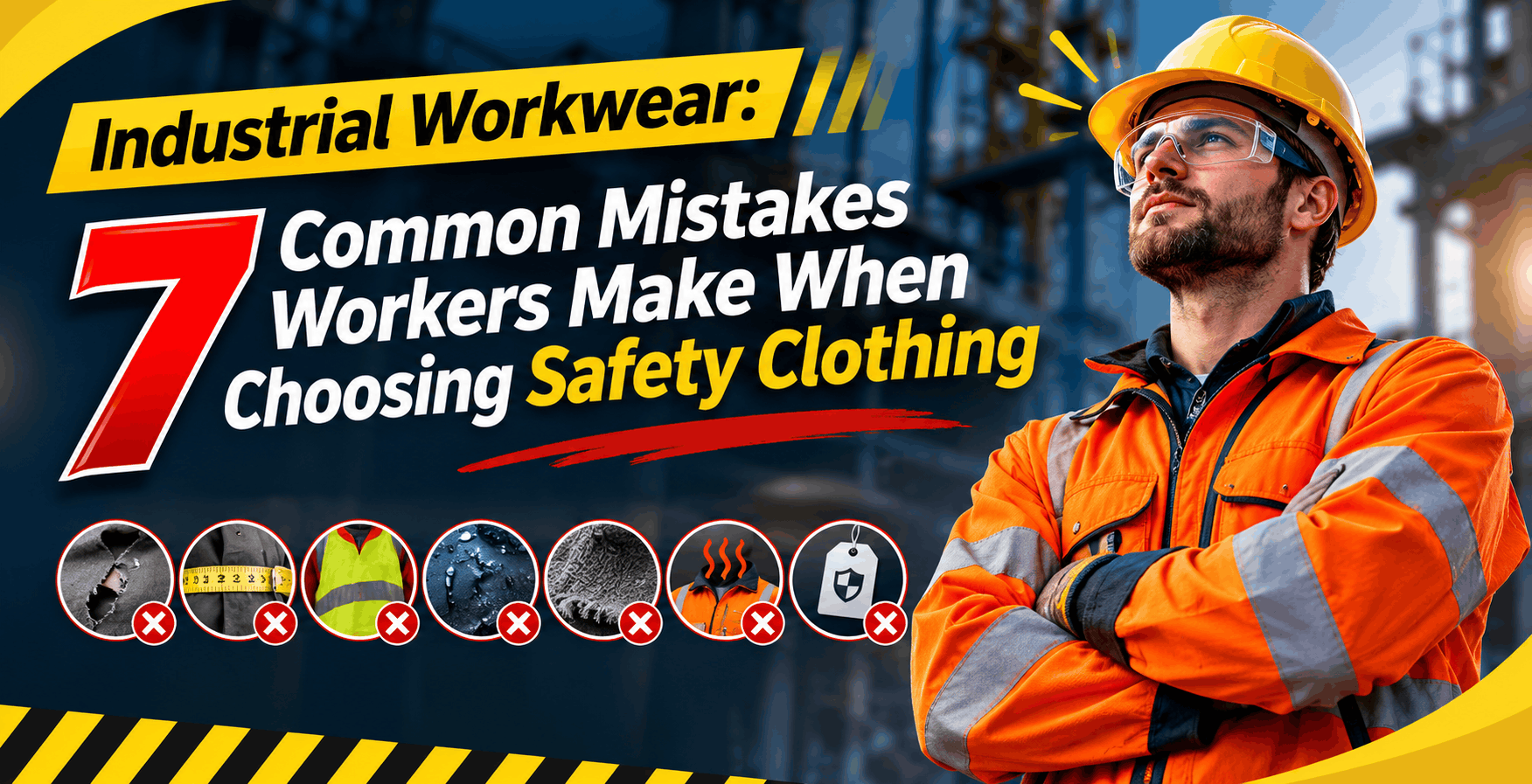
Workplace safety begins long before a worker enters a construction site, manufacturing facility, or industrial workshop. One important decision is choosing the right industrial workwear. Although protective clothing may appear straightforward, selecting unsuitable garments can expose workers to injuries, uncomfortable working conditions, and unnecessary occupational hazards.
According to the UK’s Health and Safety Executive (HSE), employers must assess workplace risks and provide suitable personal protective equipment (PPE) when those risks cannot be adequately controlled through other measures. However, protective clothing is only effective when it matches the hazards, fits correctly, and is maintained properly.
Unfortunately, many workers focus on appearance, price, or convenience rather than protective performance. As a result, they may overlook essential safety requirements.
This guide explores seven common industrial workwear mistakes, explains their potential consequences, and provides practical recommendations for choosing safer, more comfortable, and longer-lasting workwear clothing.
What Is Industrial Workwear, and Why Is It Important?
Industrial workwear refers to clothing designed for demanding working environments, offering durability, comfort, and, where specified, protection against occupational hazards.
Common examples include protective coveralls, high-visibility jackets, flame-resistant clothing, reinforced work trousers, and chemical-resistant garments.
However, not every durable workwear product qualifies as certified PPE.
Properly selected industrial workwear can help workers:
- Reduce exposure to specific workplace hazards.
- Maintain comfort during demanding physical activities.
- Improve visibility in environments with moving vehicles.
- Protect against certain thermal, chemical, or mechanical risks.
- Support mobility and productivity throughout working hours.
Therefore, choosing suitable workwear requires understanding both the working environment and the garment’s protective capabilities.
1. Choosing Industrial Workwear Based Only on Price
One of the most common mistakes is purchasing inexpensive workwear without evaluating its quality, durability, or protective performance.
Although lower prices may seem attractive initially, poorly constructed garments can deteriorate quickly under demanding industrial conditions.
For example, trousers with weak stitching may tear during repeated bending, while unsuitable fabrics may wear out prematurely.
How to Avoid This Mistake
Instead of comparing prices alone, evaluate the overall value of the clothing.
Look for reinforced seams, appropriate fabric construction, reliable fastenings, and documented protective performance where necessary.
Additionally, consider replacement frequency and maintenance costs.
A reputable industrial workwear manufacturer should provide clear product specifications, care instructions, and relevant conformity information.
Ultimately, the most economical option is not necessarily the cheapest garment but one that meets safety requirements throughout its intended service life.
2. Ignoring Workplace Hazards and Safety Requirements
Different industrial environments expose workers to different hazards. Nevertheless, some employees choose general-purpose workwear without checking whether it offers suitable protection.
For instance, clothing appropriate for warehouse operations may not provide adequate protection against welding sparks, chemical splashes, or electrical arc hazards.
Similarly, ordinary reflective clothing should not automatically be considered compliant high-visibility PPE.
How to Avoid This Mistake
Start with a workplace risk assessment.
Identify hazards such as:
- Heat, flames, and molten metal
- Hazardous chemical exposure
- Low visibility and moving machinery
- Abrasion and sharp surfaces
- Electrical arc exposure
Next, select protective garments certified or otherwise demonstrated suitable for the identified risks.
Relevant standards may include EN ISO 20471 for high-visibility clothing, EN ISO 11612 for certain heat and flame hazards, and EN 13034 for limited protection against liquid chemicals.
Importantly, compliance with one standard does not establish protection against unrelated hazards.
3. Wearing Incorrectly Sized Workwear Clothing
Poorly fitted workwear clothing can create discomfort and introduce additional safety concerns.
Tight garments may restrict movement, particularly during climbing, lifting, or kneeling. Conversely, excessively loose clothing can become caught in moving machinery.
Improper sizing may also interfere with the fit and effectiveness of other protective equipment.
How to Avoid This Mistake
Always consult the manufacturer’s sizing chart and, where possible, conduct practical fitting assessments.
Check whether the garment allows comfortable bending, stretching, walking, and lifting.
Furthermore, assess sleeve lengths, waist adjustments, and overall garment coverage.
Workers should also consider how jackets, gloves, harnesses, and other protective equipment interact.
The correct fit should support natural movement without compromising the intended protective function.
4. Overlooking Fabric Quality and Material Suitability
Fabric selection significantly influences the durability, comfort, and protective performance of industrial workwear.
However, workers sometimes assume that thicker materials automatically provide better protection.
In reality, protective performance depends on material properties, garment construction, testing, and the specific hazard involved.
For example, cotton-rich fabrics may provide comfort in some environments, while polyester blends can offer useful durability and wrinkle resistance.
Nevertheless, ordinary cotton or polyester clothing should not be treated as flame-resistant or chemical-protective without appropriate evidence.
How to Avoid This Mistake
Choose materials according to actual working conditions.
Consider breathability, abrasion resistance, moisture management, laundering requirements, and relevant protective certifications.
Additionally, check whether the garment’s performance changes after repeated washing.
For hazardous environments, prioritize documented protection over marketing claims about fabric strength.
5. Neglecting Comfort and Weather Conditions
Industrial workers often spend extended periods performing physically demanding tasks. Consequently, uncomfortable clothing can affect concentration, mobility, and overall working efficiency.
Heavy garments in hot environments may increase heat strain, while inadequate insulation can contribute to cold discomfort.
Similarly, clothing that traps moisture may become unpleasant during prolonged activity.
How to Avoid This Mistake
Select industrial workwear suitable for the expected temperature, humidity, and physical workload.
Where appropriate, consider breathable fabrics, ventilation features, adjustable cuffs, and compatible clothing layers.
For outdoor work, weather-resistant garments may help manage rain and wind exposure.
However, comfort features must never undermine mandatory protective performance.
Employers should also manage heat and cold risks through suitable working practices, rest arrangements, and environmental controls rather than relying on clothing alone.
6. Purchasing From Industrial Workwear Suppliers Without Checking Credentials
Not all industrial workwear suppliers provide the same level of product documentation, quality assurance, or after-sales support.
Some sellers may advertise garments as protective without supplying sufficient evidence of compliance.
Consequently, buyers may receive products unsuitable for their intended workplace hazards.
How to Avoid This Mistake
Before purchasing, investigate the supplier’s reliability and product information.
A trustworthy industrial workwear manufacturer or supplier should be able to explain the garment’s intended use, limitations, applicable standards, and maintenance requirements.
For relevant PPE sold in Great Britain, buyers should also check applicable conformity marking and documentation requirements.
Additionally, request technical specifications, sizing information, and sample garments for larger orders.
Reliable documentation is especially important when purchasing specialist protective clothing for hazardous environments.
7. Failing to Maintain and Replace Industrial Workwear
Even properly selected protective clothing can lose effectiveness through wear, contamination, damage, or incorrect cleaning.
Unfortunately, some workers continue using damaged garments because they appear functional.
For example, torn high-visibility clothing may provide reduced conspicuity, while damaged protective seams can compromise garment performance.
How to Avoid This Mistake
Inspect workwear regularly for tears, worn areas, damaged fastenings, and contamination.
Follow manufacturer-approved cleaning instructions, particularly for certified protective garments.
Avoid unauthorized alterations that could compromise protection.
Furthermore, replace clothing when it no longer meets the manufacturer’s inspection criteria or workplace safety requirements.
A consistent inspection and replacement process helps maintain reliable protection.
How to Choose the Right Industrial Workwear: Quick Checklist
Before purchasing industrial workwear, use the following checklist to make a more informed decision.
| Selection factor | What to check |
|---|---|
| Workplace hazards | Protection appropriate to the risk assessment |
| Safety standards | Applicable certifications and documentation |
| Fabric quality | Durability, suitability, and care requirements |
| Fit and comfort | Mobility, coverage, and PPE compatibility |
| Weather conditions | Appropriate temperature and moisture management |
| Supplier reliability | Product traceability and technical support |
| Maintenance | Inspection, washing, and replacement instructions |
Most importantly, protective clothing should form part of a wider workplace safety system that includes training, hazard controls, and appropriate supervision.
Frequently Asked Questions About Industrial Workwear
Correctly fitted clothing supports movement, reduces avoidable snagging risks, and helps maintain the coverage required for protection. It also improves compatibility with other workplace safety equipment.
No. Industrial workwear includes general-purpose occupational clothing, while PPE is specifically designed to protect against identified health and safety risks. Some industrial garments qualify as PPE, but others do not.
Replacement depends on garment condition, exposure, frequency of use, and manufacturer guidance. Protective clothing should be replaced whenever damage, contamination, or deterioration compromises its intended performance.
Look for clear product specifications, appropriate certification or conformity documentation, consistent quality, accurate sizing information, and transparent care instructions. Supplier experience and technical support are also useful considerations.
Common materials include cotton, polyester, blended fabrics, and specialist protective textiles. The best material depends on working conditions, durability requirements, and the specific protection needed.
Industrial workwear is designed to support workers in demanding environments through durability, comfort, and task-appropriate functionality. Certified protective garments can also reduce exposure to specific occupational hazards.
Conclusion
Choosing the right industrial workwear requires more than selecting durable clothing at an affordable price. Workers and employers must consider workplace hazards, fabric suitability, garment fit, safety requirements, supplier reliability, and ongoing maintenance.
By avoiding these seven common mistakes, businesses can make better purchasing decisions while supporting safer and more comfortable working environments.
Ultimately, effective industrial workwear combines appropriate protection, practical functionality, and dependable quality. Investing in the right garments is an important part of protecting workers and maintaining responsible workplace safety practices.