
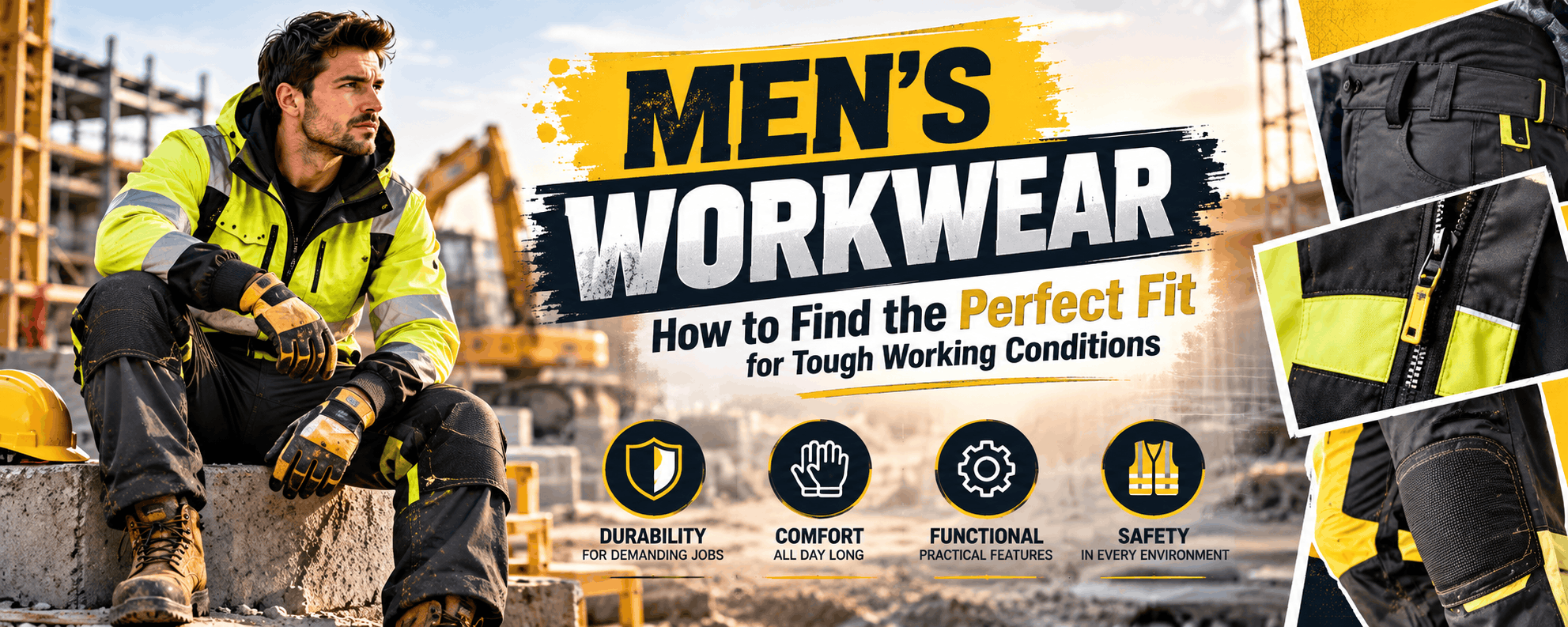
Choosing the right men’s workwear involves much more than selecting comfortable clothing. Whether you’re working on a construction site, managing warehouse operations, or handling demanding industrial tasks, your clothing plays an important role in your daily performance, mobility, and protection.
Moreover, poorly fitted workwear can restrict movement, cause discomfort, and create unnecessary workplace hazards.
However, finding the right balance between durability, functionality, and fit can sometimes feel challenging. With different fabrics, sizes, and protective features available, understanding what matters most is essential.
Therefore, this guide explains how to choose reliable men’s workwear, identify suitable materials, understand sizing requirements, and select clothing for different working environments.
Why Choosing the Right Men’s Workwear Matters
Workwear serves several important purposes beyond maintaining a professional appearance. In physically demanding industries, appropriate clothing can support safer working practices while improving everyday comfort.
For instance, construction workers frequently bend, lift, and climb throughout their shifts. Consequently, restrictive trousers or oversized jackets may interfere with these movements.
Similarly, warehouse employees often work around equipment, storage racks, and moving machinery. Therefore, clothing should provide sufficient flexibility without creating unnecessary snagging hazards.
According to the UK’s Health and Safety Executive (HSE), protective equipment should be selected with consideration for its size, fit, weight, and compatibility with other equipment.
Benefits of Properly Fitted Workwear
- Improved mobility: Well-fitted clothing allows easier bending, stretching, lifting, and walking.
- Greater comfort: Appropriate fabrics and sizing help reduce irritation during long shifts.
- Better durability: Reinforced construction can withstand repeated use in demanding environments.
- Professional appearance: Consistent work uniforms create a more organised workplace image.
- Appropriate protection: Hazard-specific garments can help protect workers when correctly selected and used.
Ultimately, investing in suitable workwear supports both individual comfort and workplace safety.
Understanding Different Types of Men’s Workwear
Before purchasing work clothing, it’s important to understand that different industries require different garment designs.
While some workplaces prioritise comfort and appearance, others require specialised protective clothing.
1. Work Trousers for Demanding Jobs
Work trousers are essential for construction, maintenance, engineering, and warehouse environments.
Moreover, quality work trousers often feature reinforced stitching, practical storage pockets, and durable fabrics.
When selecting trousers, consider:
- Flexible waistbands for comfortable movement.
- Reinforced knee areas for frequent kneeling.
- Secure pockets for carrying essential tools.
- Suitable leg lengths to prevent dragging.
- Fabric strength appropriate for the working environment.
Additionally, workers who frequently kneel may benefit from compatible knee-pad systems where their tasks require them.
2. Work Shirts and Polo Shirts
Work shirts provide a practical balance between comfort, functionality, and professional presentation.
For example, breathable cotton shirts may suit indoor workplaces, whereas suitable polyester blends can offer useful moisture-management properties.
Furthermore, polo shirts are commonly used in logistics, maintenance, and customer-facing technical roles.
Nevertheless, garment choice should always reflect workplace conditions rather than appearance alone.
3. Work Jackets and Outerwear
Outdoor professionals frequently encounter changing temperatures, wind, and rainfall.
Therefore, selecting suitable work jackets is essential for maintaining comfort.
Depending on the environment, useful features include adjustable cuffs, weather-resistant outer fabrics, insulated linings, and secure closures.
However, a weather-resistant jacket is not automatically suitable protective clothing for every hazard. Additional certified protection may be necessary.
4. Coveralls and Protective Clothing
Coveralls provide extended body coverage and are commonly used in automotive, manufacturing, and industrial settings.
Additionally, certain jobs require specialised coveralls designed for chemical exposure, flame hazards, or other identified risks.
According to the National Institute for Occupational Safety and Health (NIOSH), no single protective clothing system protects against every workplace hazard. Therefore, appropriate protection must be selected following a hazard assessment.
How to Find the Perfect Fit for Men’s Workwear
Finding the right fit requires more than choosing your usual clothing size. In fact, workwear sizing can vary considerably between manufacturers.
Consequently, checking garment measurements before purchasing can help prevent uncomfortable or unsuitable clothing.
Step 1: Take Accurate Body Measurements
Start by measuring your chest, waist, hips, and inside leg.
For accurate results, use a flexible measuring tape and keep it level without pulling it too tightly.
| Measurement | How to measure |
|---|---|
| Chest | Around the fullest part of the chest |
| Waist | Around the natural waistline |
| Hips | Around the fullest part of the hips |
| Inside leg | From the crotch to the desired trouser hem |
| Sleeve | From the shoulder to the wrist, following the arm |
Afterwards, compare your measurements with the manufacturer’s size chart rather than assuming every brand uses identical sizing.
Step 2: Check Freedom of Movement
Next, test how the clothing performs during normal working movements.
For example, try sitting, bending, reaching overhead, and squatting.
If your clothing feels tight around the shoulders, knees, or waist during movement, it may not provide enough flexibility for comfortable work.
Conversely, excessively loose sleeves or trouser legs can create snagging or tripping hazards.
WorkSafe New Zealand specifically recommends protective clothing that allows normal job movements without leaving areas exposed or creating hazards from loose fabric.
Step 3: Consider Layering Requirements
During colder months, workers often wear thermal clothing beneath their outer garments.
Therefore, choose jackets and coveralls that provide enough room for additional clothing layers while allowing you to move comfortably and freely.
However, oversized clothing should not be used as a substitute for correct sizing, particularly when garments provide certified protection.
Step 4: Test Workwear With Other Equipment
Finally, check that your clothing works comfortably alongside required safety equipment.
For instance, jackets should not interfere with harnesses, while trousers should sit appropriately over or inside footwear according to the job’s requirements.
Most importantly, never modify certified PPE in ways that could compromise its protection.
Choosing the Best Fabric for Tough Working Conditions
Fabric selection significantly influences workwear durability, comfort, and suitability.
Nevertheless, no single material is ideal for every workplace.
Cotton Workwear
Cotton is a popular fabric choice because it feels soft against the skin and allows air to circulate, helping maintain comfort throughout the day.
Additionally, suitable cotton fabrics can provide comfort during routine indoor tasks.
However, untreated cotton should not be assumed to offer flame, chemical, or specialised heat protection.
Polyester Workwear
Polyester is commonly used in work clothing because it can offer good abrasion resistance, shape retention, and relatively quick drying.
Furthermore, polyester blends can be engineered for different performance requirements.
Nevertheless, ordinary polyester garments may be unsuitable near certain heat or flame hazards unless specifically designed and certified for those conditions.
Cotton-Polyester Blends
Blended fabrics combine characteristics from different fibres.
As a result, they can offer a practical balance between comfort, durability, and ease of maintenance.
For many general-purpose workwear applications, these blends provide a useful everyday option.
Stretch Fabrics
Work trousers containing suitable stretch fibres may provide greater flexibility.
Consequently, workers who frequently squat, climb, or bend may find them more comfortable.
However, flexibility should never replace the need for appropriate protective performance.
Essential Safety Features to Look for in Men’s Workwear
While comfort is important, protective performance becomes essential when workers face identified hazards.
Therefore, buyers should carefully evaluate any relevant safety features before purchasing.
High-Visibility Materials
High-visibility workwear makes employees easier to spot in workplaces where vehicles and heavy machinery are operating, helping reduce the risk of accidents.
For example, EN ISO 20471 specifies performance requirements for high-visibility clothing, including fluorescent and retroreflective materials.
However, the required clothing class should be determined by the workplace risk assessment rather than appearance alone.
Reinforced Stitching
Reinforced seams can help improve durability in areas exposed to repeated movement or stress.
Furthermore, strengthened pocket openings and knee areas may help garments withstand demanding daily use.
Secure Fastenings
Workwear fastenings, including buttons, zippers, and adjustable straps, should stay firmly in place throughout daily activities to ensure comfort and functionality.
Additionally, poorly positioned or loose fastenings may interfere with tools and equipment.
Appropriate Protective Certifications
Certain work environments demand specialised clothing that meets established safety standards to protect workers against fire, chemical exposure, and other occupational risks.
Consequently, buyers should verify the actual product certification and intended use instead of relying on general marketing descriptions.
Common Mistakes When Buying Men’s Workwear
Even experienced buyers sometimes overlook important details when selecting work clothing.
Fortunately, many common purchasing mistakes can be avoided through careful evaluation.
Choosing the wrong size: Clothing that is too tight restricts movement, while oversized garments may create additional hazards.
Ignoring working conditions: Lightweight clothing may be unsuitable for cold outdoor environments. Similarly, heavily insulated garments may cause unnecessary discomfort in warm indoor settings.
Prioritising price over suitability: Although affordability matters, the cheapest option may not deliver the required durability or protection.
Overlooking fabric care: Some garments require specific washing procedures to maintain their protective performance.
Assuming all workwear is PPE: Ordinary durable clothing does not necessarily meet the standards required for workplace hazards.
Therefore, checking product specifications, sizing information, and care instructions before purchasing is essential.
How to Maintain Men’s Workwear for Long-Term Use
Proper maintenance helps preserve garment condition and functionality.
Moreover, regular inspection makes it easier to identify wear before clothing becomes unsuitable.
Follow these practical maintenance recommendations:
- Wash garments according to the manufacturer’s instructions.
- Inspect seams, pockets, fastenings, and reinforced areas regularly.
- Remove dirt and contamination using approved cleaning methods.
- Avoid excessive drying temperatures where prohibited by the care label.
- Replace damaged protective clothing when it no longer meets its intended requirements.
Additionally, high-visibility garments should be kept clean because accumulated dirt can reduce their effectiveness.
The HSE emphasises the importance of maintaining protective clothing in suitable condition and replacing equipment when necessary.
Frequently Asked Questions About Men’s Workwear
There is no universal replacement schedule for all workwear. Instead, inspect garments regularly and replace them when excessive wear, damage, poor fit, or reduced protective performance makes them unsuitable. Certified PPE may also have manufacturer-specific service-life limits.
First, identify your workplace dress requirements and daily physical activities. Next, consider temperature, fabric comfort, and fit. Finally, check whether your job requires any specialised protective equipment.
Workwear is generally designed around occupational requirements such as durability, mobility, and practical storage. On the other hand, everyday clothing is generally designed with a greater focus on personal style, casual wear, and comfort during routine activities.
However, only appropriately certified protective workwear should be relied upon for specific workplace hazards.
Men’s workwear should fit comfortably without restricting movement or leaving excessive loose fabric. Ideally, workers should be able to bend, reach, and walk freely while maintaining appropriate coverage.
The best material depends on the working environment. Cotton may provide everyday comfort, while polyester blends can offer durability and easier maintenance. However, hazardous workplaces may require specialised certified fabrics.
Conclusion on Men’s Workwear
Finding the right men’s workwear requires careful consideration of fit, fabric quality, working conditions, and practical functionality.
Although appearance and affordability influence purchasing decisions, comfort and suitability should remain central priorities.
Furthermore, understanding workplace hazards helps workers distinguish between ordinary durable clothing and specialised protective garments.
Whether you’re selecting work trousers, industrial coveralls, durable jackets, or professional office clothing, the right choice should support your everyday responsibilities without compromising mobility.
Ultimately, well-fitted, job-appropriate workwear is a practical investment in comfort, durability, and safer working practices.
For businesses looking for functional workwear and safety apparel, explore the clothing solutions available from MT Sports at mt-sports.co.uk.
One Comment