
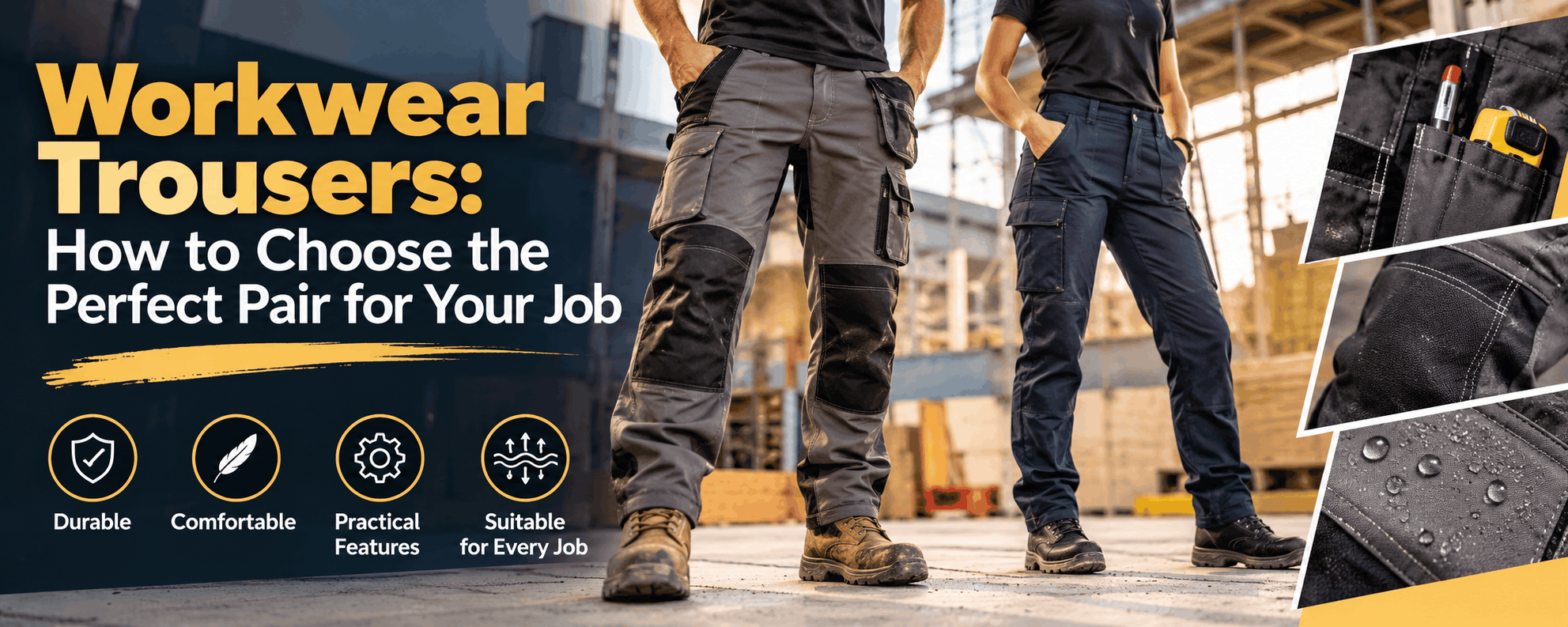
Choosing the right workwear trousers is essential for staying comfortable, safe, and productive throughout the working day. Whether you work in construction, manufacturing, logistics, engineering, or maintenance, your clothing should support your movements while protecting you from everyday workplace challenges.
However, not all work trousers offer the same durability, flexibility, or protection. Some are designed for physically demanding environments, while others prioritise lightweight comfort and professional appearance.
Therefore, understanding the differences between fabrics, fits, safety features, and practical designs can help you make a smarter purchasing decision.
In this guide, we’ll explore how to choose the best workwear trousers for your job, including important features, material options, sizing considerations, and maintenance tips.
Why Are Workwear Trousers Important?
Workwear trousers are specifically designed to withstand demanding working conditions while providing greater functionality than ordinary trousers.
Unlike casual clothing, professional work trousers often include reinforced stitching, durable fabrics, multiple utility pockets, and ergonomic construction.
Moreover, the right trousers can help workers perform daily tasks more efficiently by allowing unrestricted movement and convenient access to essential tools.
Key benefits include:
- Durability: Strong materials resist everyday wear, friction, and repeated washing.
- Comfort: Breathable fabrics and flexible designs support long working hours.
- Functionality: Practical pockets provide convenient storage for tools and accessories.
- Protection: Job-specific designs can help reduce exposure to certain workplace hazards.
- Professional appearance: Well-fitted trousers create a consistent, organised workplace look.
Consequently, investing in suitable workwear can improve everyday comfort while potentially reducing replacement costs.
1. Choose Workwear Trousers Based on Your Job
Different occupations require different types of work trousers. Therefore, your working environment should be the first consideration.
Construction and Building Trades
Construction workers frequently bend, kneel, climb, and handle equipment. As a result, heavy-duty workwear trousers with reinforced knees, abrasion-resistant materials, and tool pockets are practical choices.
Additionally, trousers with compatible knee-pad pockets can provide extra comfort during prolonged kneeling when used with appropriate protective inserts.
Warehouse and Logistics
Warehouse employees often walk, lift, and move throughout their shifts. Therefore, lightweight work trousers with stretch panels and breathable materials may offer greater comfort.
Furthermore, secure pockets can help workers carry small essentials without interfering with movement.
Manufacturing and Engineering
Industrial environments may involve machinery, sharp surfaces, heat, or other hazards.
For this reason, workers should select trousers according to a workplace risk assessment. Where necessary, specialised protective clothing must meet the relevant safety standards.
Office and Customer-Facing Roles
Not every workplace requires heavy-duty clothing. In contrast, technicians, supervisors, and customer-facing employees may prefer smart work trousers that combine a professional appearance with practical durability.
2. Select the Right Fabric for Comfort and Durability
Fabric quality significantly influences how long your workwear trousers last and how comfortable they feel.
| Fabric | Main advantage | Suitable applications |
|---|---|---|
| Cotton | Soft and breathable | Indoor and general work |
| Polyester | Quick-drying and crease-resistant | Logistics and everyday uniforms |
| Polyester-cotton blend | Balance of comfort and durability | Construction and maintenance |
| Ripstop fabric | Helps limit the spread of small tears | Outdoor and demanding work |
| Stretch fabric blends | Greater freedom of movement | Active and physically demanding jobs |
Although heavier fabrics may provide greater abrasion resistance, they can also feel warmer during extended shifts.
Therefore, consider fabric weight, breathability, and flexibility rather than choosing trousers based on thickness alone.
3. Find the Perfect Fit for Your Body
Even high-quality workwear trousers can become uncomfortable when the fit is incorrect.
Ideally, trousers should fit securely around the waist while allowing comfortable movement through the hips, thighs, and knees.
Before purchasing, check the following:
- Waistbands should remain comfortable when sitting or bending.
- The crotch and thigh areas should allow unrestricted movement.
- Trouser length should suit your work boots without creating a trip hazard.
- Stretch panels or articulated knees should support frequent bending.
Additionally, workers should consult the manufacturer’s size chart rather than relying exclusively on their usual clothing size.
Choosing Ladies Workwear
Modern ladies workwear should offer the same durability, functionality, and protection as other professional work clothing.
However, fit requirements may differ between individuals. Therefore, women’s workwear trousers are available in different waist shapes, hip measurements, leg lengths, and cuts.
Importantly, choosing correctly fitted ladies workwear can improve comfort without compromising essential safety features.
4. Look for Essential Workwear Features
Beyond fabric and fit, practical features can make work trousers more convenient.
For example, cargo work trousers often include multiple storage compartments, making them suitable for tradespeople who regularly carry small tools.
Similarly, reinforced seams can improve durability in areas exposed to repeated stress.
Other useful features include adjustable waistbands, secure zip pockets, reinforced knees, and water-resistant finishes.
Nevertheless, additional features should serve a practical purpose rather than simply increasing the garment’s weight.
5. Consider Weather and Workplace Safety
Working conditions can change significantly throughout the year.
During summer, lightweight and breathable workwear trousers can help reduce discomfort. Conversely, colder environments may require insulated trousers or suitable thermal layers.
Furthermore, outdoor workers may benefit from water-resistant or waterproof designs.
However, ordinary work trousers should not be mistaken for certified protective clothing.
According to the UK’s Health and Safety Executive, protective equipment must be selected according to workplace risks, suitability, fit, and compatibility.
Therefore, always check relevant safety requirements before purchasing specialist workwear.
6. Compare Quality Before Buying Your Next Workwear
When selecting your next workwear trousers, consider long-term value rather than focusing exclusively on the purchase price.
For instance, inexpensive trousers may initially seem attractive. However, frequent replacement can make them more expensive over time.
Instead, examine fabric construction, stitching quality, reinforced areas, washing instructions, and overall comfort.
Additionally, reading product specifications and checking size availability can help prevent unsuitable purchases.
Ultimately, the best work trousers balance durability, comfort, functionality, and affordability.How to Choose the Perfect Pair for Your Job
7. Maintain Your Workwear Trousers Properly
Proper maintenance helps extend the lifespan of professional work clothing.
Firstly, follow the manufacturer’s washing instructions. Secondly, inspect seams, pockets, and fastenings regularly.
Moreover, avoid excessive washing temperatures or unsuitable detergents that could damage specialist finishes.
Finally, replace trousers when significant wear affects their performance or protective properties.
Frequently Asked Questions About Workwear Trousers
They should fit securely without restricting movement. Furthermore, the correct leg length, waist measurement, and thigh room help maintain comfort throughout the working day.
Workwear trousers generally prioritise durability, movement, and practical features. In contrast, regular trousers are usually designed primarily for everyday comfort and appearance.
Yes, cargo trousers can be suitable for construction, logistics, maintenance, and other practical roles. Additionally, their multiple pockets provide convenient storage for everyday essentials.
Durable construction work trousers with reinforced knees, strong stitching, flexible panels, and practical tool pockets are generally suitable. However, specific safety requirements depend on workplace hazards.
Conclusion On Workwear Trousers
Choosing the perfect workwear trousers involves more than selecting the right size or colour. Instead, workers should evaluate fabric quality, durability, fit, safety requirements, and everyday functionality.
Whether you’re purchasing heavy-duty construction trousers, comfortable ladies workwear, or practical cargo trousers, prioritising job-specific features can help you make a more informed decision.
Ultimately, well-chosen work trousers offer lasting comfort, dependable performance, and better value throughout demanding working conditions.